

Cadres in khaki
Like much else in wartime Russia, the United Russia line-up for the September 2026 State Duma election was settled only at the eleventh hour and with Vladimir Putin personally involved. The five names placed at the top of the ruling party’s nationwide list made for a revealing mix: foreign minister Sergei Lavrov; Moscow mayor Sergei Sobyanin; Yevgeny Poddubny, one of Russia’s best-known pro-war military correspondents; Maria Lvova-Belova, who is subject to an International Criminal Court arrest warrant alongside Putin for her role in the deportation of Ukrainian children; and Vladislav Golovin, a young veteran who lost a leg during Russia’s assault on Mariupol.
This choice offers a snapshot of a broader shift already under way within Russia’s bureaucracy, and one that is likely to accelerate in the coming years. Lavrov represents the old guard bureaucracy; Sobyanin, the mid-2010s class of capable managers with appeal among urban Russians; the other three owe their newfound political prominence largely to the war in Ukraine. Technocrats and qualified administrators, like Sobyanin, whose presence within the elite expanded in the years preceding the 2022 invasion of Ukraine, are receding into the background. They will not disappear altogether, because their expertise remains crucial to keep the Russian economy functioning. But they are no longer a rising force. The war is producing a new elite cohort whose careers and status are inseparable from the war. Like any elite group in other post-Soviet authoritarian systems, this cohort has its own set of functions and tasks, which it performs in the interests of the ruling circle or—in the highly personalist Russian system—for the ruler himself.
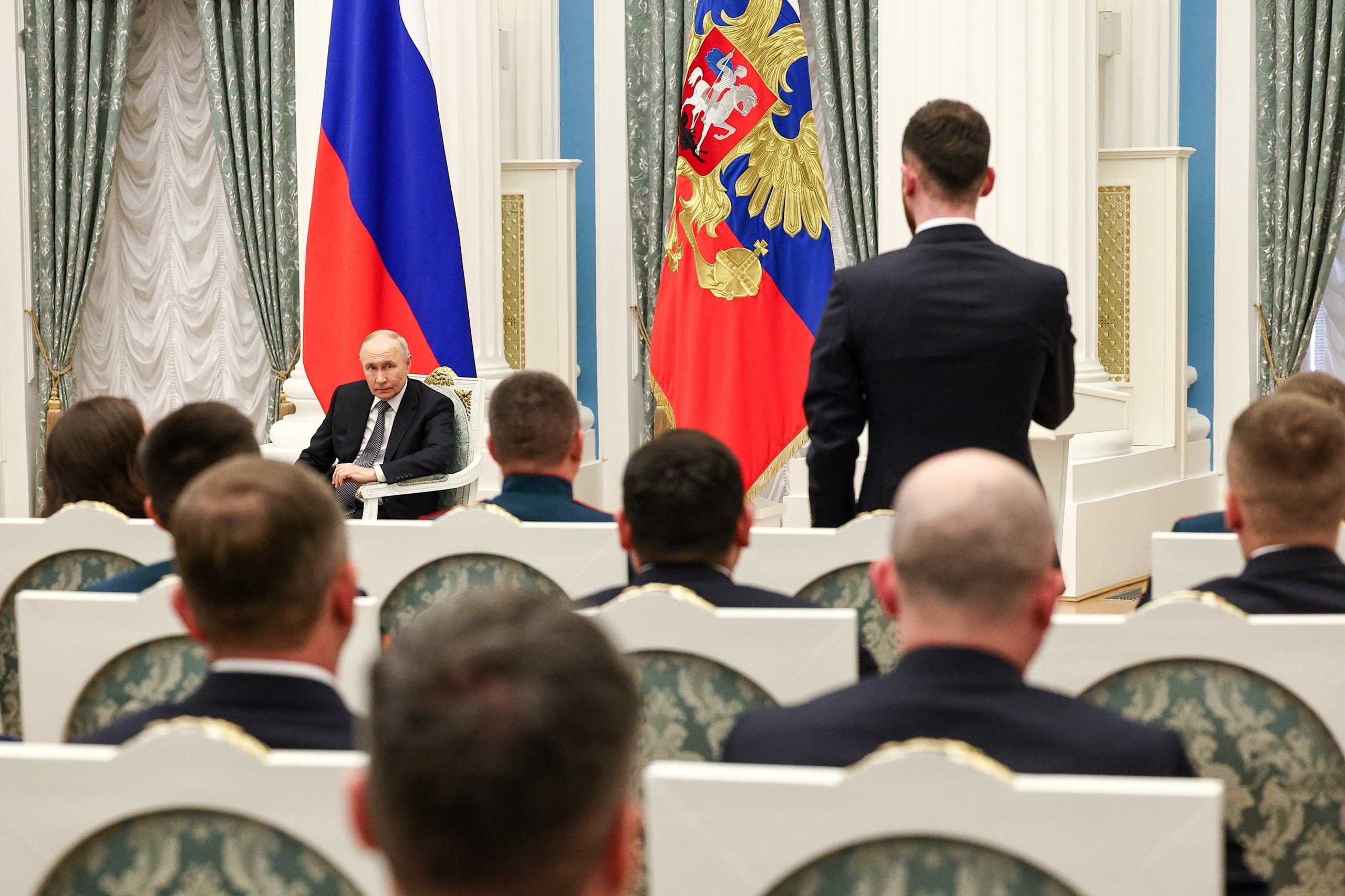
Putin set out his intention to create a new group within the Russian bureaucracy most explicitly in his February 2024 annual address to senior officials. In it, he announced the launch of the “Time of Heroes” programme to retrain military personnel and prepare them for appointments to civilian posts. In particular, Putin said a “genuine elite” should be drawn from contract soldiers and mobilised servicemen who had fought in Ukraine and, after further training, take up positions “across education…, in state-owned enterprises [and] business, in state and municipal administration”. They would replace parts of the old elite, particularly those who had “lined their pockets in the 1990s”. Ultimately, he suggested, they could become the generation to which “Russia might one day be entrusted”.
Between February 2024 and July 2026, Putin returned to this idea at least 22 times based on the Kremlin.ru record of his official and public activities (calculations undertaken by the author). Some of these remarks came during dedicated meetings with officers or their wives. But Putin also raised the subject in less obvious settings, including a forum with municipal leaders and his most recent televised Direct Line, a regular event where he responds to questions from citizens and journalists. During the latter, he repeatedly gave the floor to a specially invited officer and even asked his advice; the officer was later killed at the front.
Putin’s de facto promise to “entrust” Russia to people who had fought in the war, his repeated references to a new elite and the constant emphasis on his personal oversight of the Time of Heroes programme have prompted several explanations.
The most common is that the initiative is meant to support military recruitment by showing that fighting in Ukraine can lead to substantial career opportunities after a return to civilian life. The second sees it as a means of political control: the Kremlin can identify ambitious veterans, bind their careers to the state and absorb them before they organise independently or become political rivals. The third assigns veterans a larger political role. In this reading, Putin is seeking to push aside established business and bureaucratic elites in favour of ideologically conformist loyalists, including veterans, with the supposition that Russia could turn into a closed, North Korean-style militarised autocracy over the next 6-10 years.
Without dismissing any of these three explanations, this paper shows that the Kremlin’s integration of war veterans into the government system is part of a structural, long-term project. The state is creating a new recruitment pool of people tied directly to the war. It is selecting and training them for gradual promotion into positions of power. This marks a genuine shift in Russian cadre policy, away from a “make competent people loyal” model, associated with competitive authoritarianism, to a “make loyal people competent” logic, which is more typical for consolidated dictatorships. In his forthcoming book, “Autocratic Intelligence: How Modern Dictatorships are Getting Smarter”, George Washington University political scientist David Szakonyi identifies a broader tendency across regimes. Despite a steady trend between 2000 and 2020 towards increasing the share of technocrats in government, in more recent years dictators have found it less expensive to build up the competence of those already considered loyal (largely because securing the loyalty of competent officials has become more costly).
The paper maps this new recruitment pool by using a dataset including a named roster of federal Time of Heroes participants, their biographies, actual combat participation and post-programme appointments. These data were supplemented by three interviews with programme lecturers undertaken by the author and by publicly available information on applications and enrolment in regional equivalents of the Time of Heroes programme. The paper also draws on a named roster of 2026 Russian State Duma candidates who identified themselves as war participants, including their biographies and actual combat participation. This is supplemented by aggregate data on serving deputies with military experience elected to all regional and selected municipal legislatures between 2022 and 2025.
The data allow us to test whether two forms of loyalty appear to be rewarded via these programmes. It is assumed, first, that most veterans promoted through the system will owe their careers to Putin personally. The second assumption is that they will have an ideological coherence and loyalty intimately bound up with Putin’s decision to wage war against Ukraine and to a broader clash with NATO.
The findings of the paper confirm that the Russian regime is placing veterans in the middle and upper-middle ranks of the bureaucracy and state-linked structures. It seems to be integrating them into existing elite structures without fully displacing the other main elite groups, including siloviki (individuals with a background in the security services), technocrats and state company managers. The paper further suggests that veterans’ presence will place pressure on bureaucratic and business elites to demonstrate their loyalty to the military by extending tangible support for the war. Over time, these developments have the potential to create a vocal, embedded constituency for a militarised foreign policy orientated towards preparing society and the bureaucratic system for wider confrontation with the West; or protecting Putin’s wartime legacy if the regime weakens or pursues a partial rapprochement with Europe and America.
Putin’s need for new recruitment pools
In democracies, governing elites are renewed through channels such as competitive elections, party turnover and entry from business or civil society. In contrast, autocracies close these channels off. Personnel appointments are thus instrumental to helping the winning coalition in authoritarian regimes reward allies, co-opt rivals and remove potential challengers. Yet regime survival also depends on having competent officials to do the work of running things. This creates what political economists Georgy Egorov and Konstantin Sonin (drawing in part on evidence from Russia) call the “loyalty-competence trade-off”: capable subordinates improve state performance but may gain the networks and authority to threaten the ruler; yet safer loyalists may lack the skills to govern.
The practical challenge for leaders like Putin is to build recruitment pools that provide competence without allowing rivals to emerge. Party-based autocracies can manage this risk through internal career ladders and controlled competition. The ruling party screens, trains and monitors candidates. This gives the leadership a broad pool of officials whose performance it can observe and whose careers it can control. In more personalistic regimes like Russia, capable outsiders have little incentive to build a career in politics or state service and are unlikely to make their abilities more widely known. So the ruler must draw on groups already within reach—or create new recruitment pools by establishing dedicated programmes.
During his first two presidential terms, Putin drew senior personnel from two main recruitment pools. One consisted of his childhood friends, former KGB colleagues and associates from St Petersburg city hall; the other was siloviki. Personal acquaintance was enough to advance members of the first group. Siloviki could gain posts without a direct connection to Putin because they came from a professional and ideological milieu he knew and trusted. The model worked partly because some longtime associates brought genuine economic or administrative expertise along with their loyalty.
By around 2016, the first pool was running dry: most available figures had already received positions while others had fallen out of favour. Although people with a silovik background held around 20% of key posts by 2008, their progression into senior civilian roles later slowed. Instead, the security agencies gained broader powers as the regime grew more repressive.
At the same time, the Kremlin’s need for capable managers increased. The return of gubernatorial elections in 2012 created particular demand for candidates who were loyal, independent of regional elites and able to manage an administration and run a public campaign. Such people were difficult to find, especially as by that time governors in Russia had lost autonomy and faced a growing risk of prosecution.
Putin initially responded by recycling personnel. His third and fourth terms brought frequent rotations of the same figures between senior posts in the bureaucracy and state-owned companies, while some officials remained in place for decades. This produced a personnel bottleneck and left mid-ranking officials with few routes to the top.
An experiment with appointing members of Putin’s personal body guard detail as governors showed the limits of personal familiarity as a selection mechanism. These officials were loyal, but often lacked experience in management. All of them were later dismissed from their posts as governors.
A more successful approach emerged after the current supervisor of domestic politics, Sergei Kiriyenko, joined the presidential administration in 2016. He turned previously marginal personnel reserves into an important source of appointments. Kiriyenko created the “School of Governors”, “Leaders of Russia” and other specific cadre programmes, combining competitive selection and training with visible presidential sponsorship. Participants met Putin and were presented as young, effective technocrats. This gave the Kremlin candidates who appeared competent but remained dependent on the regime for advancement. The technocratic turn peaked with Mikhail Mishustin’s appointment as prime minister in 2020 and the subsequent reshaping of the government.
These programmes, together with recruitment into Mishustin’s government, formed a new technocratic pool for mid-to-senior level federal officials (ministers, deputy ministers and departmental directors), as well as senior regional officials. As a result, between 2017 and 2024, almost 400 people were trained through the School of Governors, and 52 graduates went on to become heads of regions. The Leaders of Russia programme produced similar results, with more focus on the federal level. Szakonyi’s biographical database of 1,578 senior Russian officials shows that roughly one in six top officials serving in 2024 was a technocrat, nearly three times the share in 2000.
Yet the prolonged war in Ukraine may have eroded the confidence of Putin and his circle in the technocratic recruitment pool. Technocrats appeared insufficiently committed to the war, while some failed on tasks central to it, including the construction of fortifications in the frontline Kursk region. Russia’s technocratic turn is now losing momentum, and Putin’s relationship even with key figures in this group, such as central bank governor Elvira Nabiullina, appears to be changing. This has made the creation and expansion of a new, more reliably loyal recruitment pool increasingly urgent.
Federal “heroes”: Filling the bureaucracy’s middle ranks
The Time of Heroes programme announced by Putin in February 2024 is the main vehicle for building the recruitment pool needed for his new “elite”. It is run by the Higher School of Public Administration of RANEPA (the Russian Presidential Academy of National Economy and Public Administration). The programme follows the model of earlier cadre initiatives, combining lectures and team building with practical placements. In 2025, it effectively supplanted the technocrat-orientated School of Governors, whose next intake was postponed. (The next section in this paper discusses the regional Time of Heroes variants, which were set up later.)
Time of Heroes is open only to participants in Russia’s war against Ukraine, including contract soldiers and mobilised servicemen with a university degree. Official figures show more than 65,000 people applied online and underwent initial testing for the programme’s two federal cohorts in 2024 and 2025. Just under 170 progressed to in-person training.
Unlike other RANEPA cadre programmes, Time of Heroes has not published a detailed curriculum. However, this paper draws on both the programme curriculum and the full participant lists for its two cohorts, obtained from lecturers who taught on the programme.
Both in-person cohorts began the programme with a two-week voyage aboard a nuclear-powered icebreaker from Murmansk to the North Pole and back. The journey was symbolically important, given the place of the Arctic in the worldview of Russia’s ruling elite. But it also served a political purpose: two weeks of isolation from the outside world provided an intensive opening exercise in cohort-building for participants.
Overall, however, Time of Heroes devotes relatively little time to such activities. Instead, it focuses on honing participants’ hard skills and giving them practical administrative experience. In contrast, School of Governors puts the trainee technocrats through numerous team building, patriotic and sometimes extreme exercises, including jumping into water from a 7-metre-high cliff and lying beneath a moving tank. Hard skills and practical administrative work account for 68% of Time of Heroes compared with 34% of the School of Governors. Team building and activities intended to foster horizontal ties make up just 11% against 35%. For all these differences, the programmes devote a similar share of 11-13% to “political information”: talks by senior state officials and propagandists on national priorities and patriotism.
The contrast between the two programmes suggests a shift from the “make competent people loyal” cadre model to “make loyal people competent”. School of Governors appears to have selected recruits for their administrative ability and then worked to bind them more closely to the regime. By contrast, Time of Heroes treats participation in the war as proof of ideological loyalty and concentrates on turning those already trusted by the Kremlin into capable administrators.
Early expert and media commentary questioned whether the Time of Heroes programme was genuine. It suggested that serving officials and politicians might simply use it to advance their careers without experiencing real combat. But the author’s research of all 169 participants in the two Time of Heroes cohorts (see detailed methodology of data collection and analysis in the appendix) suggests it does provide a genuine route into civilian career for military personnel who have fought in Ukraine.
Of the participants, 84% have exclusively military backgrounds. Another 9% moved between military and civilian work, either joining the armed forces after a brief civilian career or returning to them following the full-scale invasion. Junior officers—from lieutenant to captain—and senior officers—from major to colonel—together account for around 90%; only a handful are generals. Participants’ average age is 40. The programme includes 159 men and 10 women, most of the latter medical officers who worked as critical-care specialists or surgeons, likely close to the frontline.
Drawing on official Russian sources, independent media investigations and Ukrainian projects, we found strong evidence of actual combat participation for 94% of the 156 participants whose records we could assess (out of the 169 in total). Moreover, almost 40% of the recruits have been awarded major combat decorations, with recipients concentrated in the second cohort of the programme. In addition, at least 13 have been accused of war crimes, including involvement in some of the most notorious crimes committed in the Kyiv region in spring 2022. Public records or participants’ interviews indicate that almost half were seriously wounded. Some, including participants later appointed to senior government posts, applied to the programme directly from hospital after sustaining severe injuries.
One lecturer on the programme summed up the participants as “very simple, well-drilled Russian blokes”. Another said that after a trial class on a very specific economic topic, he had to simplify an already adapted syllabus even further to accommodate participants who “could not focus for even half an hour”, which he thought might be a consequence of their injuries.
Progression
Nevertheless, by July 2026, 108 of the 169 participants in the two Time of Heroes cohorts had been appointed to posts at different levels of government or in state-owned companies. Another four had continued working in the government posts they held before entering the programme, although one was later killed in an explosion after returning from the front. Yet none of the biographical or service-related characteristics described above is a statistically significant predictor of receiving an appointment. This confirms thatthe programme appears to genuinely serve as a route for upward mobility and starting point into a civilian career for participants.
Although Time of Heroes is a federal programme, only just over half entered federal-level bodies. The remainder secured appointments on the regional or municipal level.
For this analysis, all appointments were grouped by their primary function into four categories. “Management” covers posts carrying substantive responsibility for running a particular sector, organisation or segment of the economy, mostly in the form of heading a ministry department or state-company division. “Ideology” includes youth policy, patriotic education and state messaging, including posts in Yunarmiya, Znanie and Movement of the First—state-sponsored organisations for patriotic education, revived from its Soviet predecessors. “Veteran liaison” covers non-security roles supporting veterans and their families. “Security liaison” refers to civilian posts coordinating with the security services in regional government or at strategically important enterprises.
Management is the largest category at both federal and regional levels, accounting for 47-54% of appointments. These posts frequently place veterans in sectors in which they have no relevant education or training. Such mismatches are not unprecedented in the Russian bureaucracy, but they had become less common at federal level as technocratic recruitment gained ground from the mid-2010s. Veteran appointments therefore represent a partial departure from that recent trend.
The range of managerial roles also shows how broadly war veterans are distributed across the Russian bureaucratic landscape. Participants in the all-out invasion of Ukraine can now be found in the presidential administration monitoring public sentiment, running the Roscosmos Corporate Academy, overseeing special communications at Rostelecom, managing the training process of Russian athletes and monitoring elections in the Central Election Commission.
For roughly the other half of appointees, the Kremlin has found three more clearly defined uses: of ideology, veteran liaison and security liaison, as outlined above. These narrower remits better fit veterans’ profiles, require less general administrative expertise and serve the Kremlin’s immediate and medium-term needs.
Ideological roles are concentrated at the federal level, where they make up 35% of appointments. They turn veterans into public advocates for the war and use them as an additional tool for the ideologisation of primary and secondary education. Golovin, mentioned earlier as the fifth-placed candidate on United Russia’s election list, now heads Yunarmiya’s Main Staff; the youth movement operates through schools and cadet classes. Meanwhile, the federal education ministry department responsible for pupils’ moral and patriotic upbringing is headed by Igor Yurgin, who previously commanded an assault unit of convicts and mobilised soldiers notorious for high-casualty “meat assaults”.
Veteran-liaison posts are at 15-20% for both the federal and regional level, where appointees’ role appears to be to manage rising social tensions over delayed payments, prolonged frontline deployments and issues with employment after discharge. At the federal level, one veteran now advises the labour and social protection minister, with responsibility for gathering feedback from former servicemen and their families. At a regional level, this intermediary function has often been embedded directly in the welfare bureaucracy: for example, in Altai Krai, a major decorated with the Order of Courage twice became deputy social protection minister.
The smaller security liaison category supports security coordination in the regions and at strategically important industrial facilities. Typically, a veteran becomes the civilian institution’s interlocutor with the military and siloviki. Their background is expected to help them understand security requirements while negotiating how these are applied, so that civilian administration or operations are not unduly disrupted. Examples include a deputy governor overseeing public safety and relations with the police and security agencies, or an adviser to the head of the federal civil aviation agency handling relations with the defence ministry.
Veterans’ career trajectories suggest that appointments usually build on existing connections. In 88% of cases in which a veteran received a regional post, it was in their home region (defined as a place of birth, education or extended previous military service). In around 45% of cases, the appointment also matched the institution or region of the participant’s first or second internship in Time of Heroes.
Together with the division of appointments among the four categories, these patterns point to a practical approach adopted by the programme’s supervisors in the presidential administration. On the one hand, their objective is to find managerial posts for as many participants as possible across a wide range of sectors and regions. This gives the Kremlin a pool of loyal candidates who have acquired relevant experience, available for when Putin later calls for a veteran to fill a particular and more high-ranking vacancy. On the other hand, it seems that the supervisors are also using veterans to address medium-term political aims for the regime. This is producing a group that promotes militarised values in education and youth policy, a second group that mediates between the state and dissatisfied servicemen and their families, and a third that connects civilian institutions with the security apparatus.
At this stage, veterans’ longer-term prospects do not appear to differ substantially according to the function of their first appointment. The exception is with the municipal posts, which carry the least status and appear unlikely to provide a route to significant promotion. Across federal and regional appointments, subsequent advancement may depend more on performance and the appointee’s relationship with their senior supervisor than on the initial brief.
The timing and sequencing of appointments support this interpretation. Initial batches follow Russia’s electoral calendar, peaking around the annual voting day in September. Veterans who perform well in their posts can then be fast-tracked from regional to federal ministry; from deputy director to director of a state organisation; from deputy governor to governor; or some receive a symbolic but higher-status seat on a presidential commission alongside more managerial appointments. For at least 10 veterans, the September 2026 State Duma election is likely to be the next step, giving them a second or third appointment.
One programme lecturer described a similar logic with reference to the project’s length and multiple stages: all the “capable” and “more or less healthy” veterans had already received government posts. Meanwhile, those “in good standing” with their current senior supervisors were being lined up for promotion.
Yet Time of Heroes also serves a third, more immediate political function. When the programme was launched, analysts often interpreted it chiefly as a publicity instrument: by showcasing veterans entering prestigious civilian careers, the Kremlin could present wartime service as a route to social mobility, encourage contract enlistment and reassure servicemen that their participation in the war would be rewarded after their return to civilian life. How far the appointments perform this function becomes clearer when the substantive authority they confer is considered alongside the recipients’ previous careers.
By July 2026, no war veteran had reached the highest state offices, such as federal minister, head of a federal agency or deputy prime minister. Only four of the 108 appointees had reached the next tier down in the nomenklatura hierarchy, which includes governors and presidential envoys.
Of these, only Alexander Shuvaev, appointed governor of Belgorod region in spring 2026, had pursued an exclusively military career before 2022. His promotion illustrates the career ladder envisaged by the programme: after gaining short civilian experience as deputy governor in another region, he was selected when Putin called for a veteran to fill the more senior vacancy, becoming governor of a region bordering Ukraine where his frontline background seems more relevant.
However, the remaining three senior appointees entered the programme with prior political or bureaucratic experience. Artyom Zhoga, among the programme’s first appointees, went straight into the post of presidential envoy to the Urals Federal District. He had fought in Ukraine since 2014 but began building a political career in the occupied territories from 2023. The other two, Yevgeny Pervyshov and Maria Kostyuk, already had bureaucratic careers before 2022; the war and the programme accelerated their advancement into governorships. Kostyuk offers the clearest example of this political function. Formally the programme’s head rather than a participant, she nevertheless appeared on the participant lists supplied to us. The programme’s official website also regularly presents her governorship as one of the promotions produced by Time of Heroes. Kostyuk has not seen combat, but after her son was killed in 2022, she developed a nationally prominent pro-war media project and moved into veteran policy roles, helping her advance from a senior regional administrative post to governor.
These four senior appointments provide the Kremlin with highly visible examples of the social mobility promised by the programme. But they remain exceptions within its broader record. Ninety-two of the 108 appointments (85%) have settled in the middle and upper-middle ranks. Career military personnel hold most of these posts, which carry real but bounded authority, from heads of departments, units and public organisations to deputy ministers and senior managers in state-linked companies. Another 12 received positions such as advisers and project officers; nine of these came from military backgrounds and the remaining three had held only junior civilian roles before 2022.
Taken together, the appointments reveal a managed career pipeline. Time of Heroes supplies visible success stories for the Kremlin’s recruitment campaign, deploys veterans to meet immediate wartime needs and endows a broader cohort with the civilian experience needed for possible promotion. Advancement remains selective and dependent on existing patrons. This allows the presidential administration to build a reserve of war-linked officials while retaining control over when and how far they rise.
Regional “heroes”: Managing the return from war
In December 2024, Putin again invoked the idea of a new elite and ordered Russia’s regions to set up their own versions of Time of Heroes. Their purpose, he said, was to bring into “regional teams” people for whom “a sense of duty and service to society and the country come first”. Five months later, the Kremlin issued a requirement for Russia’s regions to train up 30-60 veterans each year. (This requirement joined metrics including poverty levels, access to healthcare and demographic trends.) In effect, the shift in federal cadre policy was extended to the regions, to be led largely by technocratic governors appointed under the previous recruitment model.
During 2025, every Russian region except Moscow launched its own equivalent; the capital apparently treated hosting the federal programme as sufficient. Regional programmes largely replicate the federal scheme: they recruit locally rooted combat veterans for posts in their home administrations, combine classroom instruction with practical placements and mentoring by serving officials, and are often delivered through regional RANEPA campuses. Federal Time of Heroes graduates serve as mentors or sit on their public councils.
The authoritarian dynamic in Russian centre-region relations rewards governors for demonstrating zealous, often excessive, compliance with Moscow’s demands. This existing dynamic is now also shaped by the Kremlin’s wartime priorities and thus produced the usual bureaucratic competition among regions over meeting the new veteran-training target. This saw governors attempt to give their own programmes maximum publicity, devise inventive names such as “The Call of Stalingrad” and “Valour of the Mountains”, and try to exceed the targets set by Moscow. By September 2026, one region had already run three separate, consecutive cohorts, more than the federal analogue; 31 (out of more than 80 regions) had formally enrolled more than 60 participants in a single cohort.
According to official regional figures, almost 44,000 people have applied to these programmes since 2024, with nearly 4,500 admitted. This puts the acceptance rate at around 10%, well above the 0.26% acceptance rate for the federal programme. But around 1,200 of those formally admitted to regional programmes remained in a deferred pool because they were still deployed. Both the use and size of this pool grew after the Kremlin introduced a rule preventing programmes from taking personnel away from the front.
In absolute terms, large regions with major military garrisons lead the number of enrolled veterans on their programmes. Moscow oblast received 2,400 applications, followed by Bashkortostan with 2,026 and Krasnodar region with 2,000. Formal enrolment followed a different pattern. Among regions with more than one million residents, Tula recorded the highest rate, with 130 admissions, or 8.93 per 100,000 residents, followed by Kursk (8.19) and Kaliningrad (6.78).
There is no statistically significant relationship between enrolment and either basic regional socioeconomic indicators or confirmed military deaths. Among regions with more than one million residents, the 10 with the highest per capita enrolment together recorded 8.2 confirmed military deaths per 10,000 residents, below the national rate of 9.05. Higher wartime losses therefore did not systematically translate into larger regional training cohorts.
Instead, the scale of regional programmes highly likely depends on an administrative and political choice by governors. The outliers are often regions whose governors have personal reasons to overperform. The Jewish Autonomous Region received almost 11 times the median number of applications, while Tambov enrolled as many participants as Moscow region despite having one-ninth of its population. As noted, governors Kostyuk and Pervyshov took part in the federal Time of Heroes programme and have a personal stake in making the model work. The Republic of Altai accepted 28% of applicants, more than twice the median, and has among the largest number of participants appointed to government posts. Following his demotion from senior federal politics to head of the poor, remote region of Altai, governor Andrei Turchak has strong incentives to regain Moscow’s trust. In Samara region, 93% of the first cohort found posts, while the second intake doubled to 90 participants, exceeding the KPI by 50%. This likely reflects governor Vyacheslav Fedorishchev’s conservative, outspokenly pro-war populism.
The architecture and public image of the regional Time of Heroes reproduce the federal political demand of elite building. However, the programme supervisors in the presidential administration have reportedly also insisted on prioritising short-term administrative function for the veterans in regions. They expect to see them serving as credible intermediaries with other returnees, who might dismiss an ordinary official who had not fought, but would be more willing to engage with a fellow veteran.
This search for intermediaries appears to reflect concern that regions have started to feel the pressure of the ever-growing population of returnees. An estimated 170,000–400,000 people have already come back from the war. Many are struggling to find work and are facing social deprivation, fuelled partly by crimes committed by returnees, with some with previous criminal records and PTSD.
The regions are already feeling this burden, but the pattern of how Russia’s central-regional relations are structured overall is also evident in the context of work with veterans. As recent studies by political scientist András Tóth-Czifra show, federal measures for the integration of veterans are inadequate, and overall the Kremlin is reverting to a familiar tactic: delegating responsibility for returning servicemen without providing regions with additional resources.
The intermediary function envisaged by the Kremlin, together with this shortage of resources, helps explain why regional appointments differ from those produced by the federal programme. Although information on appointments from regional programmes remains fragmentary, veteran-liaison roles appear to account for 44% of regional appointments. This compares with 18% among graduates of the federal programme, while only 22% enter general management, against 50% federally. Ideological posts are also slightly more common, at 30% compared with 26%.
Regions are not simply filling vacancies, as was largely the case under the federal programme: 31% of all appointments went to newly created or repurposed veteran support posts, including units in regional ministries, agencies and advisers to governors. Six per cent of ideology-related appointments have the same logic. This is a regional strategy for adapting the federal elite-building model to scarce resources: create a limited administrative infrastructure around the new cohort and use its members to manage the much larger veteran population and social discontent regarding the war.
The shift in cadre policy is thus generating a new regional personnel pool of politically approved veterans, even if most are unlikely to reach senior office. With Moscow demanding their integration but leaving regions to manage the social costs, governors have little choice but to use this cohort to draw a visible line between “good” veterans who serve the state and “bad” returnees associated with crime and disorder, while buffering the tensions that mass demobilisation could bring.
Elected veterans: Blurring the boundaries of veteran status
Elections have become the third and final main route for integrating veterans into elite structures. This was not a significant feature in the first years of the war but became more common following Putin’s 2024 call for a “new elite”.
Russia’s 2026 State Duma election will be the first federal parliamentary contest since the full-scale invasion. The data suggest that a trend of promoting veterans into regional and municipal legislatures is set to continue at the federal level. That being said, (semi-official) ambitions in this regard appear to have tempered over time. In 2025, Kremlin-aligned experts predicted that veterans could take 40% of the Duma’s 450 seats. The estimate later fell to 20%, or 100 seats, and with the final confirmed number of candidates we now know this is yet lower. This retreat may reflect concerns within the presidential administration that a large veteran bloc would be harder to manage than the existing parliamentary factions.
The main route into the Duma mirrors the pattern seen in regional elections. All parliamentary parties are fielding veterans in this election, but the overwhelming majority of those set to win represent United Russia. Analysis of the 2025 regional election results suggests that United Russia veteran candidates enjoyed an electoral premium, aided by stronger administrative mobilisation as regional officials sought to meet a Kremlin priority. Veterans standing for other parties faced an electoral penalty, reflecting broader public unease and suspicion towards those returning from the war.
Of the 546 veterans who entered United Russia’s 2026 primaries for the State Duma election, the party ultimately registered 83 as candidates, or 15% of the total. Twenty-eight individuals had completed the federal Time of Heroes programme, 17 of whom secured a job following the programme. For 11 participants, election would be their first public post. The remaining 55 presented themselves as war participants but had not taken part in the federal or regional Time of Heroes programme. One federal Time of Heroes lecturer said that programme organisers explained the absence of a third cohort by describing the Duma election as “the real third cohort”.
Unlike the federal Time of Heroes programme, whose participants and appointees were mostly career military personnel with actual combat experience, United Russia’s veteran candidates for the State Duma have a markedly different profile. Analysis of their biographies found that at least 31 of the 83 are unlikely to have seen combat, despite presenting themselves as “SVO participants” (“special military operation” candidates) on the party’s primary website and during the election campaign. Twenty of these candidates were already politicians or officials before 2022, including serving Duma deputies, regional legislators, sectoral lobbyists and former Ukrainian officials who sided with Russia. Most of the 31 claim war participant status through special “volunteer battalions” set up by officials, which independent media investigations have found generally operate far from the frontline.
The filtering out of combat veterans began at the primary stage. Our calculations suggest that 427 of the 463 war-linked contenders excluded from United Russia’s final slate had probably seen combat; even a 25% bonus added to veterans’ results could not overcome the party’s tightly managed selection process. In one single-member district, the bonus produced an apparently unplanned victory for a combat veteran over a three-term Duma deputy. The veteran withdrew two weeks later, allowing party managers to return the nomination to the incumbent.
Based on list positions and the dynamics in single-member districts, our projection suggests 47 likely veteran winners, 25 of whom are career military personnel, with 19 already officials or politicians before 2022, and three from civilian careers without prior public office (who were drafted and participated in the war). Enrolment in Time of Heroes is the clearest marker of favourable electoral prospects: 19 of the programme’s 28 candidates are projected to win—68%, against 51% for the remainder of the list. With only four of the 48 veteran candidates fielded by other parliamentary parties in potentially winnable positions, the next Russian State Duma is likely to contain no more than 50 self-declared war veterans, making up around 11% of its 450 deputies.
The same pattern appears in regional legislatures: veterans remain a limited presence, and confirmed combatants sit alongside politicians who have acquired the label. Although officials claim that hundreds or even thousands of war participants became deputies in elections in 2024 and 2025, most hold unpaid seats on municipal councils. According to our data, by July 2026 in more consequential legislative bodies, such as regional parliaments and the city councils of regional capitals, veterans generally occupy only 6-10% of seats. Beyond the least populous regions, higher veteran representation is found mainly in territories with high confirmed military losses, such as Republic of Tuva, where veterans hold five of 32 seats (16%), and Komi, with five of 30 (17%), as well as annexed territories: in occupied Sevastopol, veterans hold five of 24 seats (21%).
Across the Duma contest and recent regional elections, the evidence points to the same logic as Time of Heroes. The “new elite” is not replacing established groups, although the project is clearly more than a mere publicity exercise. The Kremlin is building a recruitment pool through controlled routes, testing entrants for discipline, competence and political reliability, and reserving higher-status posts for those who are confirmed as loyal and having performed well.
This strategy also has room for nominal veterans. Recent media reports suggest that short, carefully managed trips to the war zone, followed by a return to the same job or a modest promotion, account for a significant share of officials now presented as war participants. Some experts believe that this path to the elite is coordinated and even overseen by the presidential administration, which is also responsible for integrating actual military personnel into government structures.
The profile of the Duma candidates and the wider use of nominal military service demonstrate how the bureaucracy is adapting to a new political fashion. Where officials once joined Leaders of Russia or the School of Governors to present themselves as technocrats, some now acquire a military credential through nominal service. Mixing officials who have briefly donned khaki with career soldiers in executive bodies and legislatures would dilute any “combat brotherhood”, making it harder for veterans to coalesce into a coherent political bloc and allowing the system to absorb them gradually.
The Kremlin has reason for such caution: over the past 30 years, even military figures and combat veterans once regarded as entirely loyal have repeatedly unsettled Russia’s central authorities. Lev Rokhlin tried to mobilise officers against Boris Yeltsin in the late 1990s; Igor Strelkov went from a leading figure in Russia’s 2014 war against Ukraine to an imprisoned Kremlin critic after the full-scale invasion started; and Wagner’s 2023 mutiny exposed the risks posed by an armed network with its own leadership and loyalties.
What Europe should expect and how it should prepare
The routes into the wartime recruitment pool examined in this paper—federal and regional cadre programmes, elections at different levels and officials’ short deployments with “volunteer battalions”—do not capture every group whose influence has grown through Russia’s war against Ukraine. Nearly five years of war have also elevated previously marginal ultraconservative actors such as Konstantin Malofeev, an Orthodox nationalist financier; propagandists and Z-war correspondents, including Poddubny, now placed third on United Russia’s federal list; and officials who have served in Russian occupation administrations in Ukraine.
Two very recent publications help establish both the scale and the institutional significance of this wider wartime reshaping of Russia’s political class. The latest journalistic count, from summer 2026, puts the lower-bound estimated at more than 1,300 formally recognised veterans in government bodies, with their number continuing to rise rapidly year by year. What could still be dismissed in 2024 as Kremlin PR strategy aimed mainly at supporting military recruitment is now harder to treat as merely symbolic. Recent research by Joris Van Bladel interprets this expansion as part of a deeper institutional transformation: Russia is redistributing war experience through political, educational, patriotic and coercive institutions, with veterans becoming the human infrastructure of a state reorganising itself around permanent mobilisation for the war.
The present paper adds an empirical cadre-policy dimension to Van Bladel’s broader argument. Drawing on original data on participants’ backgrounds and subsequent appointments, it shows the Kremlin is embedding both actual and nominal veterans across the state through federal and regional programmes and elections. The previous preference for technocrats is giving way to people whose political credentials derive from the war. Their gradual entry into government at different levels, and into Putin’s personal recruitment pool, suggests that Moscow is staffing the state for a prolonged period of active conflict.
This cadre shift forms part of the wider normalisation of war within the regime’s operation. There is little to suggest Putin is likely to end the war. If anything, increasingly damaging Ukrainian strikes during 2026 appear to have strengthened his resolve to continue, provoking anger and retaliation rather than greater willingness to compromise.
The promotion of veterans, of course, should not be read as evidence that Russia is moving inevitably towards a military regime resembling the classic dictatorships of Latin America or Africa. The system may remain highly personalist even as veterans acquire a larger place within it. Still, their incorporation into the bureaucracy, including in the form of a mixture of actual and nominal veterans and the veterans’ varied presence across different regions, will have medium-term consequences for Russia’s internal evolution. European policymakers should bear this evolution in mind as it considers the possibility of further escalation.
Stay cool in the face of sharpening rhetoric
The Kremlin’s shift in its cadre policy means the number of pro-war voices emanating from within the Russian elite will continue to grow. This will heighten the anti-Western—and especially anti-European—rhetoric. The regime’s controlled recruitment system will usher in the more regular articulating of hardline positions once associated mainly with siloviki and radical conservatives. For instance, career officers with real combat experience have publicly rejected a ceasefire along the current frontline. Nominal veterans, whose political capital depends even more directly on issuing pro-war rhetoric, have campaigned on promises to continue “destroying the enemy’s manpower”.
Up to 50 war veterans may enter the State Duma in September. Even if the current Duma—which mixes federal powerbrokers, sidelined regional leaders, and industry (including military-industrial complex) lobbyists and scattered celebrities—already provides reliable support for aggressive Kremlin initiatives. The veterans cohort in the new assembly will matter chiefly as a source of further self-orientated militarist, repressive and anti-Western proposals and as a parliamentary amplifier of the most aggressive positions.
However, European governments should not read too much into the bombast likely to follow September’s election. Instead, they should take care to monitor the more gradual consequences as veterans ascend the broader power vertical: the Kremlin-centred top-down chain of federal, regional and state-linked institutions, held together by presidential control over appointments, resources and political advancement. These will emerge over the next 4-6 years as today’s mid-ranking appointees move upward and form a constituency whose careers depend on preserving the war as an affirmative political myth. Such a cohort could narrow the scope for normalisation after a ceasefire, during elite turnover or with a future change of leadership.
Still, the bark of elite rhetoric is likely to remain worse than its bite.
Throughout the full-scale war, hawks within the Russian elite have steadily escalated their rhetoric, using increasingly extreme threats and predictions to command attention abroad. Dmitry Medvedev’s recurrent warnings of nuclear escalation, Nikolai Patrushev’s prediction that Ukraine might cease to exist in 2025 and repeated claims by the SVR (Russia’s foreign intelligence service) of imminent Western false-flag operations illustrate the pattern. Such statements attract international headlines and seek to intimidate policymakers and shape wider public debate, although the dramatic events they threaten or predict have rarely materialised.
European planning should therefore assume considerable continuity in Moscow’s (already highly) confrontational course. Governments should weigh any new railings against observable changes in force posture and operational preparations. They should avoid amplifying them in ways that allow Moscow to set the European public debate.
Prepare for a more polarised post-Putin elite
For now, veterans’ prospects for further advancement depend on their performance in their current (usually first) appointment and on the relationship they build with their immediate superior, whether a senior federal official or regional governor, and with the programme’s curators in the presidential administration. They are dispersed across institutions, placed under the mentorship of incumbent officials and mixed with nominal veterans. This will dilute any shared identity based on combat experience. Most owe their new careers to presidential programmes or individual officials. They have stronger incentives to cultivate these relationships than to organise among themselves.
The September election could weaken this system of controlled distribution. Bringing up to 50 veterans into the State Duma—most with real combat experience—means they will soon be rubbing shoulders with one another day to day. They will also have parliamentary staff whose work can amplify their profile, as can their committee work. It is not too hard to see how a shared agenda around veterans’ benefits, appointments and the commemoration and legacy of the war could bring them together (and help them forge ties with veterans and other supporters outside the Duma).
A formal veterans caucus would not be necessary for them to nevertheless gain in importance. Joint legislation, coordinated public campaigns and informal support for one another’s appointments could gradually turn a shared political credential into an organised interest. Such a network will remain loyal to the Kremlin while its members bargain collectively for budgets, positions, legal privileges and political protection. The opportunity exists to acquire influence within the governing coalition without becoming an autonomous challenger to it.
European governments should not expect the impact of this network to emerge only over time. Its political weight is likely to become apparent during an eventual transformation, when an organised veteran fraction could polarise the post-Putin elite and raise the domestic cost of normalising ties with the West. Such a more organised fraction would strengthen the position of those committed to confrontation with the West against comparatively pragmatic technocrats such as Mishustin or business tycoons cautiously loyal to the Kremlin, such as Andrey Melnichenko.
European leaders, working with other Western governments, should preserve (where possible and safe) informal channels to less confrontational parts of the Russian elite, for whose members the prospect of restoring external ties could become an important source of leverage during a future transition. The point is not to naively hope that these groups can overthrow the current leadership, but to understand and identify those whose positions might be strengthened if a verifiable de-escalation in Ukraine and with the West takes place. This is as opposed to the more hawkish elites, now reinforced by the organised veteran voice.
Expect strains on the regional level
The fashion for technocrats in the Russian government has now given way to a tendency towards khaki. At the federal level, the controlled integration of veterans will leave much of the technocratic group in place because its expertise remains essential to the system. Even so, its influence and share of senior posts will continue to decline. As war credentials and loyalty acquire greater weight in appointments, the economy and bureaucracy will gradually lose some of their capacity to manage the mounting pressures created by the war.
The effects will be more pronounced in the regions, where veteran appointments are expanding faster and Moscow has delegated reintegration without providing adequate resources. The early replacement of technocrat regional governors by veterans already points to declining managerial standards. Other veteran officials on the regional and local levels have also proved poorly equipped to handle social discontent. In some instances, they have met complaints with military habits of command or open aggression.
Overall, regional systems for employment, rehabilitation and social support for veterans are unlikely to cope with a larger wave of demobilisation. Many returnees will remain marginalised, while public attitudes towards them will continue to be shaped by news of violent crimes perpetrated by veterans and other highly publicised incidents. This will deepen local polarisation and leave some veterans with a strong sense of grievance.
The Kremlin’s response to this is likely to preserve the distinction between small numbers of “good” veterans, rewarded with training, positions and public recognition, and the bulk of the rest: “bad” veterans, whose complaints or political activity are met with repression. This social group may direct its discontent against the authorities while remaining nationalist, militarist and revanchist. They could outlast Putin and create political problems for future Russian governments.
European policymakers should expect disputes over employment and unpaid benefits, crimes involving returnees and local protests to become early signs of strain. These pressures are more likely to produce a prolonged pattern of local violence, repression and administrative failure than any immediate challenge to the federal regime. Scenarios for how to deal with post-war Russia should therefore account for an uneven and potentially violent demobilisation whose destabilising effects will accumulate gradually, without necessarily encouraging liberalisation or opposition to the war.
Keep routes open to younger Russians
As this paper shows, a substantial share of veterans entering government structures are being placed in youth policy and patriotic education. These appointments add a new cadre of wartime loyalists to the ideological infrastructure already embedded in schools and universities. Their importance lies mainly in the institutional authority they acquire. But there are reasons to doubt that veterans will prove persuasive public speakers, especially when addressing younger audiences.
The broader ideological campaign developed in Russia since 2022 has struggled to win over younger Russians. Efforts to recruit university and college students into the new drone forces have increasingly relied on large payments and pressure from university administrations. These exposed the limits of patriotic appeals, and eventually failed. The removal of Yabloko, the only party campaigning for peace, from the 2026 election prompted an unusually young wave of online support, protests and detentions outside the Supreme Court. These episodes do not necessarily mean that younger Russians are broadly anti-war. But they show the state has failed to secure their automatic support, particularly in larger cities where alternative sources of information remain accessible.
Nevertheless, veteran appointments can still reshape the institutions in which this contest takes place. Officials controlling curriculums, grants, promotions and youth organisations can pressure teachers and university administrators to pursue more militarised priorities, while marginalising those who resist. Their careers also present military service and public association with the war as routes to status and advancement. A possible outcome of all this is a growing divide between an educational system imposing wartime values from above and young people who remain sceptical of them.
European governments should make use of this by widening educational and professional mobility for Russians who remain inside the country, without compromising on their own security. This year the German Academic Exchange Service (DAAD) suspended selection inside Russia after being designated an “undesirable organisation” by the Kremlin. However, some European mobility programmes should remain open to Russian-based students and researchers. Security risks for both students and recipient institutions and countries may be addressed by providing remote or third-country selection, individual vetting, secure communications and tailored protection protocols. European governments should also continue funding independent Russian-language media, accredited online education and tools that provide ways to circumvent censorship.
Maintaining these routes would give younger Russians alternatives to state institutions, draw students, teachers and researchers away from an increasingly militarised system, and preserve an educated community with experience outside Kremlin control.
Methodology for data collection and analysis
This paper draws on three linked datasets covering the federal Time of Heroes programme, its regional equivalents and war veteran candidates in the 2026 State Duma election. The coding rules developed for the federal dataset were reused where relevant in the other two; the collection, verification and analysis of each dataset are described separately below.
The analysis of the federal Time of Heroes programme in this paper draws on a participant-level dataset covering the biographies, military service, previous and/or subsequent careers of all participants in its first two in-person cohorts. Built incrementally through OSINT collection, it combines official programme materials with media reports, specialist databases and investigative lookup tools, as detailed below:
- Since Time of Heroes publishes no participant roster, complete lists for its two in-person cohorts were initially obtained from a programme lecturer interviewed for this research. The public figures relating to cohorts’ enrolment are 83 and 85 participants. But the first cohort list, which we obtained, also included programme head Maria Kostyuk as an attendee. Although she did not participate in actual combat, after her son was killed in the war in 2022 she developed a nationally prominent pro-war media project and later became head of the programme and the governor of the Jewish Autonomous Region. The programme’s official website cites her governorship in typical publications about appointments received by participants. She was therefore included, bringing the dataset to 169 people.
- Collecting information on each participant started with a complete scrape of the programme’s website and Telegram channel, using the Telegram API and web-scraping tools. It was then expanded through manual search of participants in Russian news agencies and outlets; participants’ own interviews with programme organisers or with regional media; Russian governors’ Telegram channels, earlier investigations by Russian independent media and specific war-related Russian websites and Ukrainian databases.
- For a narrow set of indicators that public sources rarely report (participants’ year of birth, military rank and unit and so on), we supplemented this with lookup tools common in Russian-language investigative practice, including caller-ID aggregators such as GetContact and commercial search services indexing leaked and aggregated personal records, such as Himera Search.
- Collected biographical, career and service information was cross-checked across multiple sources and converted into standardised analytical variables. Pre-war careers were coded into four categories: career military personnel, security-service commanders, junior civilian employees and senior political or managerial figures. Combat experience was confirmed only where evidence identified a unit and area of operations, provided a first-person account of frontline service, or linked a decoration to a specific episode. Participants documented solely in staff or rear roles, or as volunteers or mobilised servicemen without an identifiable unit or area of deployment, were coded as non-combat. Wounds required direct evidence, such as hospitalisation, amputation, an explicit biographical statement or admission through the programme’s medical track. Where evidence pointed in none of these directions, the relevant indicator was coded as unknown rather than zero.
- Participants’ internship and appointment were verified through an official announcement, a news report or the appointing institution’s personnel page. Posts were coded by institutional level, primary function, a five-tier seniority scale and sequence, allowing repeated appointments to be traced as career trajectories. Four participants had already held their posts before entering the programme; these cases were excluded from counts of programme outcomes.
Statistical analysis of this dataset was used to test whether participants’ observable characteristics affected their likelihood of receiving an appointment. Appointees and non-appointees were compared using a two-sample t-test for age and chi-squared tests for categorical variables, including career background, civilian experience, rank tier and so on. A multivariate logistic regression then tested all factors jointly. Wound status approached significance in the bivariate analysis (p≈0.05), but because it was known for around half of participants, no conclusion was drawn from this result.
To supplement the OSINT dataset, the author conducted three semi-structured, in-depth interviews with lecturers who delivered courses or individual modules to one or both federal cohorts of Time of Heroes. The interviews took place online between January and April 2026. To allow the respondents to speak freely, their identities have been withheld.
The analysis of regional Time of Heroes programmes draws on a dataset covering 83 Russian regions, excluding the occupied Ukrainian territories. All data are current to September 1st 2026. A programme was identified in every region except Moscow. As no federal register exists and no region publishes a complete participant roster, the dataset was assembled from open sources through automated collection followed by manual verification:
- An initial inventory of websites, Telegram channels and other resources associated with regional programmes was compiled using an LLM-based agent with web-search and browsing tools, which queried Russian-language search engines and followed references from regional government portals. Every link the agent returned was checked by hand for validity, correct regional attribution and actual relevance to the programme.
- All accessible material was scraped from the relevant sections of these websites: news feeds, official documents, descriptions of the selection stages and eligibility criteria, and the composition of programme public councils. From this corpus, an LLM-generated set of regular expressions extracted messages containing the numerical parameters, such as number of applications, candidates passing selection, enrolment, reserve enrolment, graduates, appointments and cohort dates. Every extracted figure was then checked manually against its primary link, and corrected where the automated extraction had misattributed a value. In 14 programmes, some of the individual participants were also named on these websites; that information was extracted as well.
- Using the Telegram API, the channels of regional governors were downloaded in full, together with a set of further official channels in which mentions of the programmes had surfaced during initial collection. An LLM applying regular expressions identified and extracted messages referring to participants in regional programmes, and from these the fact of a post-programme appointment and any available biographical information. The results were verified manually, and biographical data were supplemented through the same OSINT procedures used for participants in the federal programme. This yielded 436 documented appointments across 79 of the 83 regions.
Population and baseline socioeconomic indicators were taken from the dataset published by the “To Be Precise” project, which draws on Rosstat data. Regional casualty figures came from the register of confirmed, named Russian military deaths maintained by Mediazona and the BBC Russian Service.
Enrolment and application counts were normalised per 100,000 residents and tested against basic regional socioeconomic indicators using Spearman rank correlation, followed by partial correlation controlling for population. Each test was recomputed with the smallest-population regions excluded, as their per capita rates are unstable. Raw counts correlate with casualties (ρ = +0.49 for enrolment, +0.62 for applications), but this reflects region size: once population is controlled for, the association between casualties and the number of participants selected falls to near zero and reverses direction relative to the raw correlation (ρ = −0.08 to −0.15), while the association with the number of applications remains weakly positive throughout (ρ = +0.17 to +0.20). The same pattern was found between the number of selected participants and the regional socioeconomic indicators tested.
The analysis of war veterans contesting the September 2026 State Duma election draws on a candidate-level dataset covering nominees whom parties or candidates publicly presented as war participants, with more detailed biographical coding for candidates from the ruling United Russia party. It was assembled through automated collection from party platforms followed by manual verification:
- Official sources give different numbers of United Russia candidates with war experience. The United Russia leadership spoke of 76 war participants; the head of the Central Election Commission put the figure at 52. Neither body publishes the criteria behind its figure. By our count, the certified United Russia lists contain 83 such candidates. Our figure comes from a complete download of United Russia’s primary election website, which offered all candidate profiles in machine-readable form. We collected all regional lists, totalling 18,976 people, and filtered them with the “svo”: true (special military operation) field, United Russia’s own marker for war participants. That yielded 1,273 candidates, 546 of whom were running for the State Duma. Each was then matched by full name against the United Russia’s certified list (613 entries: 388 on the federal list and 225 in single-mandate districts). This produced 83 matches.
- Individual primary profiles were collected for all candidates carrying United Russia’s war-participant marker. Where available, these provided date and place of birth, education, current employment and position, and a free-text biography. Information on the 83 registered Duma candidates was supplemented through the same OSINT procedures used for the federal Time of Heroes dataset. Cross-matching identified 28 programme participants, whose previously verified biographical records were carried over.
- The information was converted into standardised variables using the federal programme’s coding rules. Combat experience required evidence identifying a unit and area of operations, a first-person account of frontline service or a decoration linked to a specific episode. Candidates documented solely in rear, staff or medical-support roles, or in officially sponsored short-deployment formations within the BARS system, such as Kaskad, were coded as non-combat unless separate evidence placed them at the front. Cases with insufficient evidence were coded as unknown rather than zero.
- Pre-war careers were divided into five tracks: career military personnel without public office; career military personnel appointed to public office after 2022; civilians without public office; civilians entering public office after 2022; and candidates who already held political or administrative office before 2022. The final category took precedence over all others, while elected and civil service positions were treated equivalently.
- For nominees from other parliamentary parties, published candidate lists and biographies were reviewed manually to identify those presented as war participants. This produced 48 additional veteran candidates from the other parliamentary parties.
Likely outcomes were modelled under the most recent reported assumed United Russia party-list result of approximately 45% at around 50% turnout. Projections for single-member districts incorporated the 2021 State Duma election results in the same constituencies and documented cases of informally negotiated districts left by United Russia to candidates from other parties. This allocation placed 47 of United Russia’s 83 veteran candidates in winning positions. Applying the same criteria to the other parliamentary parties placed only four of their 48 war veteran candidates in potentially winnable positions.
Acknowledgments
The author would like to thank ECFR’s editorial and programme teams, especially Jana Kobzova, Adam Harrison and Jeremy Cliffe, above all for the patience that working with him on this policy brief required. Their substantive comments and careful editing greatly improved how the research and its findings are presented.
He is also grateful to political scientists András Tóth-Czifra, Ekaterina Shulmann, Nikolai Petrov and David Szakonyi, as well as journalists Andrey Pertsev, Olesya Shmagun and Tatiana K., for thoughtful discussions of the early findings of this research in settings both formal and less so. Several former Russian officials, who understandably prefer to remain anonymous, also helped the author test his hypothesis that technocrats are gradually going out of fashion in Russia’s wartime bureaucracy.
The author’s deepest thanks go to the (also anonymous) respondents who taught on the federal Time of Heroes programme and generously shared their knowledge and materials.
The author would especially like to thank his wife, Dr Viktoria P., and his friend Mr Churchill the Dog, for their patience, support and very different but equally effective forms of encouragement throughout the project.
All opinions and any remaining errors are the author’s alone.
About the author
Mikhail Komin was a visiting fellow with the Wider Europe programme at the European Council on Foreign Relations and now is a fellow at the Center for European Policy Analysis. His analyses and commentaries have featured in international and Russian independent outlets, including The Economist, the New York Times, Politico, EUobserver, El Mundo, Meduza, TVRain and others. Komin is listed as a foreign agent by the so-called Russian Ministry of Justice.