All articles
Mon, 12 Oct 2026
395 articlesNewest first
BrookingsPreview
British Prime Minister Andy Burnham told the U.K. House of Commons Monday that Iran's Revolutionary Guard was "almost certainly" behind the suspected plot to attack the RAF Fairford base where U.S. bombers were stationed. Why it matters: This was the first time the U.K. officially blamed Iran for the alleged planned attack . What he's saying: "I can confirm our assessment that it is highly likely to have been coordinated in Iran, almost certainly directed by the IRGC. We will not tolerate these threats on our soil," Burnham said. Driving the news: 10 days ago, the U.S. evacuated a dozen B-1 strategic bombers from RAF Fairford in response to intelligence indicating an Iranian drone attack. It would have been an unprecedented and brazen move by Iran against a U.S. base in Europe — with the potential to dramatically escalate the war in the Middle East. The decision to move the bombers came several days after British security forces arrested several dual British-Iranian citizens suspected of planning an attack on the base. It was unclear whether the people who were arrested were connected to the alleged planned drone attack or if they were planning a different attack. Israeli Prime Minister Benjamin Netanyahu said Israel provided the U.K. with intelligence that pointed to a threat of an Iranian attack. State of play: British Foreign Secretary Ed Miliband said Monday that the Iranian ambassador was summoned to the foreign office in London to denounce the alleged Iranian plot. The other side: The Iranian ambassador to the UK, Seyed Ali Mousavi, told IRNA that Iran "categorically
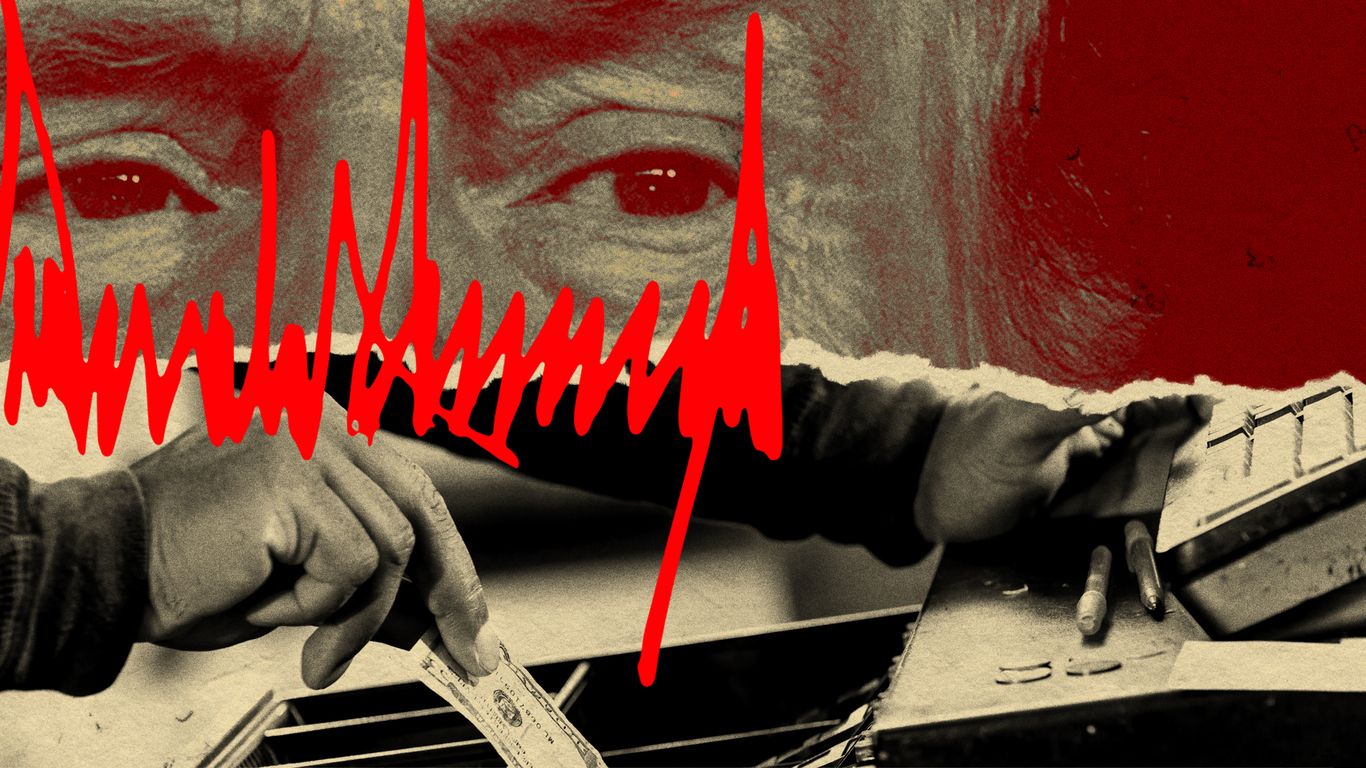
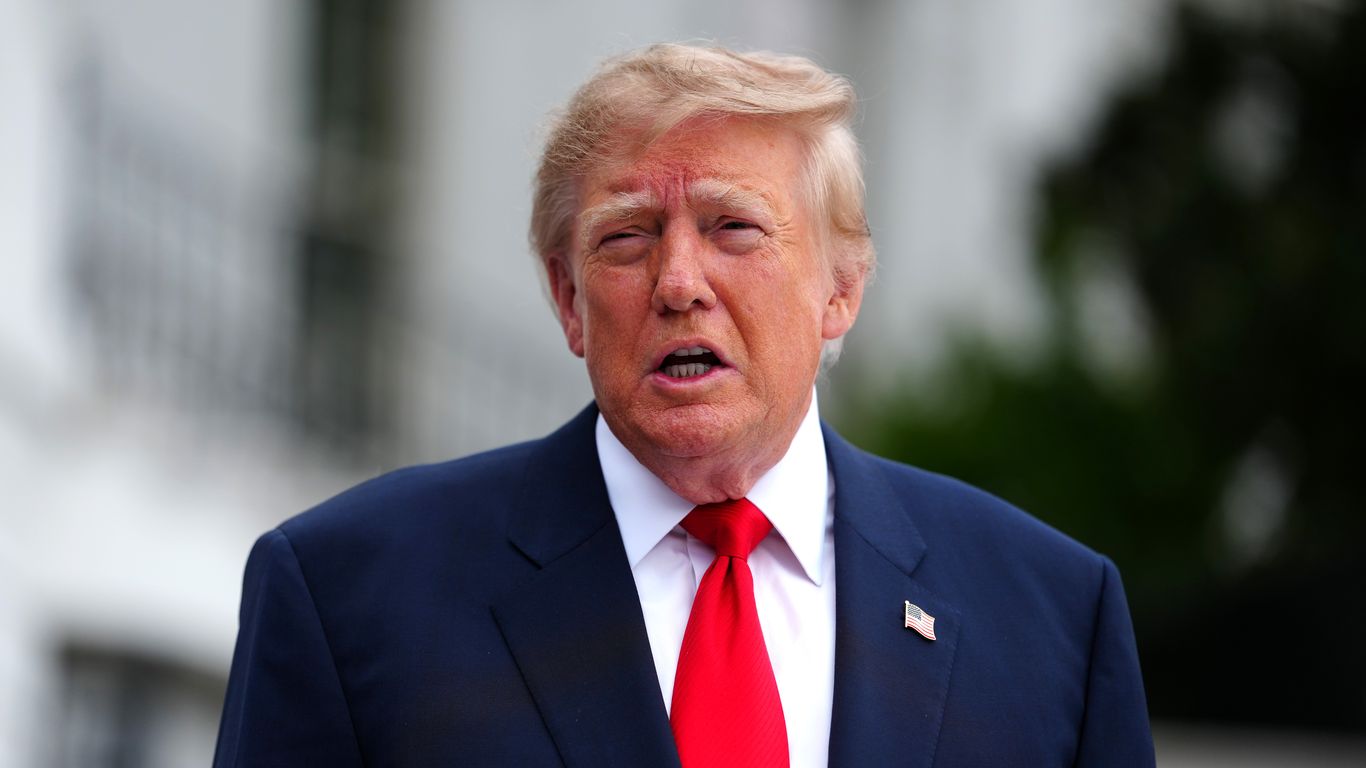
Republicans already saddled with Trump's unpopular policies in the midterms now face another awkward choice: whether to back his diesel deal with a dictator many of them despise. Why it matters: The agreement President Trump struck with Russian President Vladimir Putin Friday is designed to ease the cost of living for U.S. consumers. But Republicans who pleaded for help with fuel prices now face a fresh dispute over Russia, with energy analysts questioning whether the deal will deliver the relief Trump is promising. The big picture: With three weeks until Election Day, Republicans are trying to answer voter anger while keeping up with a president whose proposed fixes keep becoming political liabilities of their own. Trump's decision to lock arms with Putin adds another complication. Driving the news: Weeks after signing a sweeping Russia sanctions law, Trump announced Friday that Russia would supply diesel to U.S. and global markets. The next day, Trump blamed Ukraine for soaring diesel prices and called for President Volodymyr Zelensky to be replaced, even as Russia continued attacking Ukrainian cities. Republicans who just supported squeezing Moscow have three options in the final sprint for control of Congress: defend Trump's reversal, break with him or stay quiet. Zoom out: The diesel deal packs some of the GOP's biggest liabilities into one decision: the Iran war's economic fallout, the party's split over Russia and a president determined to make the election about himself. The deal also reverses Trump's own pressure campaign. Last year, he slapped an extra 25% tariff
Four CFR experts explain why Treasury’s market interventions haven’t lowered bond yields, how the sell-off is spreading abroad, and how AI spending and higher oil prices are affecting the bond market.
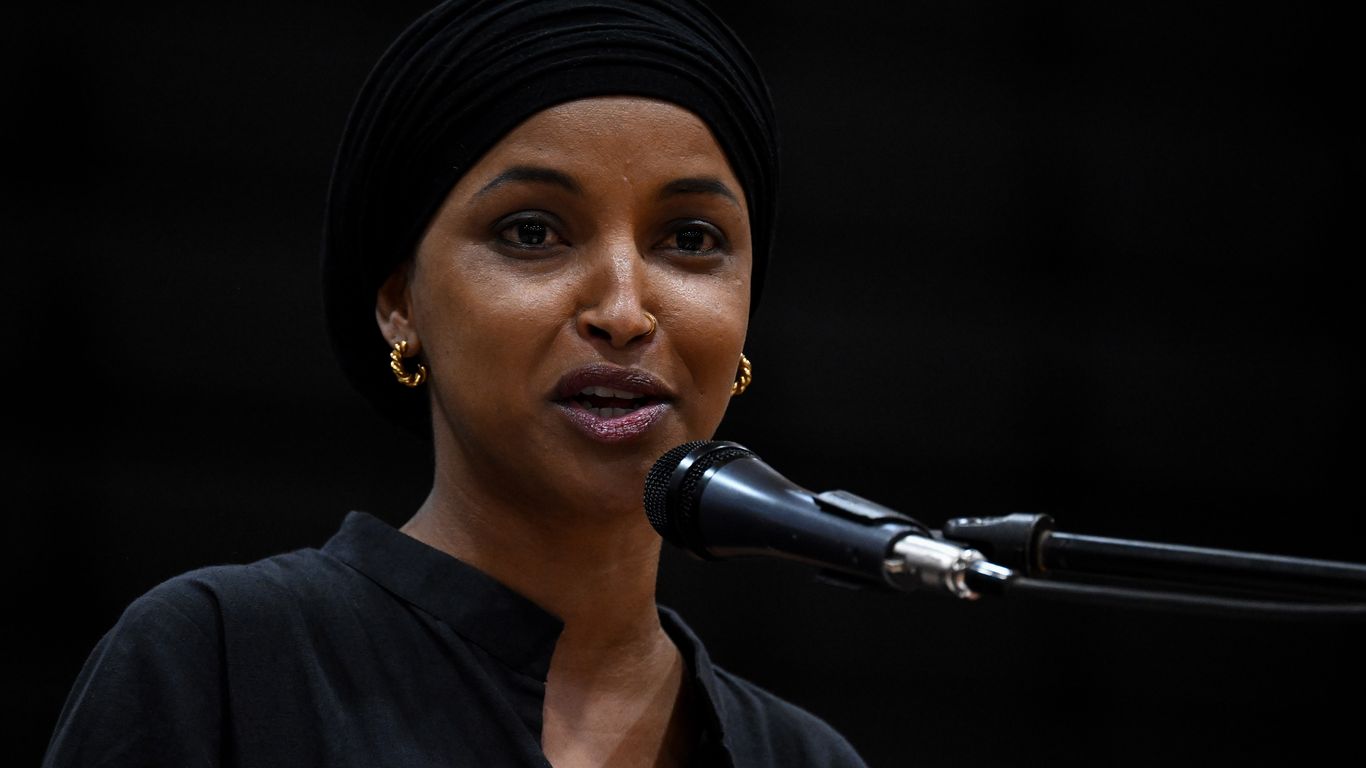
Federal agents conducted a pre-dawn search Monday at the Washington home of Rep. Ilhan Omar (D-Minn.) as part of an ongoing immigration probe, a DOJ spokesperson confirmed to Axios. Why it matters: Searching Omar's home marks a substantial escalation of the Trump administration's fight with the outspoken progressive, who has condemned the immigration crackdown in her state. Driving the news: Fox News first reported that Homeland Security Investigations agents conducted the search, citing a Justice Department statement. A DOJ spokesperson confirmed to Axios that DHS agents "executed a judicially authorized search warrant secured by the Department of Justice" as part of an ongoing federal criminal investigation. DHS referred Axios to the DOJ. Rep. Omar's office did not immediately respond to Axios' requests for comment. Zoom out: Last month, border czar Tom Homan confirmed an ongoing criminal probe into Omar, though he declined to offer details. Fox reported Monday that the search was tied to a fraud investigation into Omar's immigration paperwork. The Somali native came to the U.S. in 1995 as a 12-year-old refugee. The intrigue: President Trump has made Minnesota's Somali community one of the most frequent targets of his anti-immigration rhetoric, and Omar the face of those attacks. Just last week, he called on Minnesotans to " fight back " against the state's Somalian population. He's also specifically demanded that Omar leave the country, or that she be deported . Editor's note: This story has been updated with additional information.
The Mecca Pact moves to collective defense, but its members will not fight the Houthis for each other. The post Houthi Strikes on Riyadh Test the Mecca Pact | Geopolitics Weekly appeared first on Geopolitical Monitor .
Both parties will be pressured to intervene more in markets after the midterms as economic frustration animates the new Congress, according to an FGS Global sketch of 2027 Washington scenarios, shared first with Axios. Why it matters: In a Trump-dominated Washington, Congress ceded much of its power and relevance. That'll change three weeks from Tuesday if Democrats win the House, as expected, and perhaps the Senate in the midterms. The new analysis by FGS , a worldwide strategic leadership advisory with huge clients, is a sequel to a popular FGS report that Jim VandeHei and I used as the basis for a series of popular "Behind the Curtain" columns before the 2024 elections. FGS bills "Alternative Futures: Beyond November" as a framework for processing the epic battles ahead: how power will get used, how both parties will evolve, and how business leaders can navigate the uncertainty. "The 2026 midterms will begin — not end — a 27-month period of unusually high strategic uncertainty," the report says. Zoom in: Michael Feldman — FGS partner and co-chairman, North America — tells me that for Republicans, "intervention may mean tariffs, industrial policy, domestic manufacturing incentives, and other measures aimed at strengthening U.S. production capacity, economic security, and competitiveness." "For Democrats, intervention may mean affordability policies, labor protections, antitrust enforcement, plus regulation designed to reduce costs, curb concentrated corporate power and address inequality." "Everyone is focused on who controls Congress," Feldman added. "We think the more i
President Trump has privately shared misgivings about livestreaming the firing-squad execution of a former Army major who murdered 13 people at Fort Hood in Texas, according to four people who have spoken with the president. Why it matters: Trump has been deluged with "negative input" about the idea from a bipartisan chorus of lawmakers as well as advisers inside and outside of his White House, a senior administration official said. A livestream of former Army Maj. Nidal Hasan's execution on Dec. 3 "might not happen," Trump told one confidant, who doesn't work in the administration and shared the comment with Axios. "He didn't sound particularly enthusiastic" about webcasting the execution, the source said. "That's why he's calling around, doing the Trump thing, asking people what they think." Zoom in: Hasan faces a firing squad at Fort Hood, where he went on his murderous shooting rampage 17 years ago. He would be the first person in the U.S. whose execution would be livestreamed. Defense Secretary Pete Hegseth announced the norm-shattering idea Thursday on Real America's Voice. "We'll make sure that people are able to watch it — that it's public — because people need to understand that there's serious consequences for these types of things," Hegseth said. Zoom out: The idea was roundly condemned domestically and internationally . In the ensuing days, Trump started to publicly shift his positions: At first, Trump was full-throated in his support. "Absolutely, I approve," Trump told reporters early Friday evening. Later that night, Trump was more nuanced : "They want to do
The Council on Foreign Relations (CFR) is pleased to announce a transformative $15 million gift from the Blavatnik Family Foundation to strengthen and expand the Blavatnik Internship Program. Including both endowment and current-use support, this generous commitment more than doubles the foundation’s original investment in the program and builds on its remarkable success. “We hope […]
NBC President of Editorial Rebecca Blumenstein spoke to CFR about the experiences, risks, and mentors that have shaped her career, from small-town newsrooms to some of the country’s most influential news organizations.
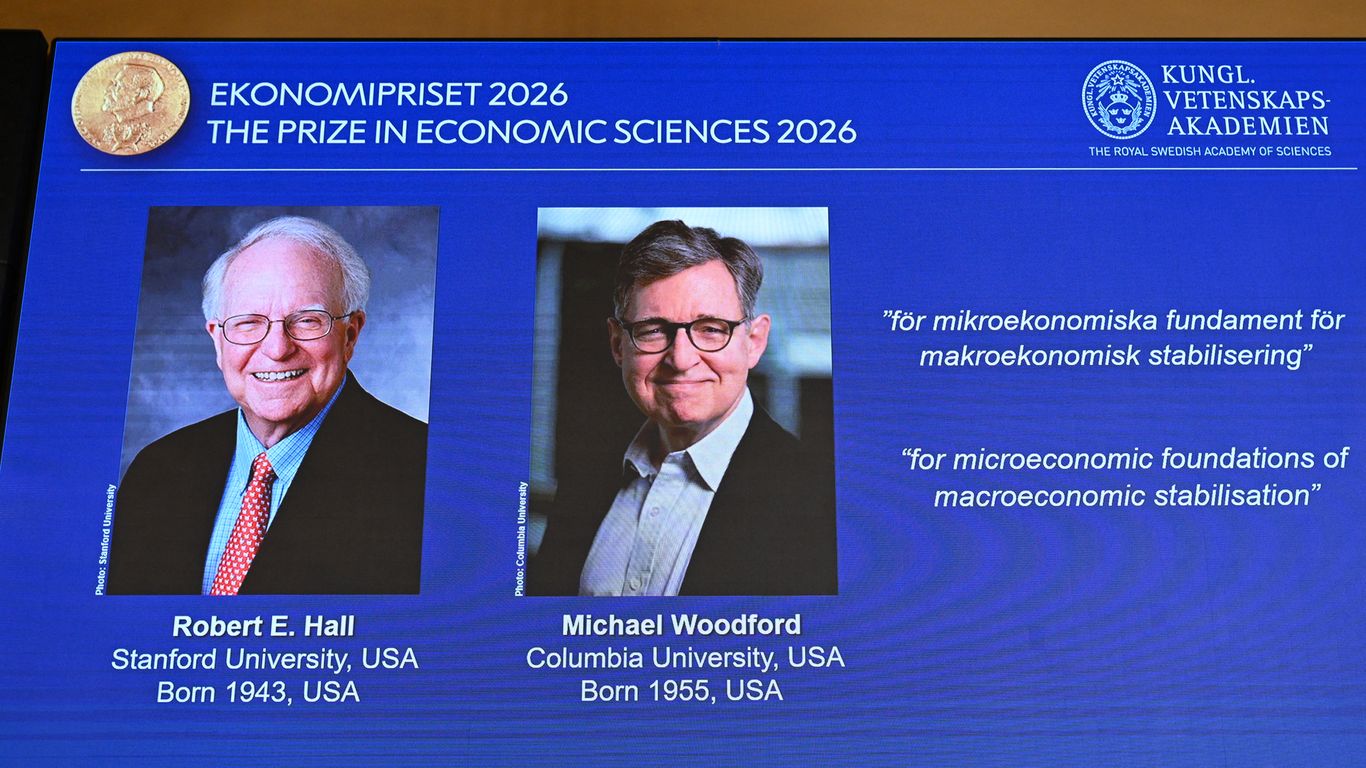
Stanford University's Robert E. Hall and Columbia University's Michael Woodford won the Nobel Prize in economics for research on how policymakers can stabilize economies , the Royal Swedish Academy of Sciences said on Monday. Why it matters: Their work helped shape how central banks set interest rates and communicate policy. The win comes as those institutions fight energy-driven inflation and risks to economic growth. Zoom out: For decades, policymakers relied on economic models that linked higher inflation with lower unemployment. But that framework broke down during the 1970s stagflation when both prices and joblessness surged at the same time. "The solution by Robert Hall and Michael Woodford was to build a new framework ground up," Timo Boppart, a member of the Nobel economics prize committee, said on Monday. What they're saying: Woodford, who called into Monday's press conference hosted by the committee, said he was "elated" by the win. " It's a tremendous honor. It's a surprise — but I'm feeling very good about it," Woodford said. The intrigue : Asked by a reporter about the threat to the global economy, Woodford said the Middle East conflict has disrupted energy markets and driven price changes with consequences far beyond the region. He pointed to the 2008 financial crisis as a key test of his research, when central banks cut interest rates to near zero but struggled to revive economic activity. His framework helped explain how other tools, including forward guidance and asset purchases, could support the economy. Zoom in: In research culminating in a landmark 2003
The US military is set to change how it selects general and flag officers. Going forward, it will incorporate a “Joint Warfighter Evaluation (JWE)” into the selection process. Each service […]
A September advance by the Iran-backed Houthi movement (Ansarallah) down the Red Sea coast has expanded the Yemen conflict, drawing several outside actors into the fighting. The Houthi seizure of territory astride the key Bab el-Mandeb Strait, through which nearly 10 percent of global trade passes, elevated the global significance of the Yemen conflict. The […] The post Outside Powers Respond to Instability in the Red Sea appeared first on The Soufan Center .
A federal judge on Sunday ordered the Trump administration to immediately halt taxpayer-funded ads featuring President Trump. Why it matters: The ruling temporarily blocks the ads weeks before November's midterm elections as multiple lawsuits challenging the Trump administration's use of taxpayer money play out in court. Sunday's ruling stems from a suit filed in the Southern District of New York by Washington, D.C.-based watchdog Common Cause, non-profit Democracy Forward and other plaintiffs. A similar lawsuit , filed by the Democratic National Committee, was filed in D.C. federal court earlier this month. The big picture: The Trump administration maintains that the ads are public service announcements and that previous Republican and Democratic administrations have used taxpayer-funded advertising to promote government policies. Trump pledged to pay for the ads himself after both lawsuits were filed, though the White House told Axios there were no plans to reimburse the government for millions already spent on the ads. Driving the news: The plaintiffs in the New York lawsuit allege that the Trump administration exceeded congressional authorization and violated restrictions on publicity and propaganda. In a brief order , U.S. District Judge Jennifer Rochon found that a motion filed by the coalition was "not moot." She found they had "demonstrated that they are likely to succeed on the merits, will suffer irreparable harm in the absence of an injunction, the balance of the equities tips in their favor, and an injunction serves the public interest," according to the order.
Pete Buttigieg has been able to campaign for Democrats across the country more than many of his potential 2028 rivals this past year. One reason: He doesn't have a job. That's by choice. Buttigieg said no when top Democrats urged him to run for governor or the U.S. Senate in Michigan this year. Why it matters: That decision is a gamble for Buttigieg's presidential ambitions. He's been able to build a national network over the last two years but hasn't added to his relatively thin resume as a former mayor of South Bend, Ind., and Joe Biden's transportation secretary. Buttigieg, 44, became a national political figure without following the typical path. He ran for president in 2020 as a small-town mayor and won the Iowa caucus by offering an optimistic vision and impressing voters with his communication skills — including in hostile environments. Driving the news: In early 2025, Democratic lawmakers and strategists including New York Sen. Chuck Schumer and former Michigan Sen. Debbie Stabenow urged Buttigieg — who had moved to Michigan — to run for office in his new state. Winning such an office, they argued, would help Buttigieg build his resume for a future White House run and give him a chance to distance himself from the unpopular Biden administration. Buttigieg passed, citing both a desire to stay home more with his husband and young twins, and figuring that he could still get his message out without being in the Senate. Instead, he set about building a larger national network among Democrats — particularly with Black voters in the South, where he had struggled in the 202
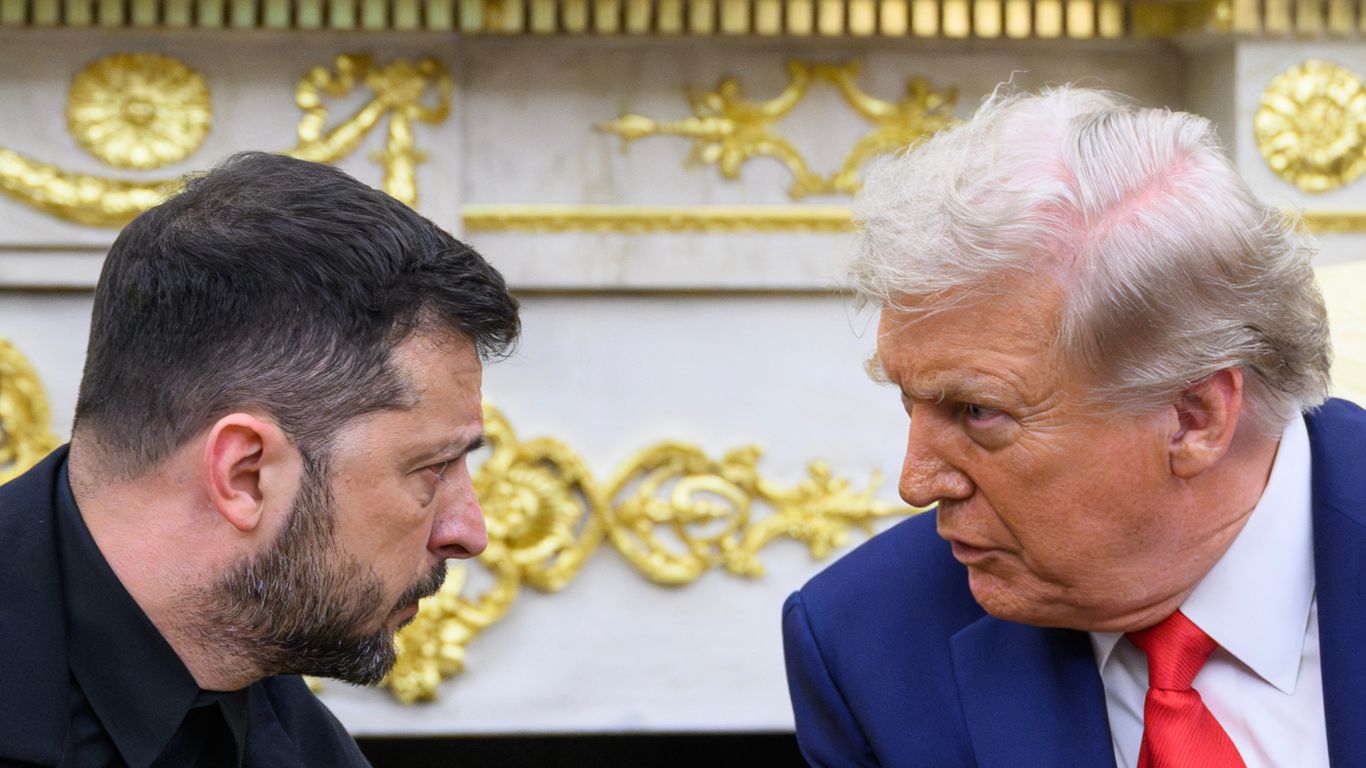
President Trump's announcement Sunday about an "energy ceasefire" between Russia and Ukraine referred to a potential deal that includes each side stopping attacks on oil refineries — and he expects Volodymyr Zelensky to abide by it, a White House official said. The official said if attacks on oil refineries cease, a deal to stop hitting power plants and energy grids could come next. Why it matters: Trump appears to be singlehandedly trying to will a partial ceasefire into existence. But for now Russia hasn't accepted any kind of ceasefire — and Ukraine wants one that forbids attacks on power plants. Reality check: The "refinery for refinery" proposal, as the official dubbed it, is lopsided. A Ukrainian official told Axios that the country has a single oil refinery which the Russians have attacked multiple times and isn't fully functional. Russia, by contrast, has a vast network of refineries. "We import diesel and gas. What we need is for the Russians to stop attacking our electricity grid," the Ukrainian official said. "The Russians are thinking about" it, the White House official said. "We will know soon if they are ready." Case in point: Hours after Trump's announcement, Russia conducted strikes on power plants in Ukraine, according to Ukrainian media. What he said: Trump's Truth Social post sounded at first like a major breakthrough. "Effective immediately, there is an ENERGY CEASEFIRE in the War between Russia and Ukraine. Both parties have agreed. Do not break it!" he wrote. It appears much more tenuous than that. Zelensky said the announced ceasefire "was news for me