

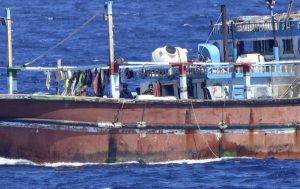
Somali piracy has resurged in 2026 and now forms one of the many active threats to international shipping, according to International Maritime Organization data. Piracy off the Horn of Africa in 2026 is at its highest level since 2013, with 25 incidents recorded by mid-September, according to a tally by the European Union Naval Force Operation Atalanta. Under the United Nations Convention on the Law of the Sea (UNCLOS), piracy includes any illegal acts of violence or detention, or any act of depredation, committed for private ends by the crew or passengers of a private ship against another ship on the high seas. Somali piracy, including armed robbery at sea within Somali territorial waters, typically follows a similar pattern: pirates employ dhows and hijacked fishing vessels as ‘mother ships’ to deploy faster, smaller boats offshore for attacks. Close to the coast, they also launch attacks directly from these small skiffs. The usual tactic then involves holding the ship, the crew, or both for ransom.
The root causes of the current phenomenon trace back to the Somali state’s collapse in 1991, after the fall of Siad Barre, which created a power vacuum that left Somalia’s roughly 3,500-kilometer-long coastline without a coast guard for decades. With limited oversight, foreign fishing vessels flooded Somalia’s waters, undercutting local fishermen and disrupting the local economy. Some armed groups eventually emerged in response. However, piracy by these ‘vigilantes’ quickly festered into a major security concern — especially from 2005 to 2012, when it transformed into a formally organized enterprise — because no state body was able to contain it.
The international response to the peak in piracy in the late 2000s and early 2010s included UN Security Council resolutions. First, through these resolutions, naval forces started to patrol the region’s waters, most notably the EU’s Operation Atalanta, whose areas of operations include the Somali Basin, the Red Sea, the Gulf of Suez, the Gulf of Aqaba, and the Gulf of Aden. Second, the industry adapted to the threat and implemented stronger security practices and standards on board to protect the crew. Third, the shipping industry began deploying privately contracted armed security personnel (PCASP) on ships crossing this stretch of Africa’s coastline. While these responses significantly reduced attacks, they did not address the root ‘land-borne’ causes of lack of governmental response, economic insecurity, and a lack of prevention.
The latest surge in Somali piracy should be understood in this context. Sea-based deterrence has weakened dramatically as multiple geopolitical crises in the region reshuffle naval assets. Certain anti-piracy patrols already moved to the Red Sea as early as 2023, when the Houthis held that artery of global trade hostage. Warships have also moved to the Strait of Hormuz since the U.S. and Israeli war on Iran started in February 2026, undercutting a layer of deterrence. It is not just less friction; supply has also increased for Somali pirates. Disruptions in shipping lanes since the start of the war in the region have seen more vessels pass the Somali coast. This has brought the land-based root causes of Somali piracy to the fore once more: the lack of a functioning Somali coast guard, enduring poverty and unemployment in certain regions — exacerbated by the dismantling of U.S. aid programs in the country — and a disrupted local fishing ecosystem contending with foreign trawlers.
One important root cause has been clan protection and so-called ‘financiers’. During the 2005-2012 peak, when Somali pirates collected between $339 million and $413 million in ransom payments, pirates could often anchor hijacked ships and their crews off the coast as long as the ransom payment would eventually also benefit government officials, clan elders, and local communities. In 2013, the World Bank estimated that as much as $300,000 of a single ransom payment could go directly to businessmen, clan leaders, and local politicians, essentially as bribes. The financiers who actually fund the pirate action groups often take between 30 and 75 percent of the ransom payment, with the ‘muscle’ of the operation receiving far less.
Piracy is also linked to terrorist groups in the region. According to the 35th report of the United Nations Monitoring Team, the quid pro quo relationship between al-Shabaab, the al-Qaeda affiliate in Somalia, and the Houthis, the Iran-backed group in Yemen, includes al-Shabaab upping its piracy operations, in return for the Houthis providing advanced weapons and training. Meanwhile, the 37th report indicates that al-Qaeda in the Arabian Peninsula (AQAP) has received a share of al-Shabaab’s piracy revenue, though this appears to be revenue from ‘pay to pass’ fees rather than hijacking for ransom.
So far, the resurgence in piracy has not changed the international response, which remains focused on deterrence. Several African and Gulf countries, along with France, have backed a proposed new counter-piracy task force. Meanwhile, Operation Atalanta warships have continued their strategy of following captured ships and mother ships. This, at times, has worked: in one instance in September 2026, pirates boarded the Glamor, a merchant ship, in the Gulf of Aden, with the crew locking themselves in the ship’s citadel. When Atalanta, a Japanese patrol aircraft, and the Indian Navy responded, the pirates left. Nonetheless, some incidents highlight the difficulty in responding: the cargo ship Sward, captured in April 2026, was released only after 138 days. Pirates reportedly used the ship as a ‘mothership’ to extend their reach and hijack other vessels, including the MV Lutuf. The Somali Federal Government and the Turkish Navy said that they retook the Lutuf by force, but Puntland authorities said that a ransom of $2.5 million was paid.
In addition to these paid ransoms, the changing seasons also do not bode well for the rest of the year. According to the Baltic and International Maritime Council (BIMCO), an international shipping association that represents shipowners, military authorities assess that the southwest monsoon reduces piracy from June to August, because its strong winds and rough seas limit offshore operations. With the end of the southwest monsoon, operations could surge further, and the ransom payments received over the past months could fund new operations. With ‘land-borne’ conditions showing no sign of changing and pressure on pirate action groups at sea decreasing, this threat to global shipping adds to a system already overloaded with blocked straits, high insurance prices, and high petroleum prices.
The post Second-Order Effects from Hell: A Resurgence in Somali Piracy appeared first on The Soufan Center.