Sri Lanka’s Economic and Geopolitical Balancing Act
Economic recovery has brought Sri Lanka a modicum of stability, but domestic strains and great-power rivalry could test how long it lasts.
Tue, 13 Oct 2026
Economic recovery has brought Sri Lanka a modicum of stability, but domestic strains and great-power rivalry could test how long it lasts.
Today’s global democratic recession is partly rooted in a common perception that democracies have a delivery problem, with many citizens in both autocracies and democracies alike now believing that strongmen can achieve better governance outcomes. But a study of four countries in Africa reveals that democratic-leaning governments have demonstrated better governance performance than autocratic governments.
Applications are now open for an intensive online course on weapons of mass destruction (WMD) non-proliferation and disarmament in an era of technological convergence.
On 23 September, SIPRI’s Dual–Use and Arms Trade Control Programme delivered a workshop in Canberra on ‘Developments in China’s Export Control Framework: Implications for Australia and Multilateral Cooperation’.
This blog highlights how climate change and landmine contamination can interact to create new security risks.
Fighting Without Holding: Why Military Operations Fail to Produce Security in West Africa / Texas National Security Review (Oct 5, 2026) jorik Tue, 10/06/2026 - 09:31 Link https://tnsr.org/2026/10/converting-military-capacity-into-durable-security-in-… Media type Globe User Kars de Bruijne
Somali piracy has resurged in 2026 and now forms one of the many active threats to international shipping, according to International Maritime Organization data. Piracy off the Horn of Africa in 2026 is at its highest level since 2013, with 25 incidents recorded by mid-September, according to a tally by the European Union Naval Force […] The post Second-Order Effects from Hell: A Resurgence in Somali Piracy appeared first on The Soufan Center .
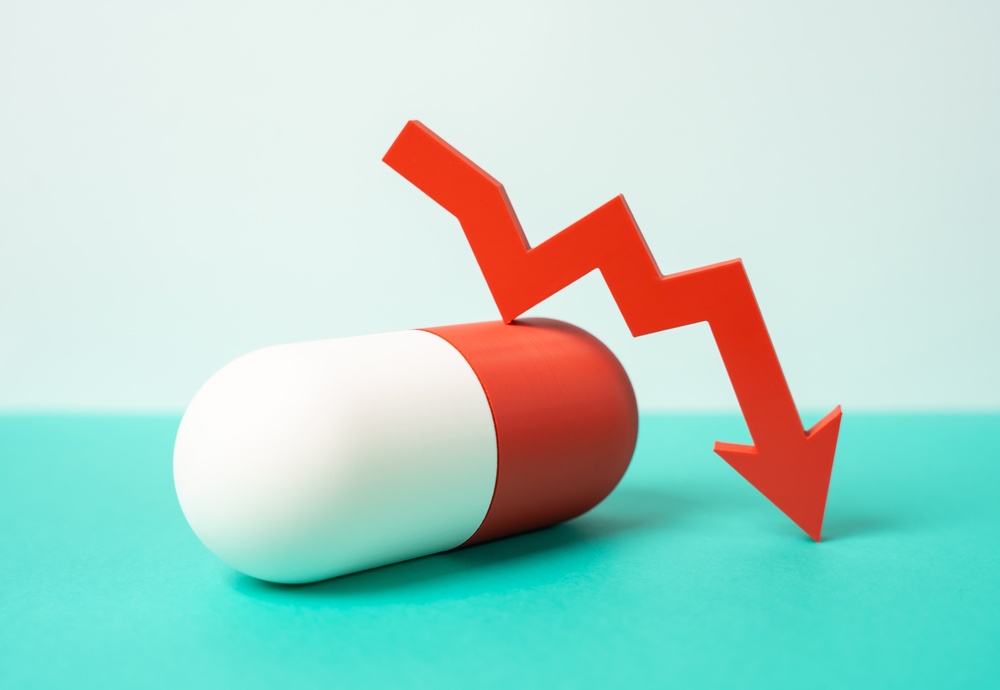
Introduction In the spring of 2025, eleven EU health ministers described Europe’s dependence on Chinese medicines as the weak point in Europe’s defense. The warning was accurate but largely ignored. For twenty of fifty-six active pharmaceutical ingredients (APIs) that German regulators classify as essential to supply, enough of the world’s production sits in China that […]
A new Sahel telecom regulator is clearing the way for Russian satellites, and possibly Russian control of the data. The post Digital Sovereignty or New Dependency? Russia’s Satellite Project for the AES appeared first on Geopolitical Monitor .
Latin America’s largest democracy will hold a runoff presidential election on October 25. Experts say the result could reshape Brazil’s regional and international relations.
As the next presidential election looms, anxiety about the Nigerian president’s physical condition is growing.
The US tariff on India's Russian oil was always a bargaining chip, not a stand on principle. The post Trump’s India Tariffs over Russian Oil Were Never about Principle appeared first on Geopolitical Monitor .
Despite a new textbook, an influx of Russian teachers and managers, and an end to the teaching of Ukrainian, the Kremlin is unlikely to have “reprogrammed” locals.
Policy proposals on sovereign debt must both match the scale of the challenge and be implementable within existing political constraints.
On 16–17 September, SIPRI, IAI and UNTFHS convened a two-day dialogue in Rome on human security in Europe and the Mediterranean.