The Plaza Accord was not an externally imposed punishment of Japan but part of a broader restructuring that Japanese economists and policymakers themselves recognized was necessary. Its effects were undermined, however, when Tokyo responded to the resulting slowdown with policies that exacerbated investment, credit expansion, and the very imbalances the adjustment was intended to resolve.
China rising, America in decline? The Trump-Xi summit Audio sseth.drupal@c… 25 September 2026 In this week’s episode of Independent Thinking, our experts discuss the Trump-Xi summit in Washington and the increasing competition between the two superpowers. President Donald Trump welcomes Xi Jinping to Washington with the US-China dynamic in a moment of historic flux. China is rising economically and militarily, while the US is mired in the Iran war, alienating allies and pursuing Trump’s unpredictable trade and tariff disputes. What do the two leaders want from this meeting, and will they get it? Can they reconcile their differing economic powers, the competition for critical minerals, and their radically contrasting visions for artificial intelligence. And in the longer term: who will dominate the 21st century? Does Xi really want to retake Taiwan for China before his time in power ends? Or is the US-Chinese dynamic more complex and perhaps less alarming? To unpick these threads Bronwen Maddox is joined by three experts from Chatham House’s Asia-Pacific Programme: programme director Ben Bland, senior research fellow Dr Yu Jie and associate fellow Dr Bill Hayton. About Independent Thinking Independent Thinking is a weekly international affairs podcast hosted by our director Bronwen Maddox, in conversation with leading policymakers, journalists and Chatham House experts providing insight on the latest international issues. More ways to listen: Apple Podcasts and Spotify . Explore our other Chatham House podcasts .
During a year on the staff of the ROK/US Combined Forces Command in 2023, I never asked an American counterpart the question behind much of our work: Would the United […]
The increasing use of drones on the modern battlefield has sparked a great debate about their impact on the ever-changing character of warfare. Whether framed as evolutionary drivers of that […]
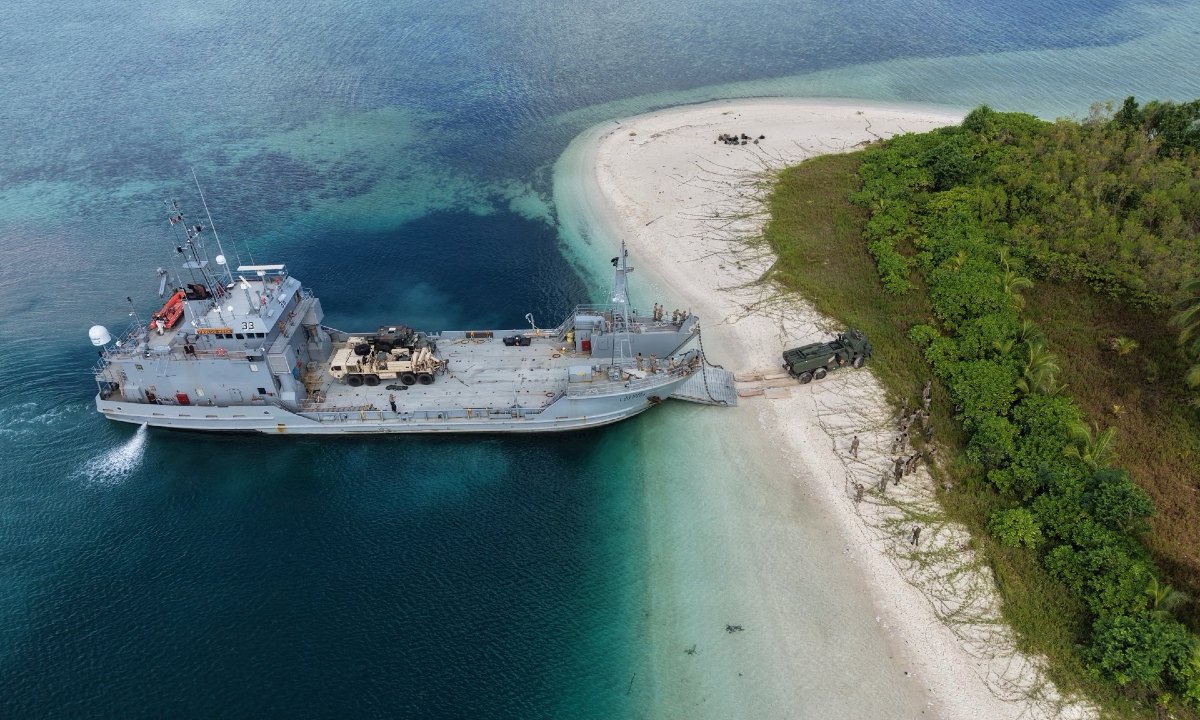
The 2025 National Security Strategy called for a “military capable of denying aggression anywhere in the First Island Chain.” During 2026, MWI focused its research efforts on understanding how the […]
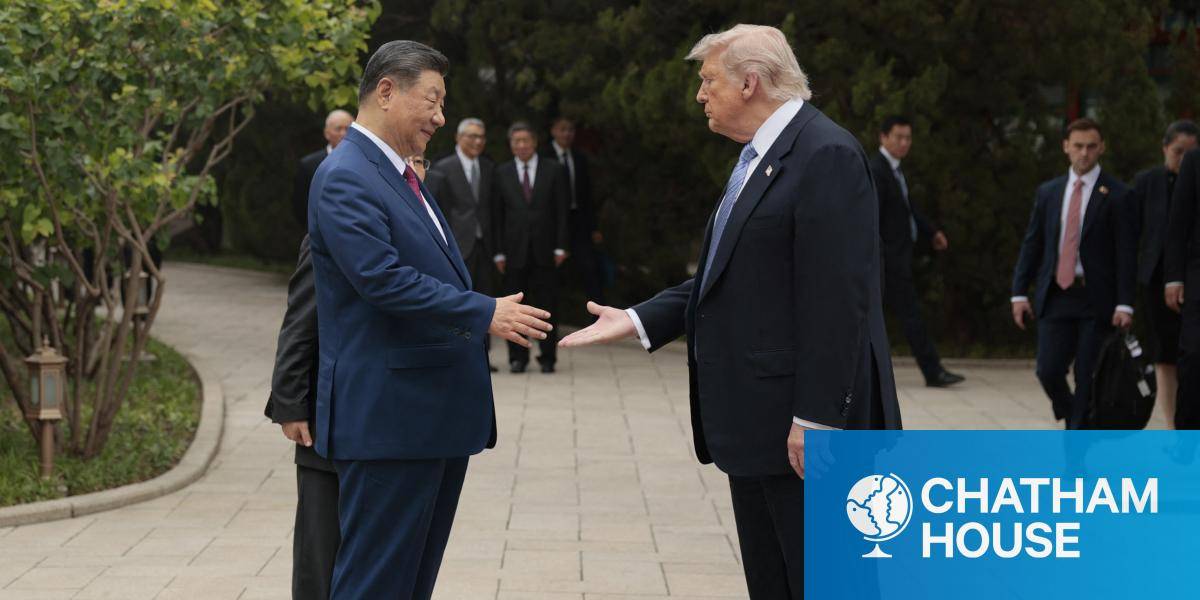
Trump–Xi summit: Why the US and China should not underestimate each other Expert comment LToremark 22 September 2026 The US and China both face serious domestic strains. As Trump and Xi meet this week to discuss trade, AI and Taiwan, neither side should mistake the other’s weaknesses for strategic decline. A superpower summit is a big deal. As US President Donald Trump and China’s President Xi Jinping meet in Washington this week, they have a lot to cover. They will try to extend a trade truce that expires in November, including China’s pause on rare earth export controls and America’s delay on chip restrictions. The leaders will also tackle Taiwan, where Beijing wants Washington to halt a $14 billion arms package, as well as China’s purchases of Iranian oil and a proposed dialogue on the national security risks of artificial intelligence (AI). In their negotiations, each side may be tempted to focus on the other’s weaknesses. But underestimating the other’s power would be unwise. China has many weaknesses – but should not be underestimated Many observers argue that China’s economic vulnerabilities will limit its international ambitions. Its growth model is faltering; its households still are not spending, so Beijing continues to push surplus production overseas. This has provoked a backlash of trade barriers from the US, EU and beyond. The property sector – once a quarter of the economy – is in its fifth year of slump, while a mountain of hidden local government debt threatens to drag down China’s growth for years to come. Meanwhile Xi’s government has become steadily more
Imbalances are a feature of the global financial system, not a bug Expert comment jon.wallace 17 September 2026 The current focus on ‘global imbalances’ is too easily used by policymakers as a smokescreen for their own domestic failings. Global imbalances are back on the international finance agenda this year, prompting a flagship G7 report and creating discord at the G20 finance minsters’ summit. Seemingly this focus on global imbalances is justified. China’s trade in goods surplus now alarms Europe’s leaders as much as it worries America’s. The US’s net liability to the world – the degree to which its overseas borrowing exceeds its overseas investments – reached an astonishing 70 per cent of US GDP in 2025. The last time global imbalances were this prominent was just ahead of 2008’s Global Financial Crisis. What a shame, then, that this focus is so misguided. Imbalances are a feature of the global financial system, not a bug. They arise from saving and investment decisions, allowing diversification and dispersing risk in the process. In truth, ‘global imbalances’ are not primarily a global phenomenon. They are simply the product of all the world’s domestic imbalances added up. And because foreign investment is more mobile than domestic investment, it is more likely to punish bad domestic policymaking by moving elsewhere. The result is to impose discipline – constraints – on political choices. There is a generous interpretation of the motives for the current focus on global imbalances. It is possible that simultaneous domestic reforms across the global economy would make f
China is weathering the Hormuz energy crisis. But copying its model comes with risks Expert comment thilton.drupal 17 September 2026 China absorbed the shock by drawing on stockpiles and a decade of electrification. Europe needs electrification for security, but it needs to decide which parts of the system it is willing to buy from Beijing. Resources are no longer ‘king’ when it comes to energy, wrote Zhao Hongtu and Chen Wenlin in the 1 September 2026 edition of Qiushi , the Chinese Communist Party’s flagship theoretical journal. Mineral-rich economies may have some leverage, but the countries that control ‘transition-related technology, finance and rules’ will gain more influence as the world sees the rise of the ‘electrostate’, with ‘China, India and Brazil becoming the main force of new energy development.’ As a result of the US-Israeli war on Iran, argue Zhao and Chen, energy security has become a priority in national policymaking: ‘clean energy is seen as an important route to security’ and ‘economies that actively embrace the energy transition may occupy more important positions in the future global energy landscape.’ It is unsurprising that a CCP journal would commend China’s efforts in building renewable energy and managing the fallout of the Iran war. But the numbers support their conclusions. The oil importer most exposed to the crisis in the Strait of Hormuz – China imports 70 per cent of its oil, around half of it from the Gulf – has also been the least disrupted. Weathering the storm China’s strength in weathering the Hormuz crisis so far stands in contrast to
The Bureau of Industry and Security needs to adjust its focus and practices to maintain its position as the U.S. government’s primary champion of international technological competition.
Geoffrey IrvingTechnology, Trade, Economy, Domestic Politics, Foreign Policy, United States
What if a security commitment designed to preserve freedom of action ends up taking that freedom away? That possibility sits at the edge of the American debate over Taiwan. The […]
The world is undergoing a historical and cultural rupture. Just as Hollywood and other American exports once gave the rest of the world a glimpse of modern life and the future that awaited them, China is now doing the same for African, Latin American and even American young people
ECFR CommsAsia, China, China, Commentary, Mark Leonard
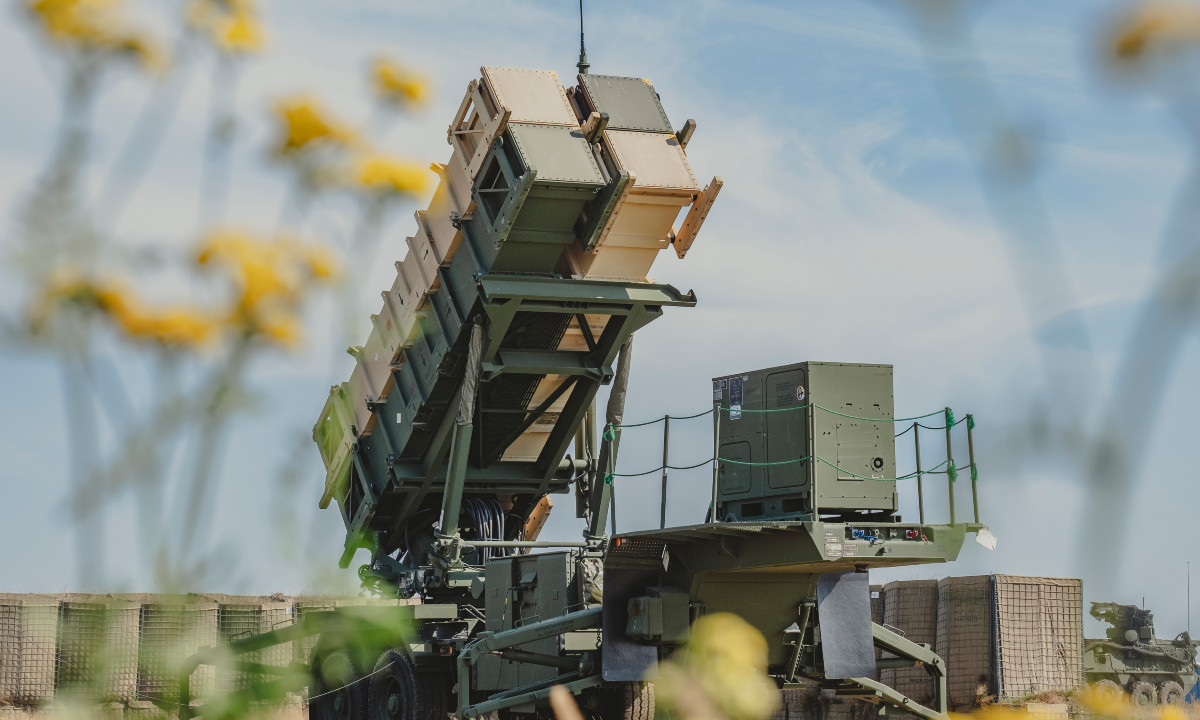
The US Army currently has fifteen Patriot battalions and eight THAAD batteries—finite resources that are badly needed across the service’s global operational footprint. EUCOM needs them to deter an ever-encroaching […]
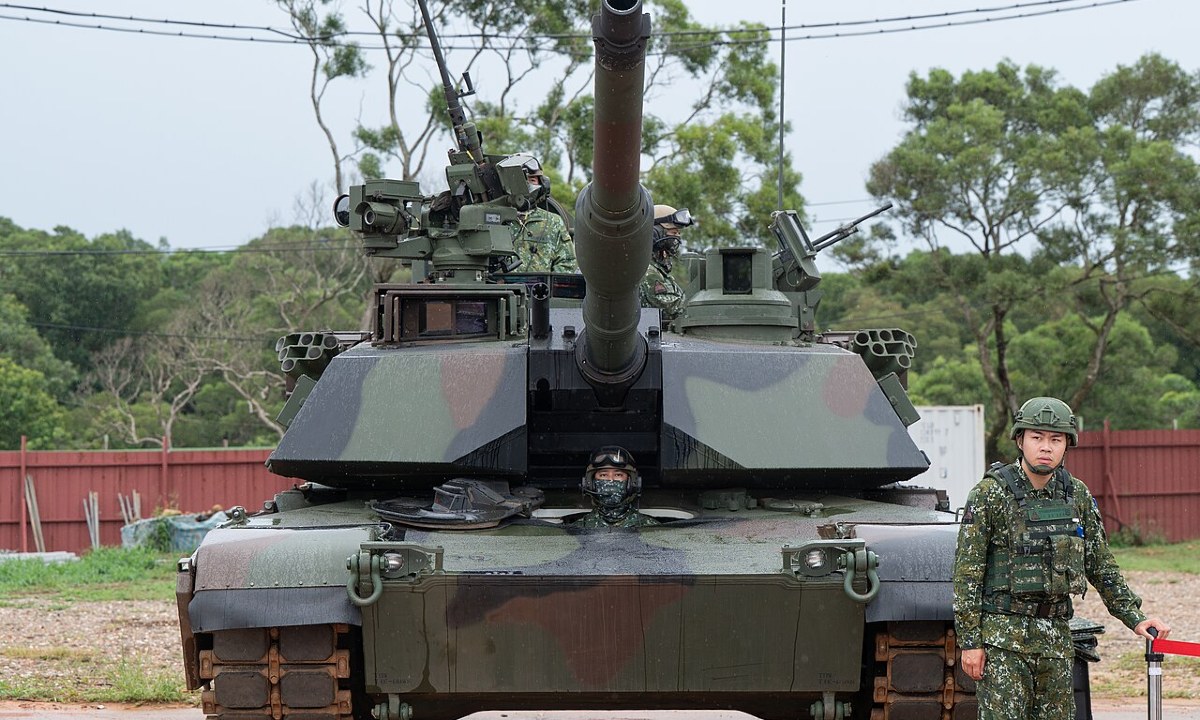
On August 14, Han Kuang 42, the field phase of the latest edition of Taiwan’s largest annual wargame, drew to a close. For many military hardware enthusiasts, the sight of […]
It is 2027. China has spent three years repositioning forces under cover of maritime exercises and coast guard operations. In October, Beijing declares an expanded air defense identification zone covering […]
Deterrence in the Pacific The Class of 2006 War Studies Conference is the culminating event of a yearlong MWI Fellowship bringing together both MWI Fellows and subject matter experts to […]
On March 5, 2022—four days before South Korea held what would become its closest presidential election in history—North Korea fired a suspected ballistic missile eastward into the sea. It was […]