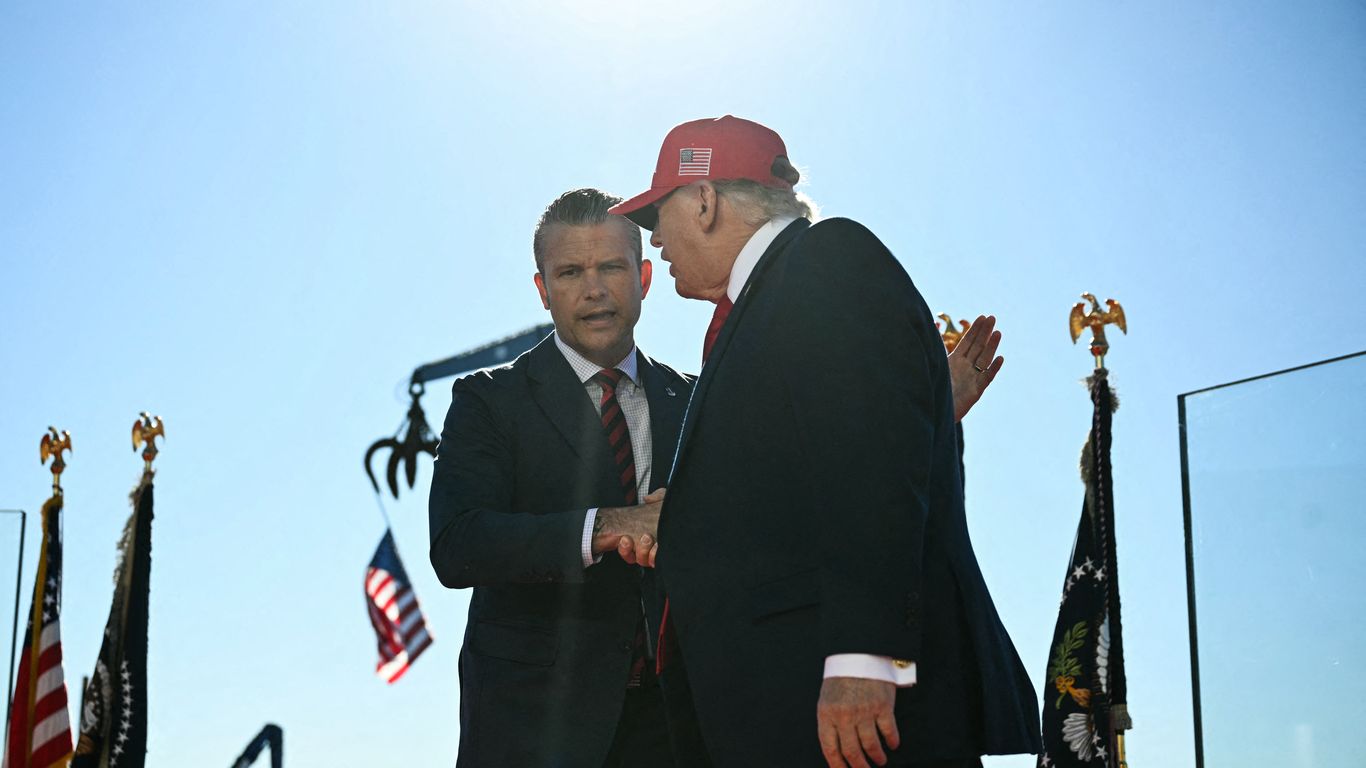
President Trump said in a Thursday Truth Social post the execution of the convicted Fort Hood shooter by firing squad will not be live-streamed. The big picture: The president's post walks back an idea that Defense Secretary Pete Hegseth pitched last week, setting off an avalanche of bipartisan condemnation. Driving the news: " He will die, as scheduled, by firing squad, but this event will not be streamed," Trump's post read. He added, "That said, the execution may be viewed in person by the immediate families of the victims, if they so choose." This is a breaking news story and will be updated.
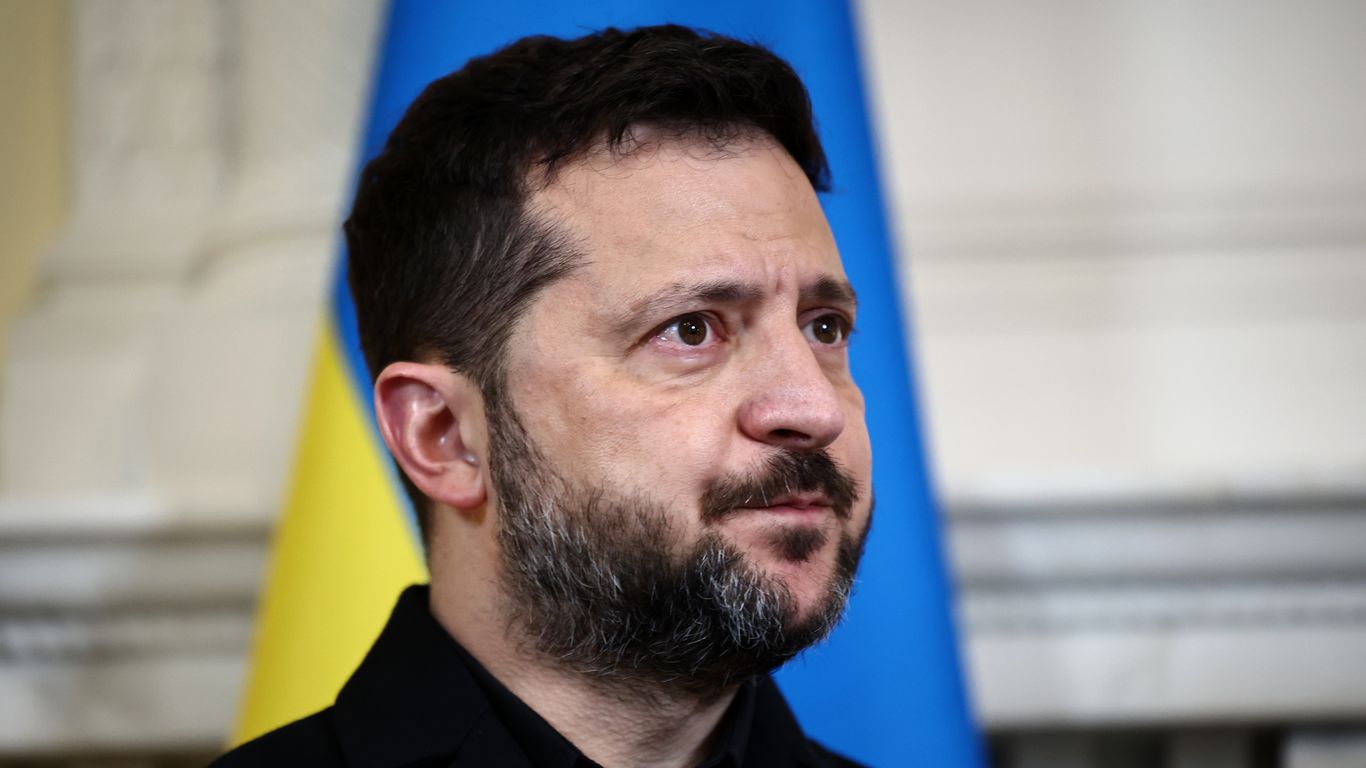
Ukraine's Starlink and Starshield satellite services — critical tools in its war against Russia that were unexpectedly throttled this week — have been restored to full capacity, a Ukrainian official tells Axios. The official also said that Ukraine conducted a strike overnight against a Russian oil refinery — defying President Trump's demand that it stop hitting those facilities. Why it matters: The twin developments further strained the U.S.-Ukraine relationship, as the war with Russia drags on and the Trump administration sided with Russian President Vladimir Putin last week by lifting sanctions on Russian oil sales. State of play: The move angered Ukraine. President Volodymyr Zelensky responded by calling it "a weak decision" and a "gift to Putin." Trump then called for Ukraine to elect a new president. The crisis intensified this week when Elon Musk's SpaceX restricted service of Starlink — a satellite service used for defensive purposes in battle — while Starshield, a tool used for offensive war operations that is controlled by the U.S. government, was also slowed. After more than a day, the services were restored. Ukraine, meanwhile, fired on a Russian oil refinery, which U.S. officials are unlikely to look kindly upon. The Ukrainian official said the country resumed strikes because Russia continued to hit Ukrainian energy infrastructure, despite Trump announcing that the two sides had agreed to a ceasefire. That declaration came as a surprise to Zelensky. The bottom line: It's still unclear to many inside the Trump administration and the Ukrainian government whether T
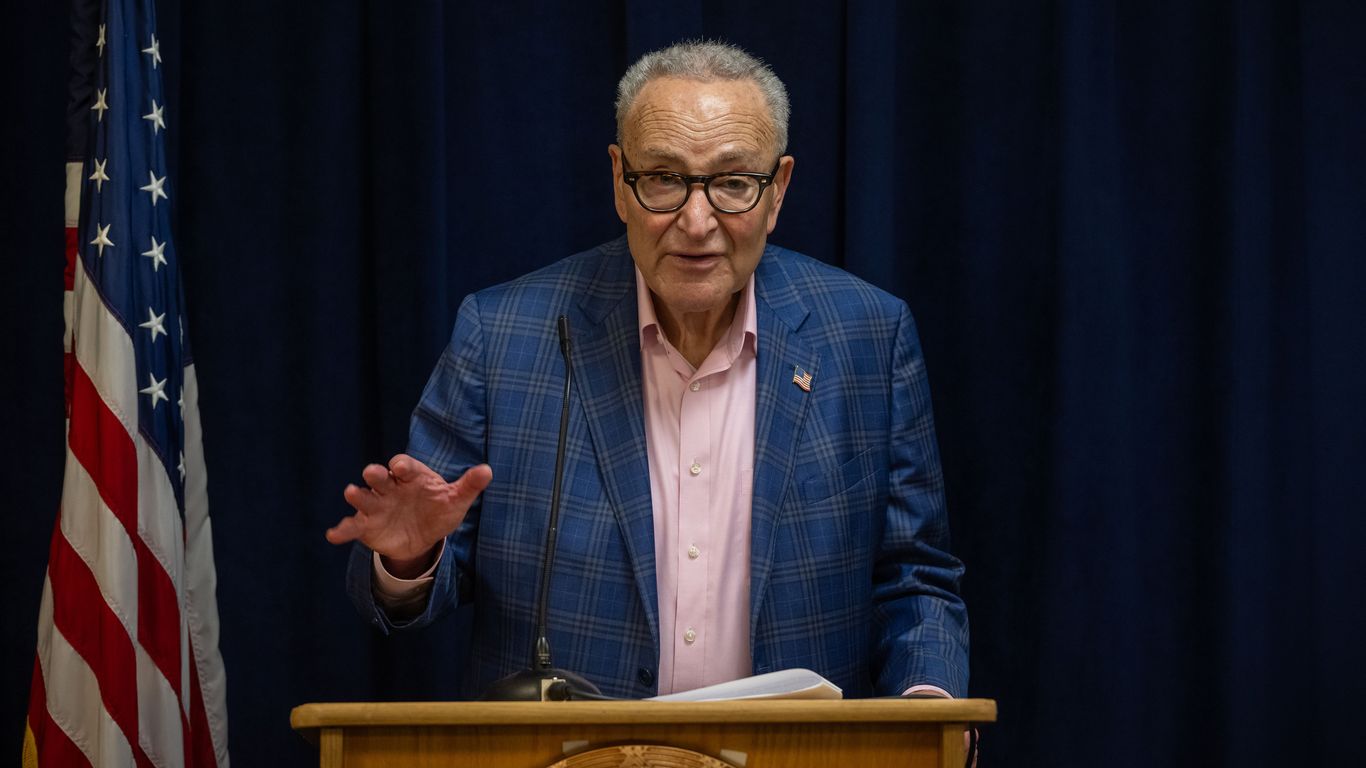
Senate Minority Leader Chuck Schumer (D-N.Y.) is on the cusp of leading his party to midterm victory and reclaiming his title as Senate majority leader. Winning the majority isn't guaranteed. But this son of Brooklyn, who has been in public life for 52 years, is more than favored to win a secret ballot to remain Democratic leader. Why it matters: At age 75 (76 by the time the new Congress convenes in January), Charles Ellis Schumer, an old-school pol who visits all 62 of New York's counties every year, looks poised to do what very few people do in life — go out on top. Behind the scenes: For starters, Democratic senators aren't quietly maneuvering — or publicly positioning themselves — to take the top job, according to senior aides. You can't beat someone with no one . A handful of Democratic Senate candidates, including Abdul El-Sayed in Michigan and Troy Jackson in Maine, haven't committed to supporting Schumer for leader. But they likely don't have the votes to stage a coup. And Schumer's super PAC is spending heavily to get them across the line. That calculus could change if Republicans overperform expectations with a massive win, potentially triggering a serious leadership challenge. Otherwise, the job is Schumer's for the asking — and he's asking. "I am running for re-election for leader. Period," he said two weeks ago. The intrigue: The bigger question surrounding Schumer involves 2028 and whether he'd retire at the top of his game or risk an embarrassing primary loss to, perhaps, Rep. Alexandria Ocasio-Cortez, who was born in the Bronx and represents parts of the Br
Gen Z and millennials have launched their biggest bid yet to remake Congress, but roughly seven in 10 were out by early September, a new report finds. Why it matters: These two generations are struggling to clear the first hurdles of a political system that rewards experience, fundraising and established party support. State of play: A new report from Future Caucus , a nonpartisan nonprofit that works with younger elected officials, found that a record share of this cycle's congressional candidates came from the nation's two youngest political generations. The group identified 3,918 candidates who filed for Congress this cycle, 31% more than in 2024. Of candidates with known or estimated ages, 36.4% were millennials or Gen Z, up from 23.4% in 2024. The report counts everyone who filed and doesn't track how many were first-time candidates. Between the lines : Many young candidates are trying to reach Congress without the political experience that helps candidates advance. Just 1.7% of Gen Z candidates and 9% of millennials have served in a state legislature. Among congressional challengers with age data, nearly 40% of those with state legislative experience reached the general-election stage, compared with 26.2% without it. By the numbers: Only 21.2% of Gen Z congressional candidates remained in the race at the report's September cutoff. That figure rose to 30.2% for millennials, 41.1% for Gen X and 44.5% for Baby Boomers. Nearly 33% of Gen Z candidates failed to qualify for a primary ballot, compared with 18.3% of millennials and 9.4% of Gen X. Incumbents averaged 59 years
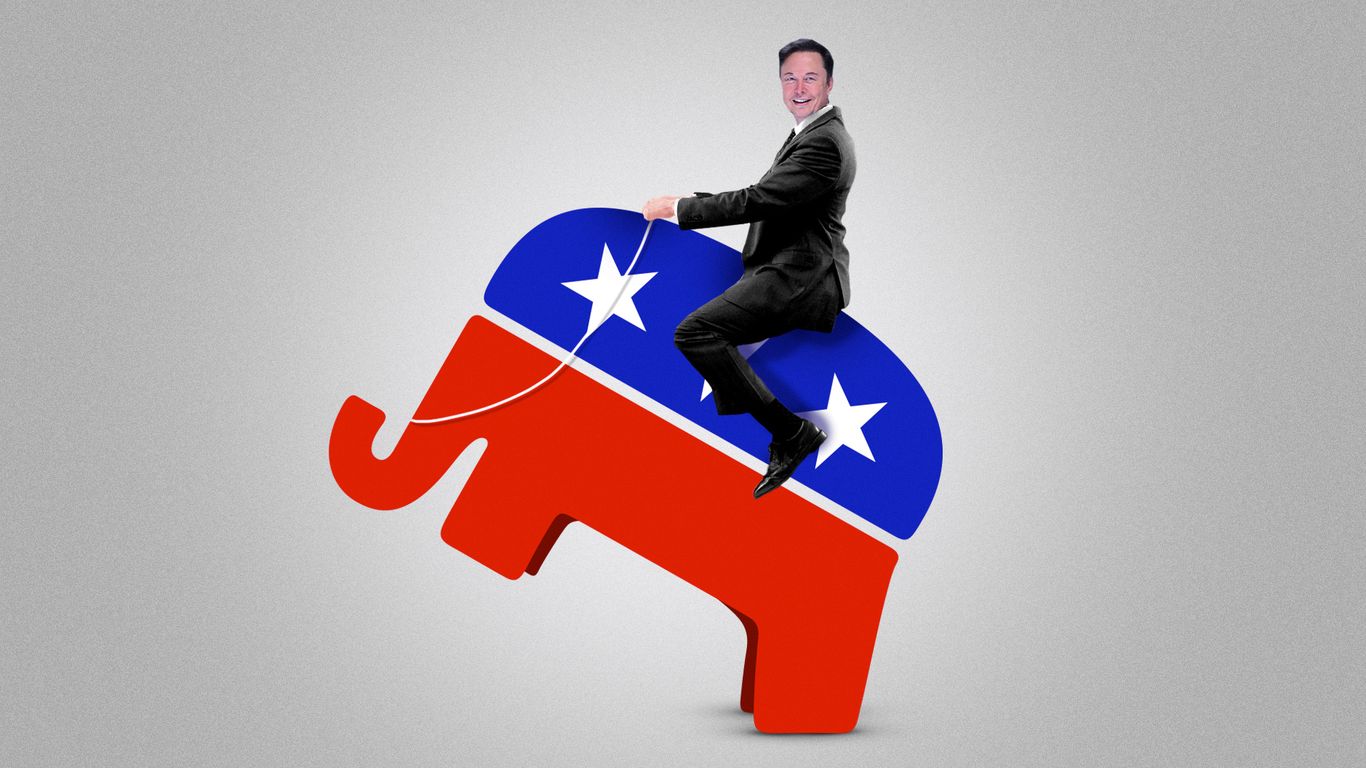
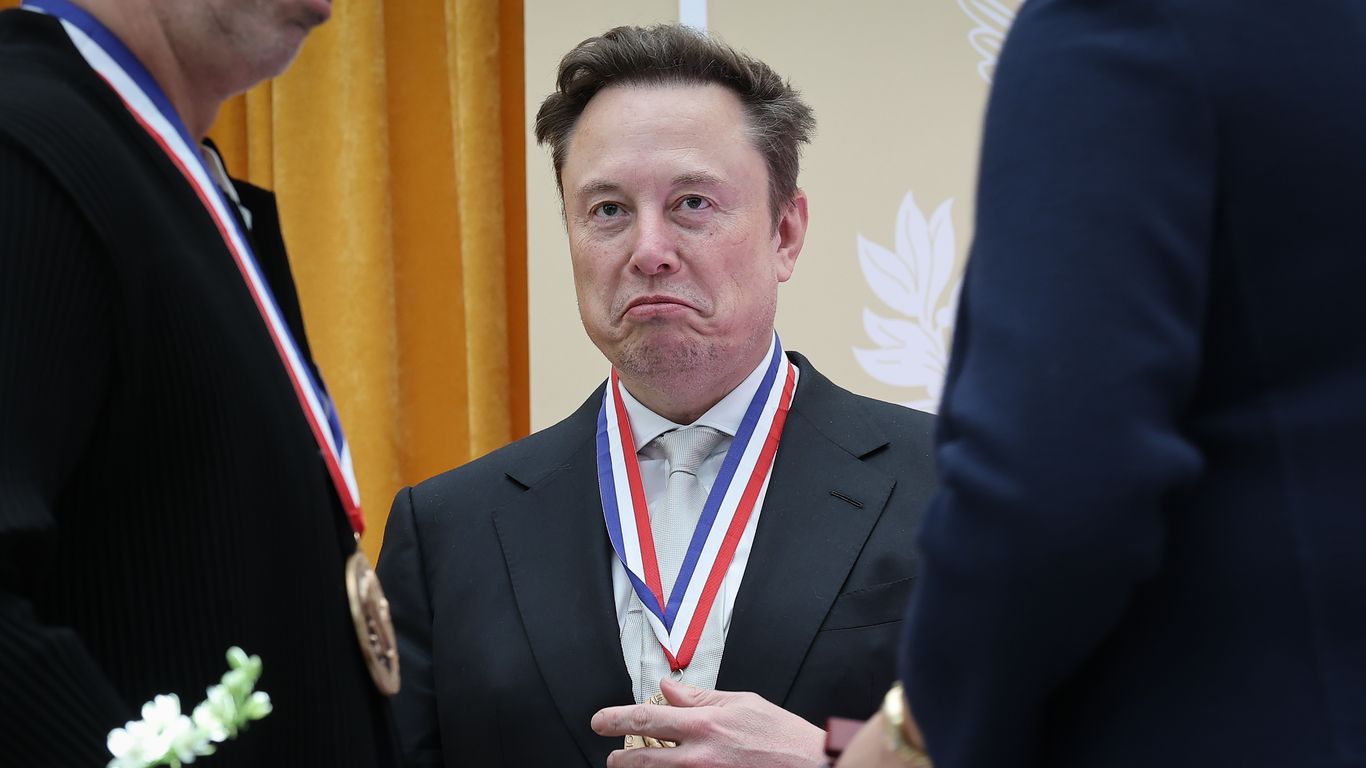
Elon Musk 's team reached out to Republicans in late August to discuss a train wreck they all saw coming: Unless the GOP poured more money into Texas immediately, the state's Senate race could be lost in a matter of weeks. Why it matters: That chat set in motion a massive rescue operation for Republican Ken Paxton funded substantially by Musk, the party's largest donor, who gave $158 million in September alone. Musk's rescue gave Paxton's sleepy campaign new life and showed why the world's richest person is the X factor in the push to prevent a midterm debacle for President Trump's party. Zoom out: It also helped Republicans avoid a death-spiral scenario: that propping up Paxton in Texas would force them to drain badly needed resources from other Senate battlegrounds. Instead, Musk's money allowed Republicans to flood Texas' expensive TV markets and free up cash to shore up unexpectedly competitive races in Kansas and South Carolina . Behind the scenes: In late August, Democrat James Talarico was dominating the Texas airwaves, portraying Paxton, the state's attorney general, as one of the nation's most corrupt politicians. Paxton, who isn't known as a prolific fundraiser, was dark on TV. Polling seen by Musk's team and the GOP's Senate Leadership Fund (SLF) suggested his chances were sinking. Against that backdrop, Musk's top political adviser, Chris Young, called SLF president Alex Latcham with an idea: Musk would donate $5 million to a pro-Paxton super PAC if that group raised another $5 million. Latcham countered: Would Musk contribute $10 million if the pro-Paxton group
Republicans who haven't faced serious reelection fights in years are suddenly campaigning like they're running in swing districts. Why it matters: Democrats are eyeing House districts so Republican that they weren't even on the party's radar at the start of the 2026 midterm election cycle. That includes incumbents like Reps. John McGuire (R-Va.) and Lauren Boebert (R-Colo.), neither of whom were seen as remotely vulnerable coming into the second Trump term. Most of these seats haven't elected a Democrat in years or even decades and are only truly in play if the party is winning nationally by double digits. Even then, some are a stretch. But candidates in Trump country say frustration with rising prices, corruption, the war in Iran and political incumbency in general have led to a sea change that could precipitate some shock results on Nov. 3. State of play: Rep. Jack Bergman (R-Mich.) is running scathing attack ads against Democratic opponent Callie Barr, labeling her "Crooked Callie" and tying her to Alexandria Ocasio-Cortez, Rashida Tlaib and Abdul El-Sayed. That's a stark change from 2024, when Bergman defeated Barr by 21 percentage points. His ads that cycle made at most a passing reference to Barr , according to AdImpact. Rep. John McGuire (R-Va.) won by 15 points in 2024, a sleepy general election with minimal spending or ads. He too is running attack ads amid a challenge from former Democratic Rep. Tom Perriello. What we're hearing: Democrats say they are astounded by the level of anti-establishment frustration in their districts. "We're in a real race. It's unreal,"
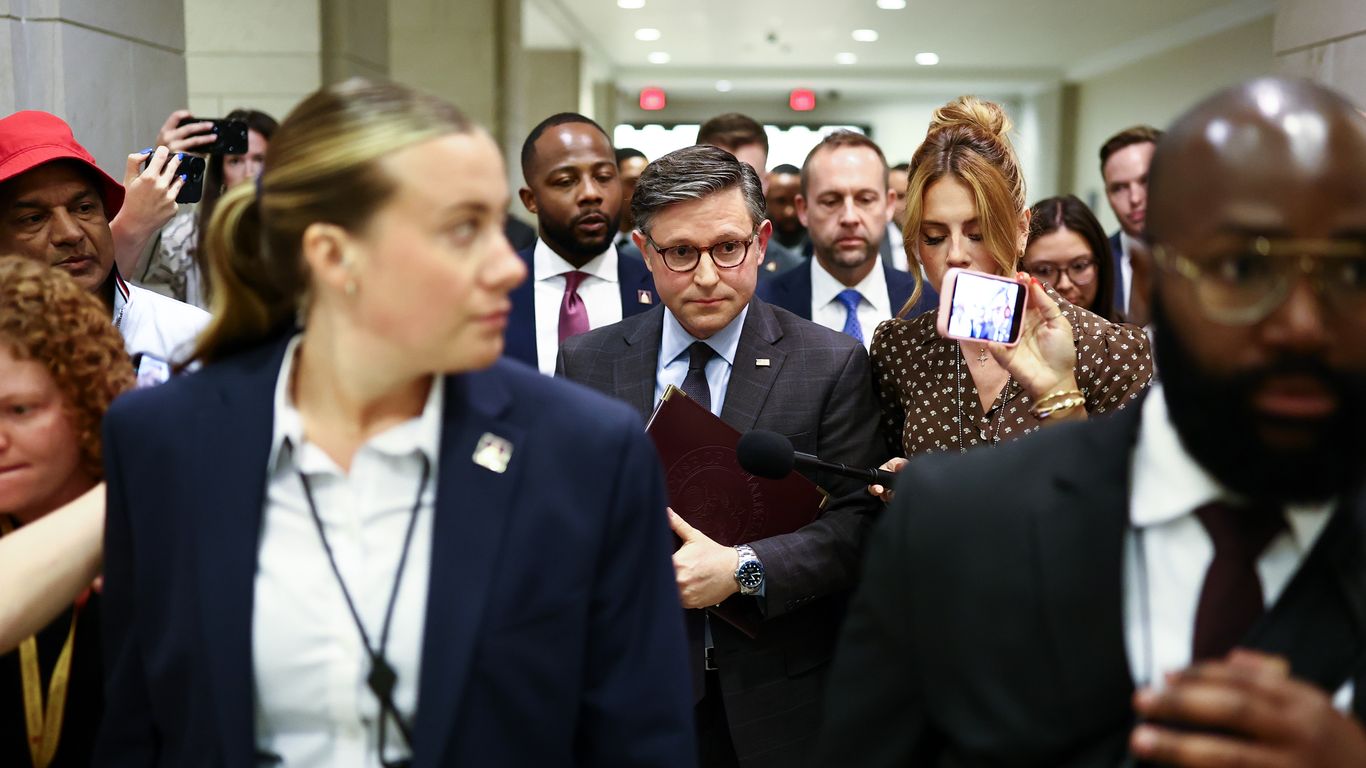
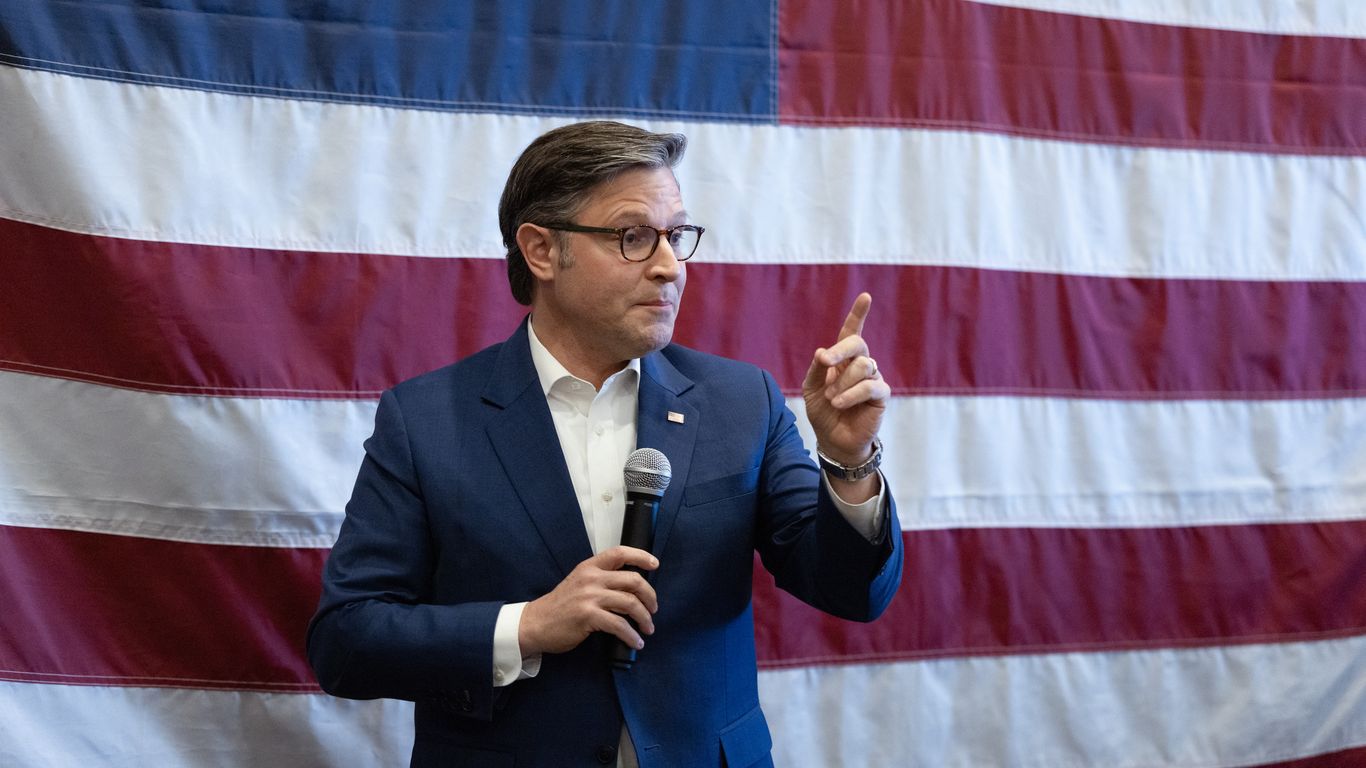
Speaker Mike Johnson's sudden frank talk about his political future is upending the quiet maneuvering ahead of a post-election GOP leadership contest. Why it matters: The race could become a three-way fight if Johnson follows former Speaker Nancy Pelosi's example and tries to stay in leadership if Republicans lose the majority. Majority Leader Steve Scalise (R-La.) has widely been viewed as a top contender for the job — and Rep. Jim Jordan (R-Ohio) did not seek a waiver to remain Judiciary chair, fueling speculation that he's preparing to run for leader. Many Republicans privately worry they're going to lose and expected Johnson to step aside if the majority slips away. But his new blunt and unexpected musings on his own future challenge that assumption. Driving the news: "In the unlikely scenario where we lost the majority, I would expect my colleagues would ask me to continue leading this conference, even if we have divided government," Johnson told CBS News. But some members aren't buying it: "Why would you want to be minority leader after speaker?" one House Republican told us, adding they would support new leadership. One leader not taking the bait is Scalise: "There are no races that any of us need to be talking about until after the election's over," he told Axios during an in-flight interview while campaigning out west. Scalise acknowledged Johnson's comments: "I think early on he said he wasn't going to play in hypotheticals, and you know, and he might have gone down that path for a minute. We're focused on holding the House, and that's where my energy is." Between
The rupture between President Trump and Ukrainian President Volodymyr Zelensky over last week's diesel deal deepened Wednesday after an Elon Musk -owned satellite system used by Ukraine unexpectedly restricted service — undercutting Ukraine's fight against Russia. Why it matters: The Ukrainian military uses SpaceX's Starlink satellite communications system to control and operate its reconnaissance and intercept drones. When it doesn't operate at full capacity, Ukraine's ability to gather intelligence, use interceptor drones and conduct long-range strikes against Russia is impeded. Service was partially restored on Wednesday, but Ukrainian officials were still searching for answers about why the service was throttled and who was responsible. The limitations came days after a new crisis erupted between the U.S. and Ukraine over Trump's agreement to lift sanctions on Russian oil sales. Zelensky criticized the move, then Trump called for Ukraine to elect a new president. A senior U.S. official said the Trump administration had nothing to do with the alleged Starlink service constraints. But Ukrainian officials remain suspicious. Driving the news: Ukrainian officials said SpaceX imposed the restrictions Tuesday night. The system turned off, they said, when a drone exceeded 160 kph. In some cases, it disconnected when the speed went over 80 kph. The Starlink restrictions came several hours after the Ukrainian military did not receive an early warning about a Russian ballistic missile attack. Ukrainian officials said the U.S. has provided such alerts over the last several years as
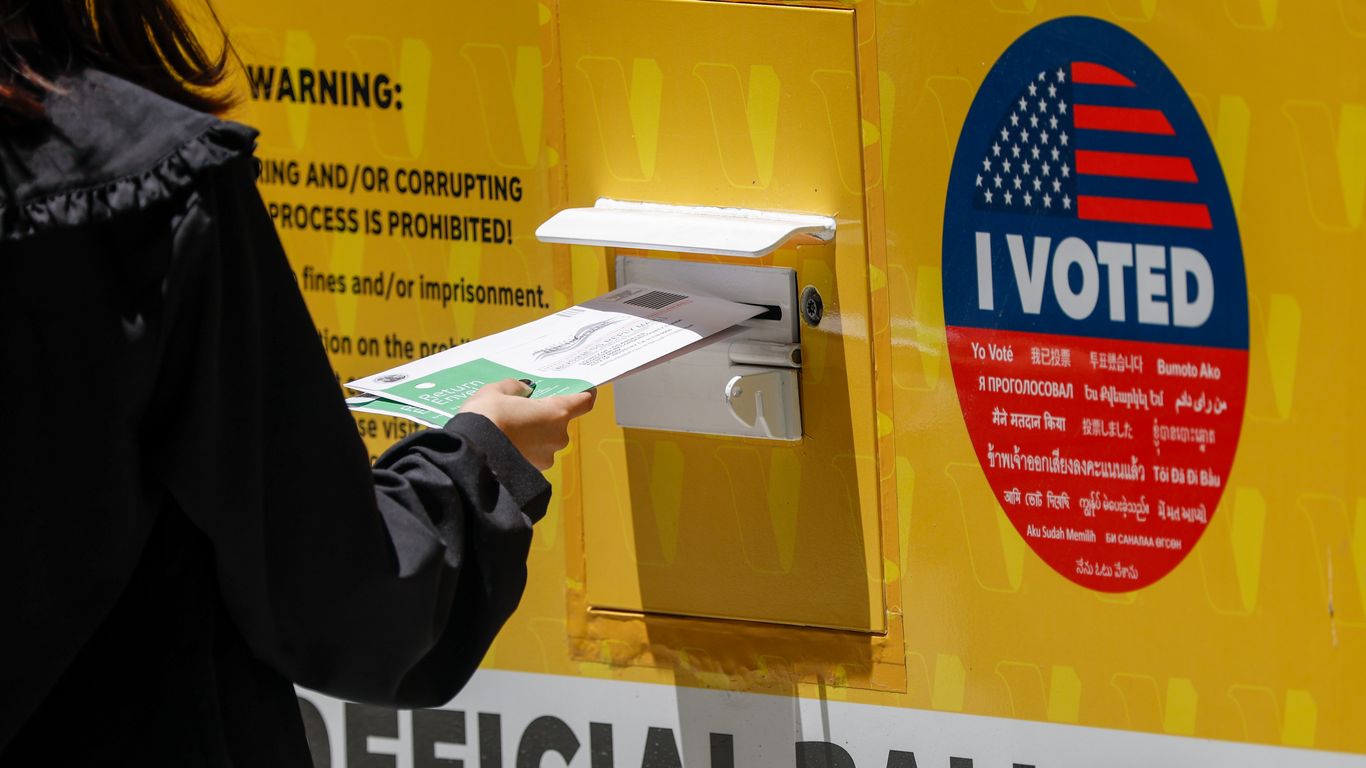
The Trump administration is threatening emergency court action unless California officials investigate potential ineligible voters within 48 hours and set aside ballots from anyone whose citizenship they cannot verify, according to two letters sent to state officials from the Justice Department. Why it matters: With voting already underway, President Trump 's DOJ could delay ballots from eligible Californians mistakenly flagged as noncitizens and set up a court fight just three weeks before Election Day. Driving the news: Acting Deputy Attorney General R. Trent McCotter sent a letter Tuesday to Los Angeles County Registrar-Recorder/County Clerk Dean Logan along with a thumb drive of "likely noncitizens who were sent a vote-by-mail ballot," according to a copy of the letter shared with Axios. McCotter asks local officials to investigate their citizenship status by noon October 15. The letter did not say how many people are on the list. For anyone whose status can't be confirmed, DOJ asks the officials to "segregate—not cancel" those ballots and suspend signature verification or counting of any ballots already returned. DOJ also asks officials to withhold ballots from people on the list unless their citizenship has been confirmed. California Secretary of State Shirley Weber received a similar letter . Friction point: McCotter closed his letter with a threat: "If you cannot implement this process by then, given the ongoing federal election, the United States will have no choice but to seek emergency relief." What they're saying: "This should not be controversial, as the crimin
President Trump has directed his White House counsel to examine explosive allegations dropped on him Friday in the Oval Office: Former Trump attorney Alina Habba told the president that another one of his top advisers — former Kennedy Center leader Ric Grenell — failed to deposit a multimillion-dollar donation that her billionaire husband made to the center a year ago, according to four senior administration officials and three insiders briefed on the controversy. Grenell denied the accusations as "absurd" and a "lie." Habba and her husband, Turhan Mildon, declined to comment through a spokesperson. Why it matters: The extraordinary row between the two top-tier presidential advisers and former allies provides a rare and acrimonious behind-the-scenes glimpse into the intersection of power, influence and money in Trump's Washington. The total value of the contribution in question: nearly $6 million, White House sources said Habba told them. A senior administration official cautioned that "these are only allegations. We don't know if they're true. This could be a misunderstanding." Said another: "POTUS doesn't want to deal with this. Of course, he's concerned. But if there is missing money, this is a big, big problem." Just a few months ago , Grenell was friends with Mildon and Habba. But he was notably absent from their $10 million wedding that was attended by Trump world officials, power brokers and luminaries last month. "This is the ultimate MAGA blood feud," said one Trump world insider with knowledge of the conflict. Zoom in: The dispute grew out of a friendship between
Advocates for AI safety and regulation are emerging as a force in U.S. elections, spending nearly $50 million this election cycle on candidates who favor regulation, a new analysis shared exclusively with Axios shows. Why it matters: The safety spending points to the unusual power dynamics in the AI race, where researchers shape policy and regulation in ways that differ at times from the priorities of the companies where they work. The researchers add to the advocacy and giving of an array of AI safety groups that have been well-funded for years, including from Coefficient Giving, a philanthropy with close ties to many top AI executives, especially at Anthropic. Driving the news: AI safety groups and individual donors have spent $48 million this cycle on Democratic and Republican races, according to new figures shared first with Axios. That includes donations from researchers, such as OpenAI's Juan Felipe Cerón Uribe and Redwood's Aryan Bhatt. It also includes Guardrails Alliance, a tech-worker-backed AI safety group that has raised $11.7 million between its super PAC and 501(c)(4). The big picture: Taking AI industry money has grown complicated due to viral warnings of catastrophic AI risk from the very same industry developing it and data center NIMBYism mobilizing communities in blue and red districts alike. OpenAI president Greg Brockman pulled a planned second $25 million donation from Leading the Future, a super PAC backed by tech execs and investors, in part because of an internal revolt at OpenAI. Forces favoring AI acceleration — who earlier in the year appeared to
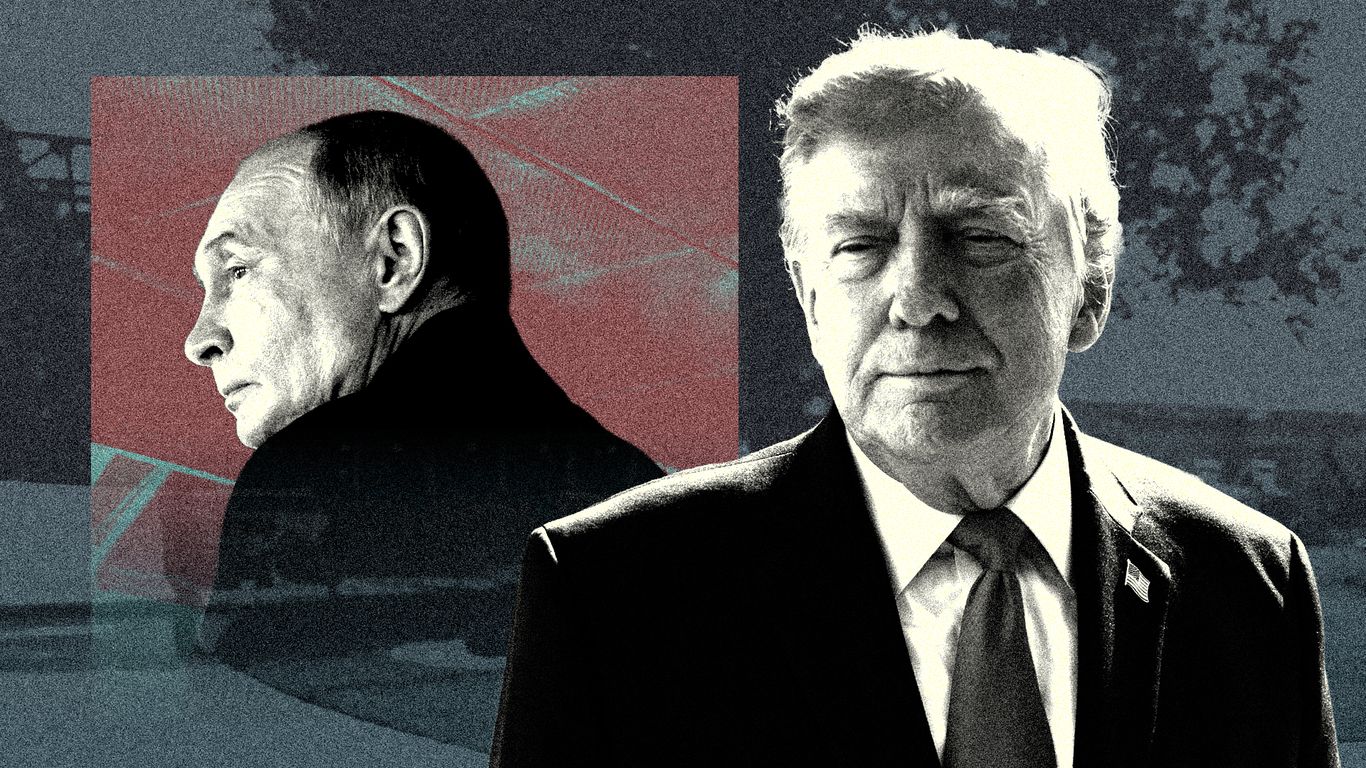
President Trump is indulging his fondness for Vladimir Putin at a moment of acute political peril, forcing Republicans in the midterms to take cover as he showers Moscow with one-sided concessions. Why it matters: With just three weeks until the election, Trump is rekindling a decade-long, scandal-scarred relationship with a dictator reviled by most Americans — including his own supporters. Driving the news: Since speaking with Putin on Friday, Trump has embarked on a remarkable five-day campaign of diplomatic concessions and cover for Russia — sparking bipartisan blowback just as voters prepare to cast their ballots. On Friday, Trump announced a deal to unleash millions of tons of Russian diesel onto global markets, easing sanctions designed to starve Moscow's war revenues. On Saturday, Trump lashed out at Ukrainian President Volodymyr Zelensky for striking Russian refineries and demanded that Kyiv replace its leader. On Sunday, Trump blindsided Zelensky by declaring an immediate "energy ceasefire." Russia has continued attacking Ukrainian energy infrastructure, with no apparent consequences from Washington. On Monday, Trump dismissed months of intelligence-based reports that Russia was enabling Iran's war effort by supplying information about U.S. military assets. On Tuesday, Trump doubled down on the diesel deal and brushed off concerns that the proceeds could finance Russia's war machine, even as GOP senators labeled it a "betrayal" and "a gift to our adversary." Between the lines: The benefits to Russia are clear. Far less apparent is what Trump's concessions accomplis
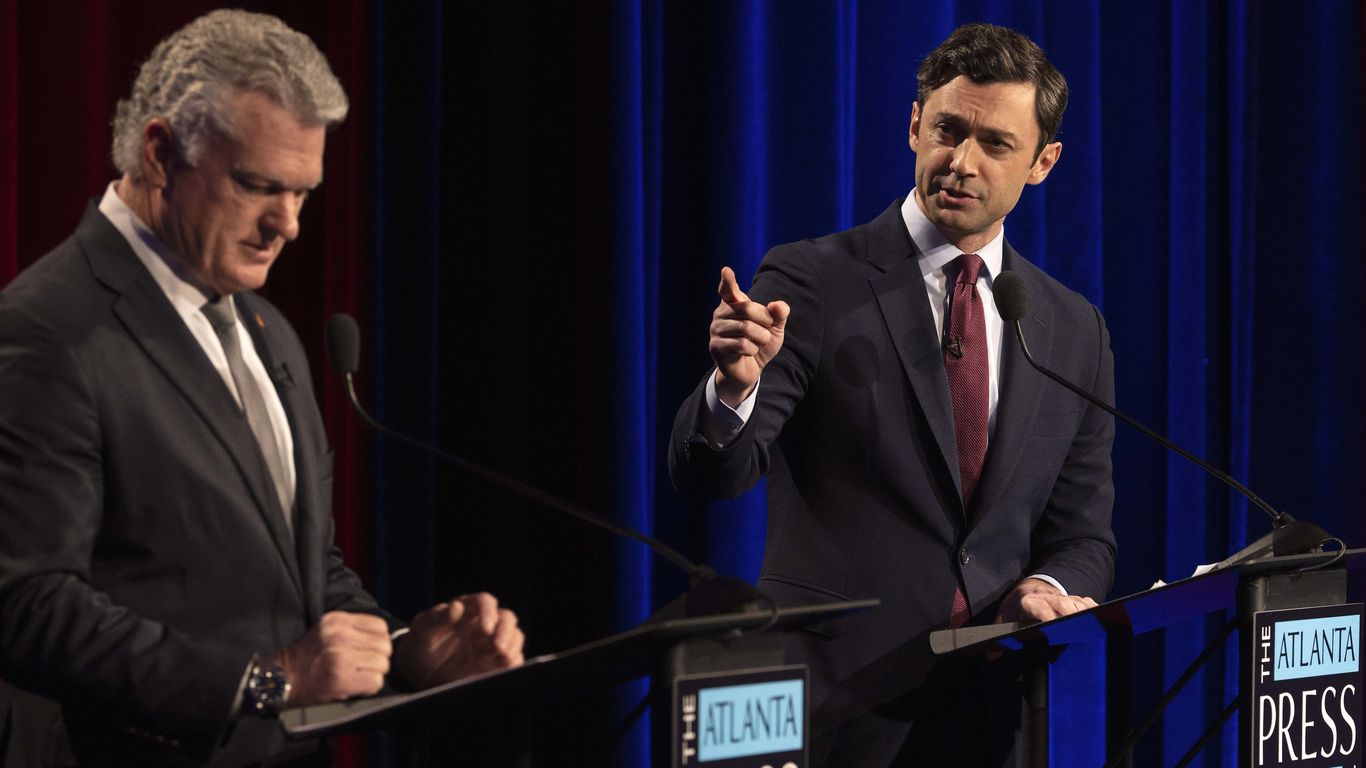
Sen. Jon Ossoff (D-Ga.) delivered another debate performance tailor-made for social media Tuesday night, feeding the presidential speculation he insists is entirely misplaced. Why it matters: A darling of the Democratic internet and a favorite to win the party's nomination in 2028, Ossoff emphatically ruled out a White House bid and pledged to serve a full six-year Senate term if re-elected. "He is running. He's going to be your DSA candidate," Republican challenger Rep. Mike Collins countered, seeking to paint Ossoff as a socialist with ambitions beyond Georgia. The big picture: Georgia was one of three battleground states hosting Senate debates Tuesday night, with candidates in Iowa and Maine also clashing over President Trump's foreign policy, the cost of living and their records in Washington. In Georgia, Ossoff and Collins traded vicious personal attacks throughout their second and final debate, reprising a feud that has become a viral spectacle online. "Will you commit tonight that for the remainder of this campaign — it's just three weeks, Mike — you won't allow any more neo-Nazi propaganda to be produced from your house?" Ossoff demanded , referring to Collins' son-in-law, an alleged white nationalist influencer. Collins accused Ossoff of inciting threats against his family, then attacked him over campaign support from billionaire Reid Hoffman, who had ties to Jeffrey Epstein. "Mike, you really want to bring up the Epstein files?" Ossoff shot back , pointing to Collins' initial vote against releasing the documents — a position he reversed after Trump changed course.
House Speaker Mike Johnson (R-La.) needs Latino voters to stick with Republicans as they did in 2024. But new polling shows they're drifting back toward Democrats at levels not seen in years. Why it matters: Latino voters souring on President Trump has been part of the mood music of the president's second term. Democrats hope this helps them replicate the landslide from Trump's first midterm in 2018. The big picture: Democrats have their widest lead of the year against Republicans, 57% to 31%, on the generic congressional ballot, according to new polling from Equis Research. In battleground districts, Democrats lead 62%–38% among likely Latino voters in two-way races, ahead of the party's 2022 level of 57%. That's well above the 49% of Latinos who voted Democratic in 2024, but below the 67% who backed Democrats in 2018, according to Equis , a leading authority on Latino voting behavior. Zoom in: Republicans were convinced that Trump's undeniable gains in 2024 represented the beginnings of a real realignment, but poll after poll this year has indicated that Latino voters haven't found a permanent home in the GOP. In Florida, GOP Rep. María Elvira Salazar has addressed Trump directly in a campaign ad about his immigration crackdown. The Equis survey, conducted Sept. 23–Oct. 2, provides fresh evidence of Trump's declining support among Latino voters. Trump's approval rating stands at just 30%, compared with 65% disapproval. That's a 35-point deficit — and a new low in Equis surveys. Between the lines: Economic concerns — and rising gas prices — are driving much of the dissatis
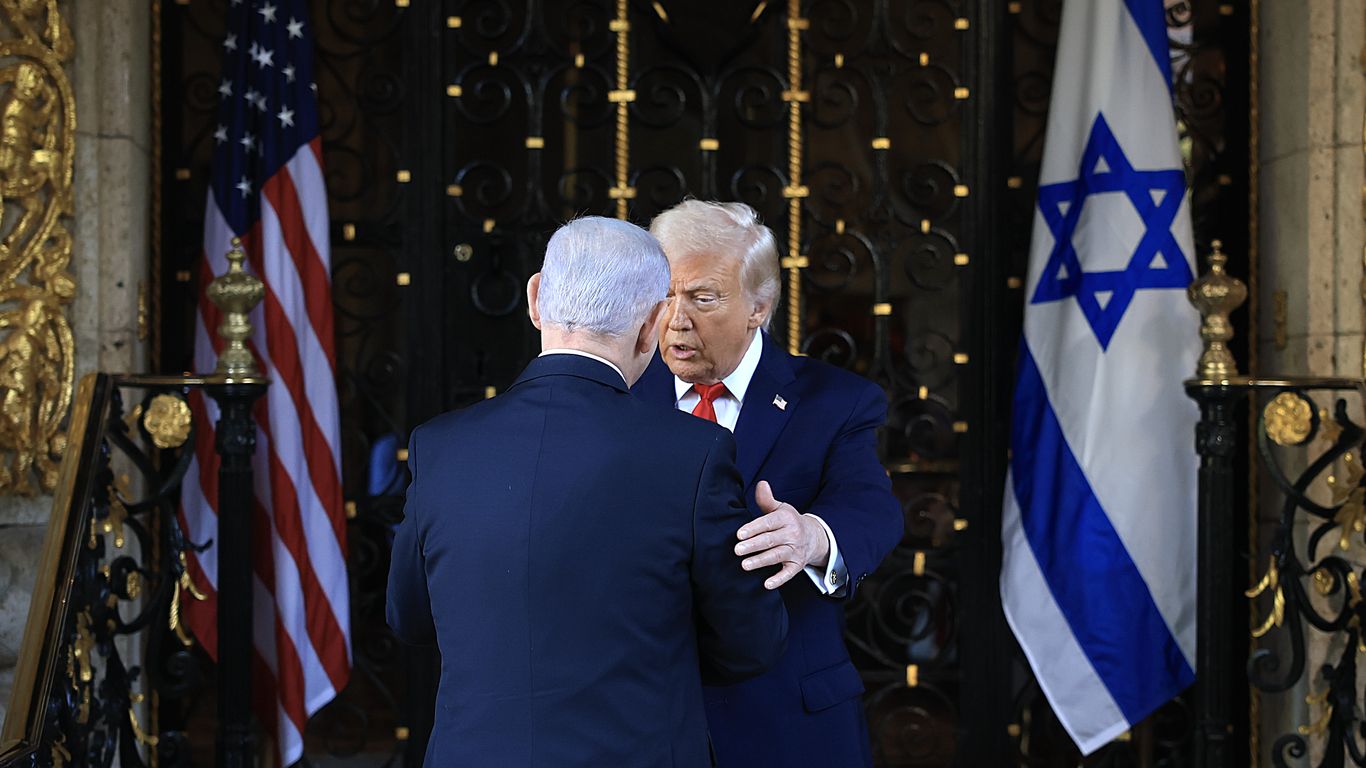
Israeli Prime Minister Benjamin Netanyahu and President Trump last week discussed the possibility of launching a major new operation against Iran before the Israeli and U.S. elections, according to two U.S. officials, one Israeli official and a fourth source with knowledge of the matter. Netanyahu said during the call that he was concerned about Israeli intelligence indicating Iran was taking troubling steps to reconstitute its nuclear program, according to the Israeli official. The Israeli leader's call with Trump about the possible attack took place before Trump said he would not strike Iran ahead of the midterms. Why it matters: Resuming major combat operations in Iran would inject a volatile new issue into the Oct. 27 Israeli elections and the U.S. midterms a week later. But the Israeli and U.S. militaries are still on alert and concluding preparations to be ready in case he changes his mind, sources said. " Bibi seems to want to go in again. He has talked to the president about it a couple times, and the president has said, 'Well, you know, Bibi, go ahead and get ready.' But there's really no commitment. 'Go ahead and get ready' is maybe now, maybe later, maybe never," a U.S. official said. A White House official said it's "false" that Trump and Netanyahu discussed resuming the war. "The President has said that we will not be attacking Iran at any time prior to the midterm elections," the person said. Netanyahu's office said that "the prime minister maintains regular contact with President Trump and senior U.S. administration officials and does not comment on the conte
President Trump's deal to lift sanctions on Russia to increase diesel supplies "is a betrayal of the people of Ukraine" and "a gift to our adversary," a bipartisan coalition of senators wrote in a letter admonishing the agreement. Why it matters: The decision to turn to Vladimir Putin in an attempt to ease the diesel crunch is piling onto Republican headaches ahead of the midterms and fueling fresh friction between the U.S. and Ukraine. What they're saying: The deal "will not achieve just ends, nor will it benefit Americans," the senators warned, urging Trump to withdraw from it and ramp up the economic pressure on Russia as called for in a sanctions bill named for the late Sen. Lindsey Graham that he signed into law last month. While record-shattering diesel and gas prices are squeezing key industries and American households, the lawmakers argued that "allowing Russian-origin diesel into global markets will offer limited to no relief to Americans." Analysts have expressed doubt that the levels Trump pitched will meaningfully sway prices, Axios' Ben Geman reports . However, the lawmakers argued that it will "undoubtedly finance" Russia's war "and advance its security cooperation with China, Iran, and North Korea." The fine print: The signers are Sens. Richard Blumenthal (D-Conn.), Thom Tillis (R-NC), Jeanne Shaheen (D-NH), Susan Collins (R-Maine), Dick Durbin (D-Ill.), Alan Armstrong (R-Okla.), Sheldon Whitehouse (D-RI), Lisa Murkowski (R-Alaska), Jack Reed (D-RI), Chris Coons (D-Del.), Mitch McConnell (R-Ky.) and John Cornyn (R-Texas). The White House directed Axios to the
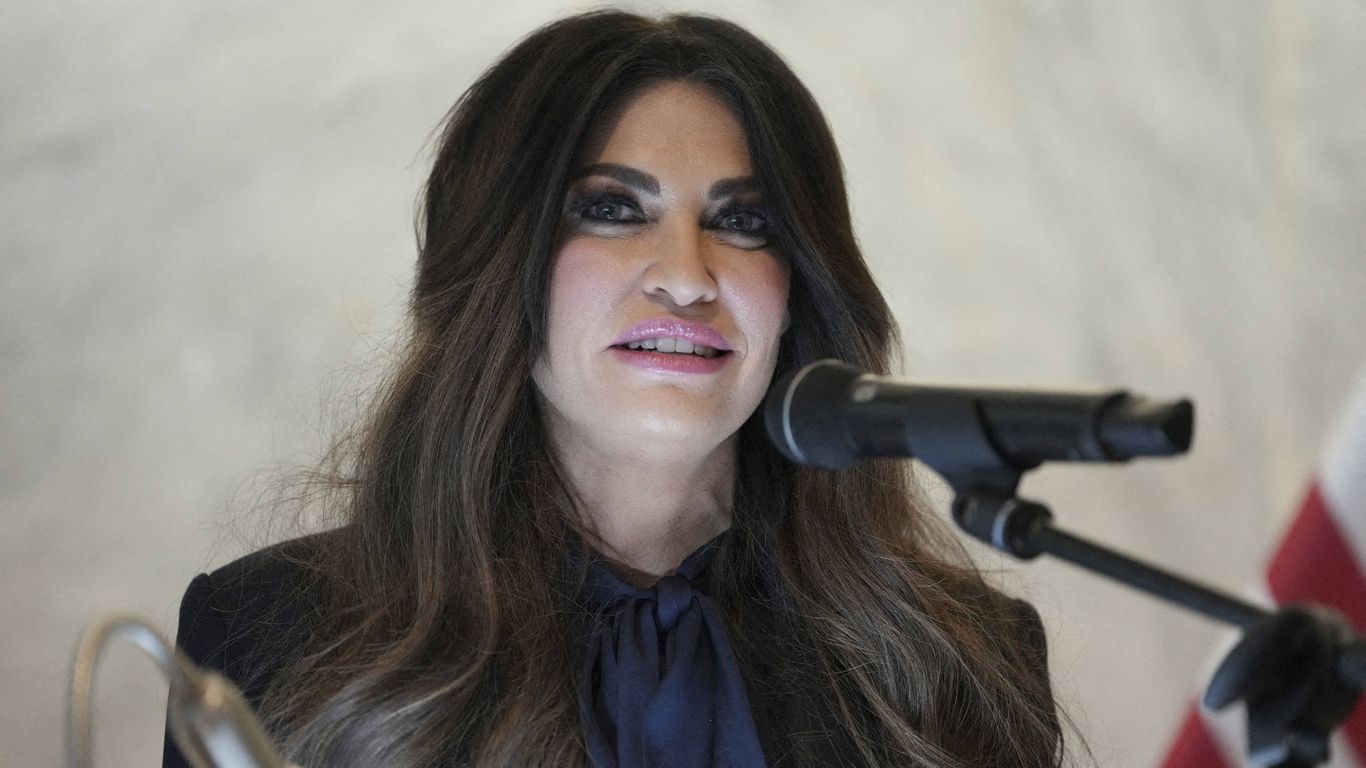
Kimberly Guilfoyle , the U.S. ambassador to Greece, announced her resignation Tuesday, shortly after the White House asked her to step down and following reports alleging misconduct before and during her diplomatic posting. Why it matters: The exit of the president's longtime political ally and former fiancée of his son Donald Trump Jr. follows a series of Wall Street Journal reports alleging she used her political connections to seek financial favors and promote private business interests. Guilfoyle has denied any wrongdoing. White House press secretary Katie Zacharia said Tuesday during her first press briefing that Guilfoyle was asked to resign. "She has been a wonderful asset to the team and we wish her well," Zacharia said. Driving the news: "My gratitude and respect for President Trump and Secretary Rubio remain unwavering," Guilfoyle wrote in a post on X on Tuesday. "I am proud of what we accomplished together, and I will always be a loyal supporter of President Trump and his mission to Make America Great Again." "While my time as Ambassador may be coming to an end, my commitment to President Trump, the America First movement, and the country I love will never end. It has been the honor of my lifetime to serve the United States of America." Guilfoyle's removal isn't entirely surprising, as Trump told reporters yesterday that he was "looking at" firing Guilfoyle following the allegations: "We're not happy," he said. Those comments follow a senior U.S. official telling AP that Trump and Rubio were "extremely pissed off" about the reports and were considering dismissing
Europe is testing a new response to China Shock 2.0 , betting that it can confront Beijing's export juggernaut without resorting to President Trump's tariff-heavy approach. Why it matters: More of the world is beginning to confront the threat that China's industrial overcapacity poses to their industries. But protecting individual sectors will not solve the bigger problem: China's factories are cranking out far more than its own economy can absorb. Driving the news: The European Union and China struck a preliminary deal on Friday to sharply limit Chinese hybrid vehicle exports to Europe. The EU plans to initially cap Chinese hybrid and plug-in hybrid imports at 350,000 annually, potentially starting as early as December. The cap would more than halve projected Chinese hybrid shipments, which were on track to reach roughly 800,000 this year, an EU official told reporters . Imports totaled 302,000 in 2025. (Chinese officials Monday noted that the deal still allows its automakers to increase shipments from last year's levels.) Vehicles exceeding the quota would be blocked rather than face additional tariffs. The backdrop: France and Germany last week proposed giving Brussels sweeping new powers to restrict market access over unfair trade practices, a striking shift for Germany, which opposed EU tariffs on Chinese EVs in 2024. European Commission president Ursula von der Leyen warned in her annual address last month that the bloc's trade deficit with China had reached a "tipping point." "Some say the second China shock is looming. But it's already here," von der Leyen said. Wha
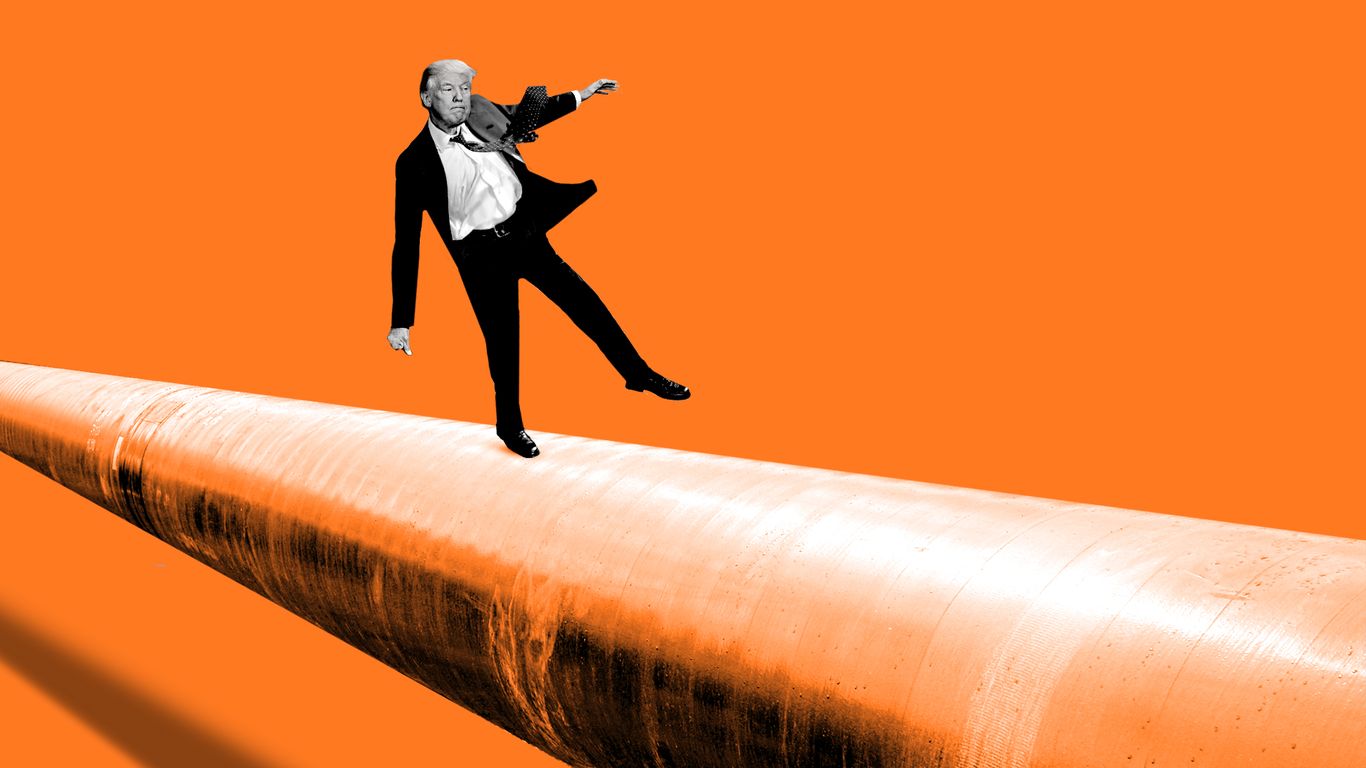
President Trump is turning to Vladimir Putin to help ease a global diesel crunch, setting up a clash between Washington's energy priorities and its efforts to pressure Russia over its invasion of Ukraine. Why it matters: The fuel shortage is among the most severe effects of the Iran war and Ukrainian strikes on Russian refineries. Average U.S. diesel prices remain far above $6 per gallon, adding to GOP headwinds in the midterm elections. Trump says his deal will help bring costs down. Catch up quick: Trump on Friday claimed an agreement to bring escalating Russian exports, and the Treasury Department waived sanctions to help enable it. A few things to watch... The campaign trail. So far a few Republicans in close races — including Michigan Senate candidate Mike Rogers and Alaska Sen. Dan Sullivan — have criticized the agreement. Republicans already saddled with Trump's unpopular policies in the midterms now face another awkward choice: whether to back his diesel deal with a dictator many of them despise, Axios' Andrew Pantazi writes. The market. Diesel futures dipped after the announcement. But analysts expressed doubt that the levels Trump is claiming will meaningfully sway prices in the U.S. and elsewhere — if Russia indeed delivers. Per Trump's claim, Russia will "immediately" provide what amounts to 2.24 million barrels, followed 3.73 million next month (equivalent to around 124,000 barrels per day spread over a month), and then roughly double it thereafter. "In the near-term, it's hard to see the waiver helping global fundamentals for diesel much," writes economics and
Data: RealClearPolitics , American Presidency Project ; Note: Nebraska's Senate race is between a Republican and an independent; Chart: Erin Davis/Axios Move over Wisconsin and Arizona. With Democrats making Republicans sweat in a host of red-state Senate races , a new batch of swing states may be emerging. Why it matters: Some of the closest Senate races are in Nebraska, Ohio, Texas, Iowa and even Kansas. Sure, this could be a blip — or a reminder that it's a 50-50 moody nation, even in a bunch of red states. The conditions that helped Barack Obama carry conservative states like Indiana and North Carolina in 2008 — an unpopular war, a bruising economy, an electorate hungry for change — could resonate again in 2028. State of play: Democratic and Republican Senate candidates are running margin-of-error races in red states that not long ago were thought to be forbidding, or even a wasted effort, to many Democrats. The Senate races in Kansas and Ohio are tied. So is Nebraska, where independent Dan Osborn is trying to knock off Sen. Pete Ricketts. Democrat James Talarico has consistently led polls in Texas, though that race appears to be tightening as money pours into the state on behalf of Republican Ken Paxton. Alaska is also a toss-up. President Trump won all these states by double digits in 2024. Zoom in: Republican operatives told Axios they're far from convinced that what's happening now will create a new slate of swing states in the 2028 race for the White House. They see the current campaign as more of a one-off — a combination of dismay with Trump, high prices and unin