Dwayne
Thu, 15 Oct 2026
The recent arrest of five men near RAF Fairford Airbase in the United Kingdom as part of a suspected Iranian terror plot against the base and an “unspecified new threat” to use drones to attack U.S. assets stationed at Fairford prompted the United States to remove all 12 of its B-1 Lancer bombers from the […] The post Drones Are Threatening U.S. Assets Overseas, but Their Threat to the U.S. Homeland is Higher appeared first on The Soufan Center .
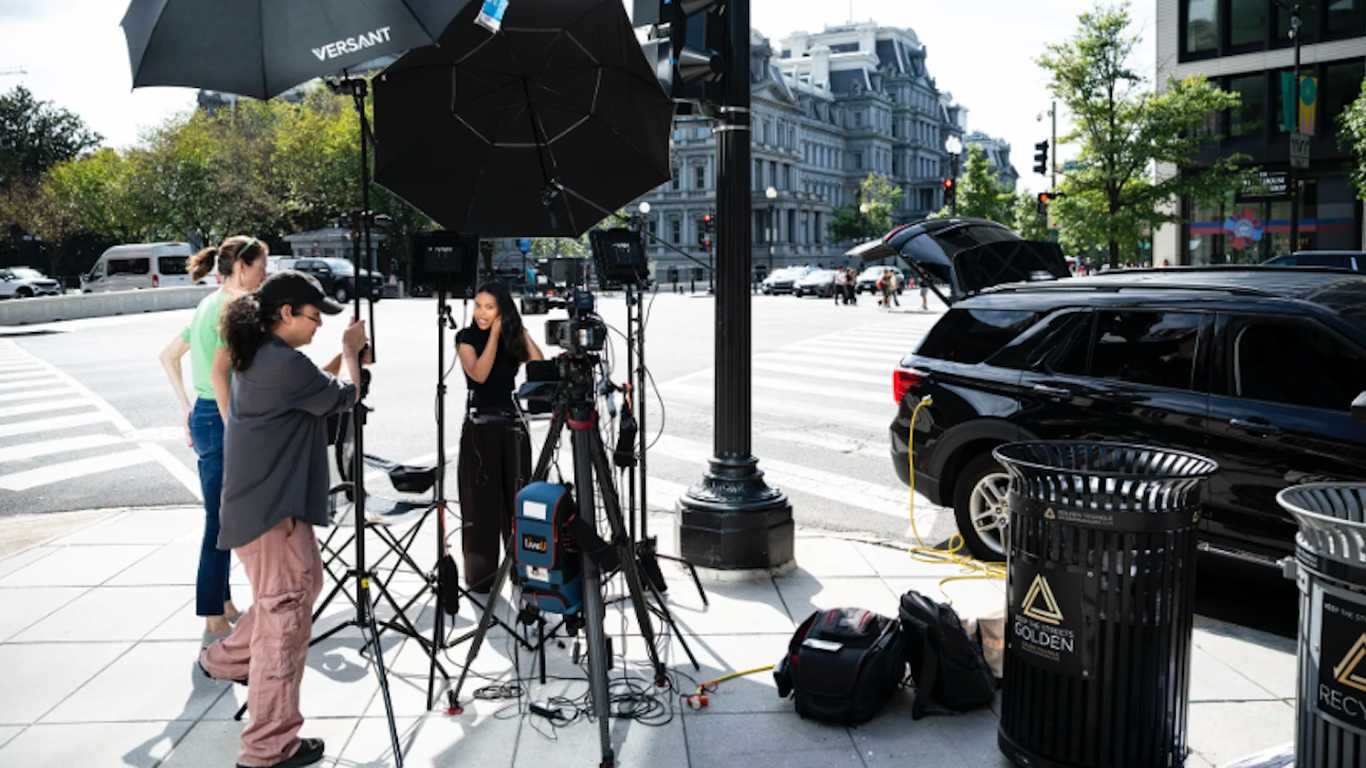
A federal judge on Tuesday ruled the Trump administration must continue to grant CNN, MS NOW and Politico access to the White House grounds while the lawsuit filed by the three news organizations continues. Why it matters: It marks a major win for the news outlets as it maintains their White House access and signals the judge believes their legal claims could succeed on their merits. Judge Timothy Kelly, an appointee of President Trump, awarded a temporary restraining order to the plaintiffs on Sept. 24 that mandated the White House reinstate the outlets' credentials for 14 days. Last week, Kelly extended that through Oct. 13. The preliminary injunction preserves the outlets' access until the case is resolved, which could take weeks, months or years. Zoom in: "Defendants (except for President Trump) and their agents, representatives, and all persons or entities acting in concert with them, shall not execute, implement, or enforce the September 18, 2026, decision to revoke the White House 'hard pass' press credentials held by employees of CNN, MS NOW, and POLITICO," Kelly's court order said. What they're saying: In a statement, Theodore J. Boutrous, Jr., attorney for CNN, MS NOW, and Politico, said the ban "blatantly and explicitly violated due process and the First Amendment." "The harm this ban did to our clients, the First Amendment, and the public as a whole is profound," he said. "The Court was right to enjoin the White House from enforcing this 'unconstitutional ban on the free press' for the foreseeable future." Yes, but: The judge's ruling doesn't guarantee that the
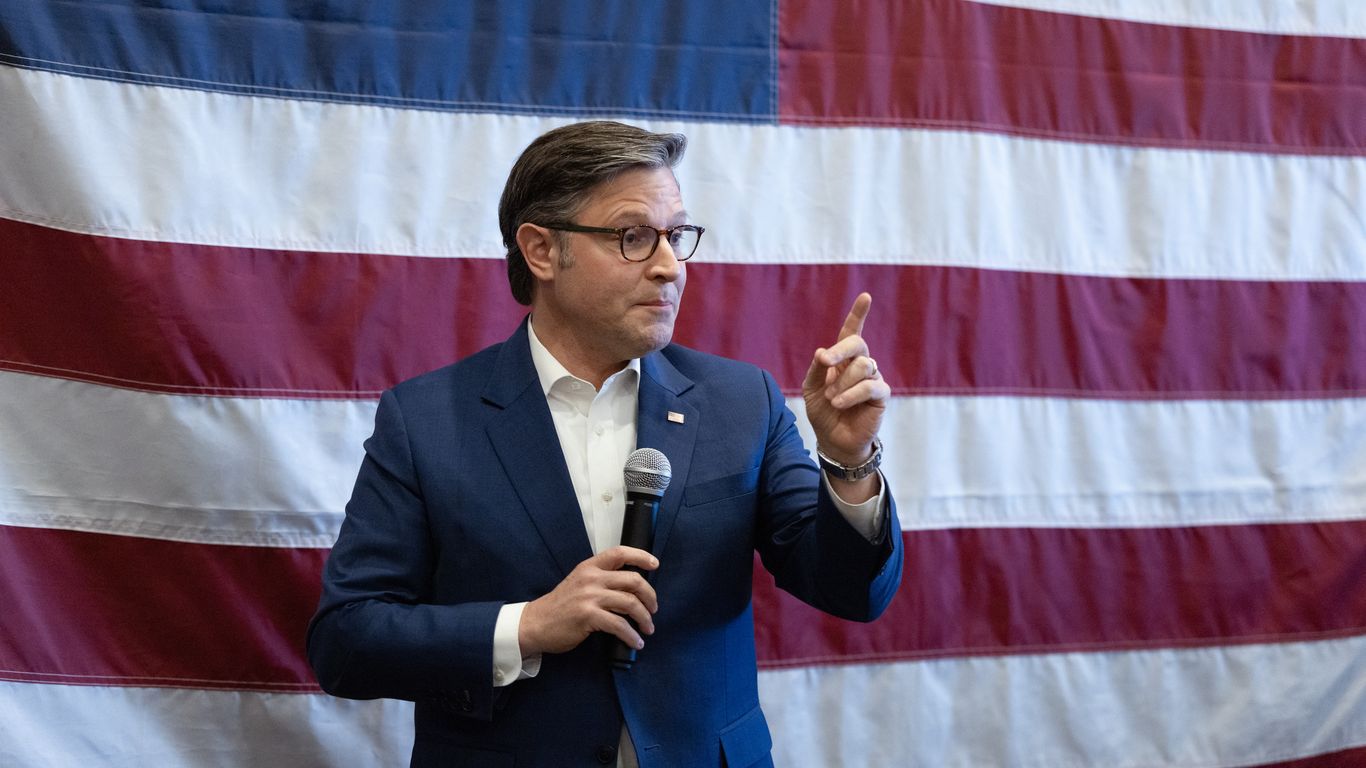
House Speaker Mike Johnson (R-La.) needs Latino voters to stick with Republicans as they did in 2024. But new polling shows they're drifting back toward Democrats at levels not seen in years. Why it matters: Latino voters souring on President Trump has been part of the mood music of the president's second term. Democrats hope this helps them replicate the landslide from Trump's first midterm in 2018. The big picture: Democrats have their widest lead of the year against Republicans, 57% to 31%, on the generic congressional ballot, according to new polling from Equis Research. In battleground districts, Democrats lead 62%–38% among likely Latino voters in two-way races, ahead of the party's 2022 level of 57%. That's well above the 49% of Latinos who voted Democratic in 2024, but below the 67% who backed Democrats in 2018, according to Equis , a leading authority on Latino voting behavior. Zoom in: Republicans were convinced that Trump's undeniable gains in 2024 represented the beginnings of a real realignment, but poll after poll this year has indicated that Latino voters haven't found a permanent home in the GOP. In Florida, GOP Rep. María Elvira Salazar has addressed Trump directly in a campaign ad about his immigration crackdown. The Equis survey, conducted Sept. 23–Oct. 2, provides fresh evidence of Trump's declining support among Latino voters. Trump's approval rating stands at just 30%, compared with 65% disapproval. That's a 35-point deficit — and a new low in Equis surveys. Between the lines: Economic concerns — and rising gas prices — are driving much of the dissatis
Congressional Democrats' private text chains lit up with fear and anger on Monday after Department of Homeland Security agents searched Rep. Ilhan Omar's (D-Minn.) home in Washington, D.C. Why it matters: The search came less than a month before the midterms , immediately setting off alarm bells among Democrats that "more October surprises" could be coming, as one senior Democrat told Axios. Rep. Becca Balint (D-Vt.) told Axios: "We expect more of this kind of thing." Driving the news: Homeland Security Investigations "executed a judicially authorized search warrant" on Omar's home as part of an ongoing immigration probe, the Justice Department said in a statement. DOJ has not detailed the scope or subject of the search warrant. Fox News reported the investigation concerns Omar's immigration paperwork. She came to the United States in 1995 as a 12-year-old refugee from Somalia. Omar's office and Democratic House leadership quickly denounced the action as an "abuse of power," with a spokesperson for Omar saying she "has done nothing wrong." What we're hearing: "People are outraged. ... [This is] what authoritarian tyrants and dictators do," said the senior House Democrat, who spoke on the condition of anonymity to relay colleagues' private conversations. Another House Democrat told Axios "the chatter on texts" is that "folks are irate." Zoom out: Democrats allege the raid fits into a broader pattern of Trump using federal resources to boost Republicans and target his political opponents. DHS became embroiled in controversy just last week after a statement targeting Pennsylva
The Treasury Department on Tuesday announced more than $1.2 billion in penalties against Bank of America for years of failures to report suspicious transactions and address shortcomings in its anti-money-laundering program. Why it matters: The action includes the third-largest penalty in Treasury history. What they're saying: "Today's actions send a clear message that even the biggest financial institutions are not above the law," Treasury Secretary Scott Bessent said in a press release . The big picture: The civil action comes less than a week after federal regulators fined American Express $350 million over similar failures to detect and report suspected money laundering. Zoom in: Bank of America admitted to willfully violating federal anti-money-laundering laws — including requirements to maintain adequate safeguards and report suspicious transactions. Regulators said the bank failed to properly monitor trillions of dollars in transactions, resulting in more than $5 billion in suspicious activity that was either unreported or reported late. More than $1 billion involved potential national security and other high-priority risks — including Chinese money-laundering networks and suspected trade-based money laundering linked to the U.S.-Mexico border, regulators said. Of note: The Office of the Comptroller of the Currency also assessed a $750 million civil penalty, the largest in the agency's history. Treasury also announced an $11.6 million settlement with Bank of America over hundreds of apparent violations of U.S. sanctions, including those targeting Russia and Iran. Flas
U.S. Attorney Jeanine Pirro said her office is probing Rep. Ilhan Omar's (D-Minn.) financial disclosures, the day after federal agents searched the congresswoman's Washington, D.C. home. The big picture: It's another example of the administration's escalating fight with the progressive lawmaker, who has clashed with the White House over its immigration crackdown — and whom President Trump has labeled as "crooked." Driving the news: Asked about a prior ethics probe into financial filings from the Office of Congressional Conduct, which her office said cleared Omar, Pirro said Tuesday on Fox News' "America Reports" that "is subject of an investigation as well." "It doesn't matter what the House does. It doesn't matter, you know, what this agency or that does. We're looking at the facts. Based upon the facts, we'll follow them wherever they take us," she said, and confirmed her office is handling the probe. Catch up quick: Federal agents searched Omar's home before dawn Monday as part of a separate immigration probe, Axios' Ben Berkowitz reported. Omar described the search in an X post as "an attempt to target political enemies and weaponize federal law enforcement." Trump has repeatedly lashed out against Somali immigrants, including Omar — who he described in a post last year as "always wrapped in her swaddling hijab" and "the worst 'Congressman/woman'" in our Country." Zoom out: Omar's office pointed Axios to The Wall Street Journal's reporting last month that the Office of Congressional Conduct recommended that the House Ethics Committee dismiss allegations that she possibl
Israeli Prime Minister Benjamin Netanyahu and President Trump last week discussed the possibility of launching a major new operation against Iran before the Israeli and U.S. elections, according to two U.S. officials, one Israeli official and a fourth source with knowledge of the matter. Netanyahu said during the call that he was concerned about Israeli intelligence indicating Iran was taking troubling steps to reconstitute its nuclear program, according to the Israeli official. The Israeli leader's call with Trump about the possible attack took place before Trump said he would not strike Iran ahead of the midterms. Why it matters: Resuming major combat operations in Iran would inject a volatile new issue into the Oct. 27 Israeli elections and the U.S. midterms a week later. But the Israeli and U.S. militaries are still on alert and concluding preparations to be ready in case he changes his mind, sources said. " Bibi seems to want to go in again. He has talked to the president about it a couple times, and the president has said, 'Well, you know, Bibi, go ahead and get ready.' But there's really no commitment. 'Go ahead and get ready' is maybe now, maybe later, maybe never," a U.S. official said. A White House official said it's "false" that Trump and Netanyahu discussed resuming the war. "The President has said that we will not be attacking Iran at any time prior to the midterm elections," the person said. Netanyahu's office said that "the prime minister maintains regular contact with President Trump and senior U.S. administration officials and does not comment on the conte
Defense Secretary Pete Hegseth plans to livestream the December execution of Fort Hood shooter Nidal Hasan by using a firing squad, one of the rarest forms of capital punishment in the United States. Why it matters: The planned livestream would mark the first public U.S. execution in roughly 90 years, but it has already drawn scrutiny , with President Trump expressing doubt it'll happen. Catch up quick: Hegseth said Oct. 8 that Hasan, who was convicted of killing 13 people in the 2009 shooting , will be executed in December, and the execution will be livestreamed. Trump has expressed apparent uneasiness despite giving his initial endorsement , Axios' Marc Caputo reported. House Speaker Mike Johnson (R-La.) expressed some concerns, too, while Vice President Vance said he wouldn't watch if it were aired. Zoom out: Execution by firing squad is rare, with only six since capital punishment resumed in 1977, per the Death Penalty Information Center. . The U.S. military last executed someone by firing squad in 1945, when it executed Pvt. Eddie Slovik for desertion in France, per NPR . The military's last execution was in 1961, when it hanged John A. Bennett . How a firing squad works State of play: The Pentagon hasn't disclosed its firing squad procedures for Hasan's execution and didn't respond to Axios' request for comment Tuesday. Past executions offer a glimpse of what the method typically involves. How it works: The procedure typically begins with a prisoner strapped to a chair placed before a wall and surrounded by sandbags to absorb blood. A medical professional will typical
President Trump's deal to lift sanctions on Russia to increase diesel supplies "is a betrayal of the people of Ukraine" and "a gift to our adversary," a bipartisan coalition of senators wrote in a letter admonishing the agreement. Why it matters: The decision to turn to Vladimir Putin in an attempt to ease the diesel crunch is piling onto Republican headaches ahead of the midterms and fueling fresh friction between the U.S. and Ukraine. What they're saying: The deal "will not achieve just ends, nor will it benefit Americans," the senators warned, urging Trump to withdraw from it and ramp up the economic pressure on Russia as called for in a sanctions bill named for the late Sen. Lindsey Graham that he signed into law last month. While record-shattering diesel and gas prices are squeezing key industries and American households, the lawmakers argued that "allowing Russian-origin diesel into global markets will offer limited to no relief to Americans." Analysts have expressed doubt that the levels Trump pitched will meaningfully sway prices, Axios' Ben Geman reports . However, the lawmakers argued that it will "undoubtedly finance" Russia's war "and advance its security cooperation with China, Iran, and North Korea." The fine print: The signers are Sens. Richard Blumenthal (D-Conn.), Thom Tillis (R-NC), Jeanne Shaheen (D-NH), Susan Collins (R-Maine), Dick Durbin (D-Ill.), Alan Armstrong (R-Okla.), Sheldon Whitehouse (D-RI), Lisa Murkowski (R-Alaska), Jack Reed (D-RI), Chris Coons (D-Del.), Mitch McConnell (R-Ky.) and John Cornyn (R-Texas). The White House directed Axios to the
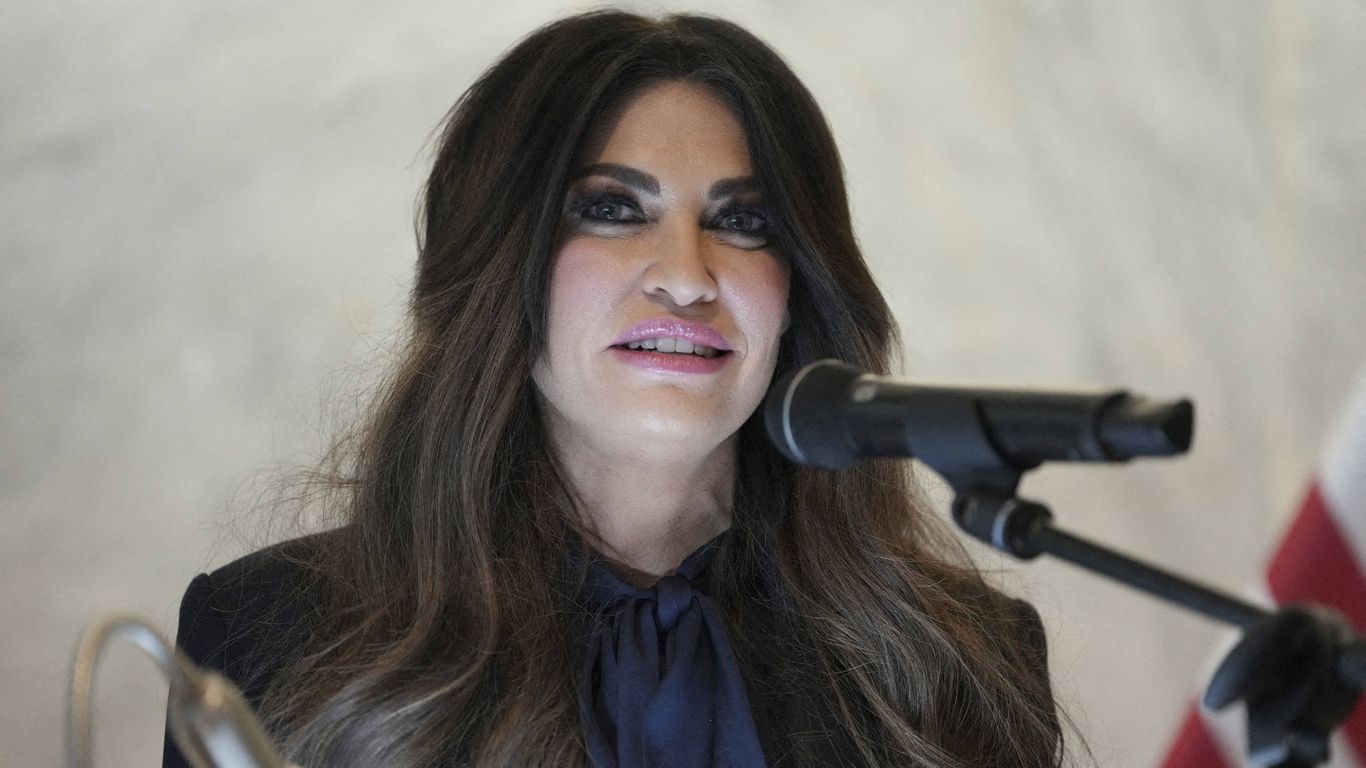
Kimberly Guilfoyle , the U.S. ambassador to Greece, announced her resignation Tuesday, shortly after the White House asked her to step down and following reports alleging misconduct before and during her diplomatic posting. Why it matters: The exit of the president's longtime political ally and former fiancée of his son Donald Trump Jr. follows a series of Wall Street Journal reports alleging she used her political connections to seek financial favors and promote private business interests. Guilfoyle has denied any wrongdoing. White House press secretary Katie Zacharia said Tuesday during her first press briefing that Guilfoyle was asked to resign. "She has been a wonderful asset to the team and we wish her well," Zacharia said. Driving the news: "My gratitude and respect for President Trump and Secretary Rubio remain unwavering," Guilfoyle wrote in a post on X on Tuesday. "I am proud of what we accomplished together, and I will always be a loyal supporter of President Trump and his mission to Make America Great Again." "While my time as Ambassador may be coming to an end, my commitment to President Trump, the America First movement, and the country I love will never end. It has been the honor of my lifetime to serve the United States of America." Guilfoyle's removal isn't entirely surprising, as Trump told reporters yesterday that he was "looking at" firing Guilfoyle following the allegations: "We're not happy," he said. Those comments follow a senior U.S. official telling AP that Trump and Rubio were "extremely pissed off" about the reports and were considering dismissing
A few observations explain what is likely to happen on Election Day 2026 and why it matters.
President Trump is turning to Vladimir Putin to help ease a global diesel crunch, setting up a clash between Washington's energy priorities and its efforts to pressure Russia over its invasion of Ukraine. Why it matters: The fuel shortage is among the most severe effects of the Iran war and Ukrainian strikes on Russian refineries. Average U.S. diesel prices remain far above $6 per gallon, adding to GOP headwinds in the midterm elections. Trump says his deal will help bring costs down. Catch up quick: Trump on Friday claimed an agreement to bring escalating Russian exports, and the Treasury Department waived sanctions to help enable it. A few things to watch... The campaign trail. So far a few Republicans in close races — including Michigan Senate candidate Mike Rogers and Alaska Sen. Dan Sullivan — have criticized the agreement. Republicans already saddled with Trump's unpopular policies in the midterms now face another awkward choice: whether to back his diesel deal with a dictator many of them despise, Axios' Andrew Pantazi writes. The market. Diesel futures dipped after the announcement. But analysts expressed doubt that the levels Trump is claiming will meaningfully sway prices in the U.S. and elsewhere — if Russia indeed delivers. Per Trump's claim, Russia will "immediately" provide what amounts to 2.24 million barrels, followed 3.73 million next month (equivalent to around 124,000 barrels per day spread over a month), and then roughly double it thereafter. "In the near-term, it's hard to see the waiver helping global fundamentals for diesel much," writes economics and
Without a ceasefire with Ukraine on attacking each other’s energy infrastructure—to which the Kremlin is unlikely to agree—the diesel agreement between Putin and Trump is largely for show, rather than representing a genuine increase in the volumes of Russian diesel on the global market.
Ahead of a tough winter for Ukraine, Donald Trump’s swing back toward Russia bodes ill. But instead of panicking, Kyiv’s European allies are focusing on action.
General George S. Patton reminds us that a good plan, violently executed today is better than a perfect plan next week. Doctrine agrees. Field Manual 5-0, Planning and Orders Production […]
Supporters of "Medicare for All" now outnumber opponents by nearly 2-to-1, according to a new survey of U.S. adults from the Axios-Ipsos American Health Index . The big picture: Two-thirds of all survey respondents — and half of Republicans — said the federal government should be willing to spend more tax dollars to lower health care costs for Americans. Why it matters: With three weeks to go before the midterm elections, and private health insurance premiums and prescription prices crushing voters, these findings suggest a path for swing-state candidates who embrace socialized medicine. But the public's openness is driven more by desperation than by confidence in government. Affordability is foremost on most Americans' minds, and health care brings almost daily reminders of economic pressure. Between the lines: Survey respondents say they want more government intervention — but they trust those leaders less than ever. Trust in President Trump for health-related information fell to a survey low of 20%. Trust in Health Secretary Robert F. Kennedy Jr. fell to a survey low of 25%. Trust in congressional Republicans (20%) and Democrats (25%) also were at lows. By the numbers: 43% of Americans said they support the idea of establishing a "Medicare for All" program to provide government-run health insurance to all, largely replacing private health insurance; 24% oppose the idea and 32% say they aren't sure. Nearly half of independents (47%) support it, as do 62% of Democrats. 21% of Republicans support Medicare for All, and 27% are undecided, compared with 52% who oppose the idea
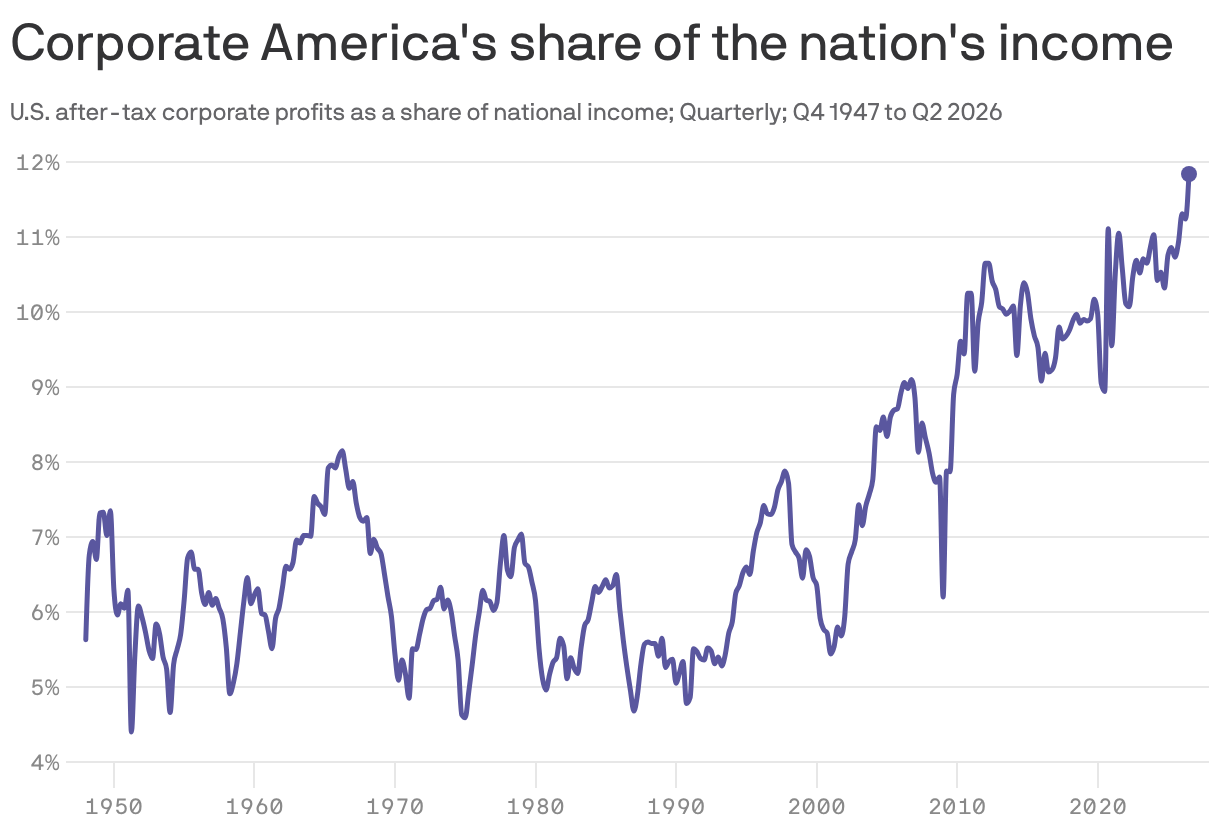
Data: U.S. Bureau of Economic Analysis, FactSet; Chart: Axios/Matt Phillips; Note: After-tax profit data includes inventory and capital depreciation adjustments. Corporate America is raking in record profits, luxuriating in luscious margins and capturing the largest chunk of the country's income on record. Why it matters: The corporate bonanza is bolstering the stock market, but it may also be playing a role in the persistently sour sentiment among the American electorate. The latest: Tuesday is the unofficial start of third-quarter earnings season as JPMorgan Chase, Goldman Sachs and others report results. Zoom in: Wall Street expects the members of the blue-chip S&P 500 index to continue to make it rain. Third-quarter earnings per share are expected to grow roughly 29% for the index, compared with the quarter in 2025, according to estimate data collected by FactSet. That's after a massive 50% annual increase in second-quarter earnings that was supercharged by the giant, non-operating gains on valuations of tech investments reported by Amazon and Alphabet. (Amazon, for example, penciled in its stake in Anthropic as boosting its profit by more than $50 billion.) But even without those enormous gains, the numbers were quite strong, thanks to the AI boom that analysts expect to keep powering giant profits. What they're saying: The market is still all about AI, but the gains are extremely concentrated . "At the stock level, AI infrastructure stocks are expected to drive more than half of S&P 500 EPS growth in Q3," wrote Ben Snider, chief U.S. equity analyst with Goldman Sachs.
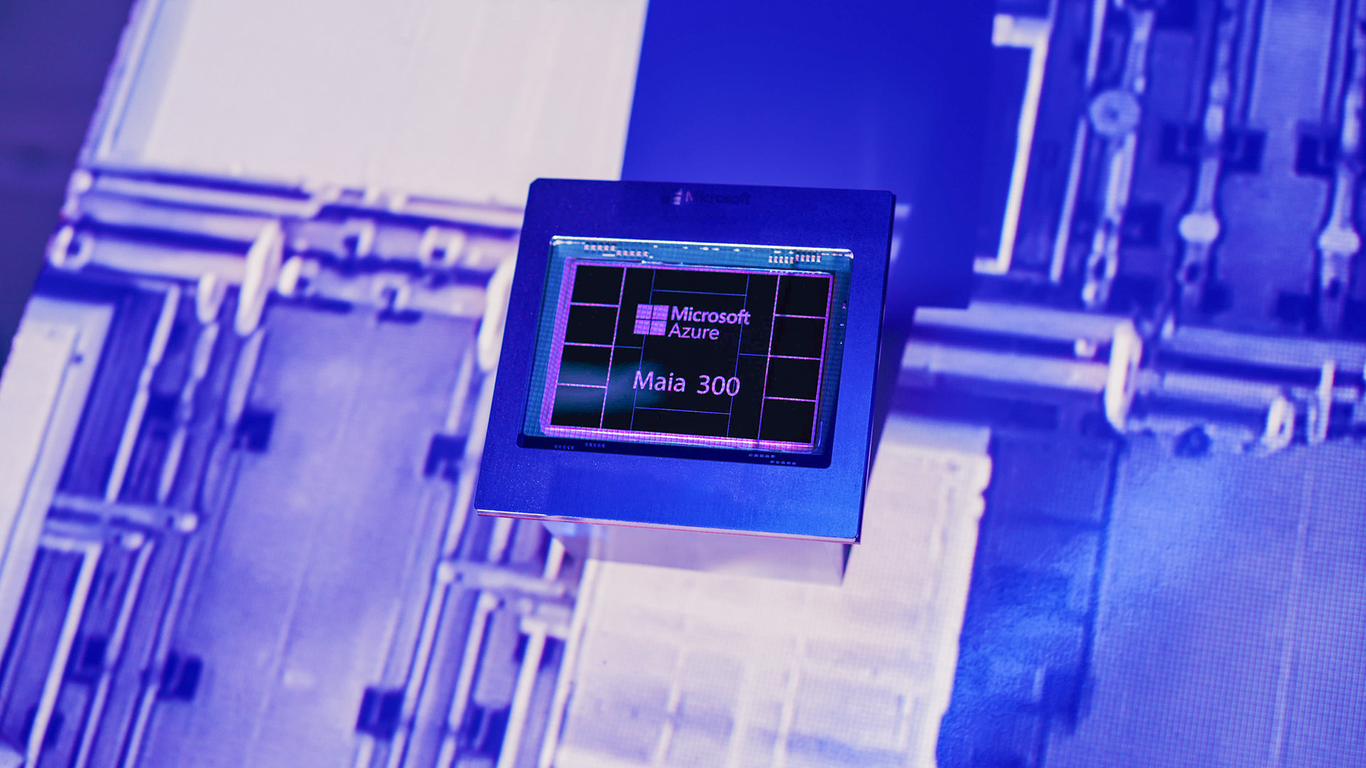
The trillion-dollar AI race is moving from software to silicon, as Microsoft's massive bet on its proprietary Maia chips proves Big Tech wants to wean itself off Nvidia's dominance. Why it matters: Microsoft's plan to power its AI products with custom silicon shows how every major Nvidia customer is now a competitor, seeking lower costs, improved performance and more control. The shift is particularly significant for inference — the computing needed to generate AI responses — as more sophisticated AI models and agents drive demand for computing power. Driving the news: Microsoft unveiled Maia 300, its latest custom AI accelerator, saying it will begin deploying the chip in 2027 and it will become the primary inference system for its own products and services. The company says Maia 300 will deliver 40% more AI tokens per megawatt than leading GPU-based systems. It's also designed to minimize unnecessary data movement between chips and memory, a growing bottleneck as AI models become more complex. The big picture: Microsoft's plan is part of a much broader shift, with nearly all major AI players seeking Nvidia alternatives. Google has been developing its own Tensor Processing Units for years, with its latest generation including separate versions optimized for training AI models and running inference. OpenAI is developing its Jalapeño chip with Broadcom, initially focusing on inference workloads. The company said in August that its first chip was outperforming Nvidia hardware on certain workloads and that it was already developing subsequent generations. Amazon has its own