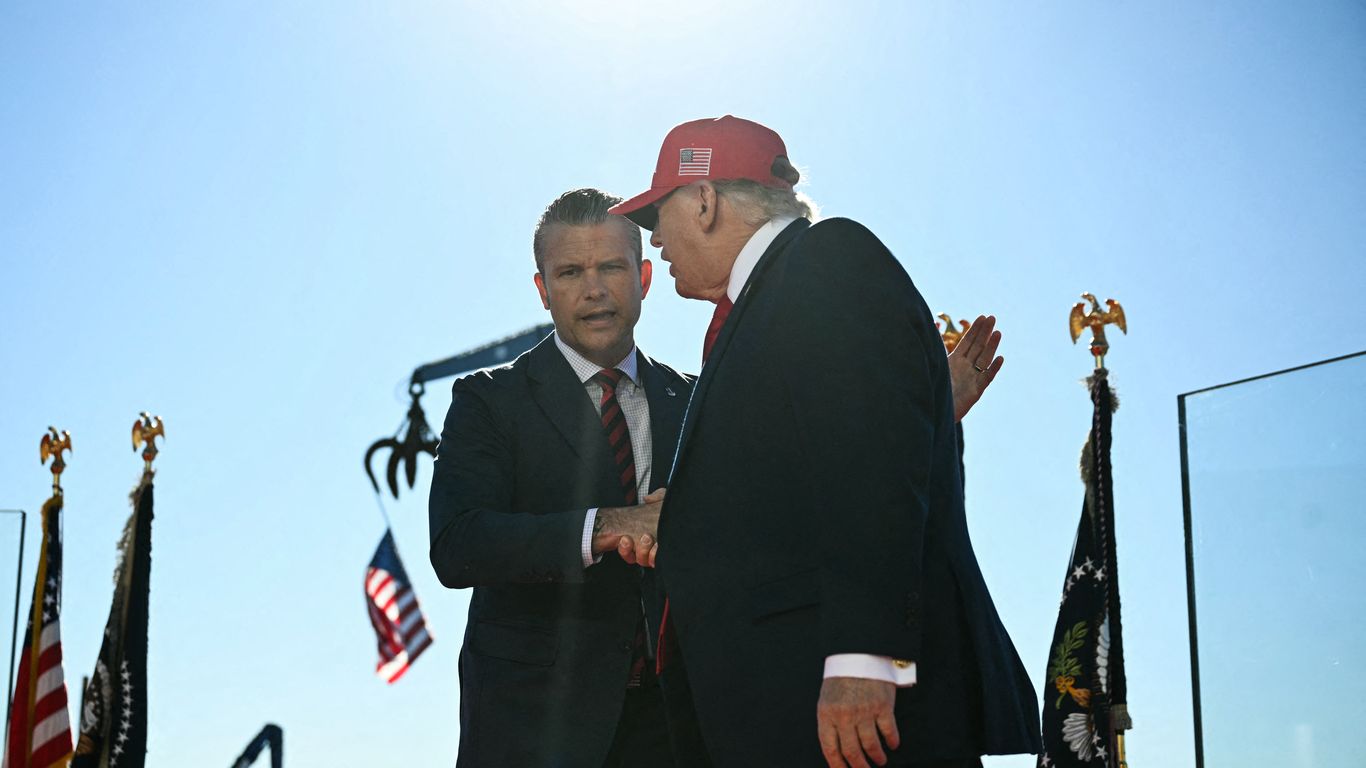
President Trump said in a Thursday Truth Social post the execution of the convicted Fort Hood shooter by firing squad will not be live-streamed. The big picture: The president's post walks back an idea that Defense Secretary Pete Hegseth pitched last week, setting off an avalanche of bipartisan condemnation. Driving the news: " He will die, as scheduled, by firing squad, but this event will not be streamed," Trump's post read. He added, "That said, the execution may be viewed in person by the immediate families of the victims, if they so choose." This is a breaking news story and will be updated.
Ukraine's Starlink and Starshield satellite services — critical tools in its war against Russia that were unexpectedly throttled this week — have been restored to full capacity, a Ukrainian official tells Axios. The official also said that Ukraine conducted a strike overnight against a Russian oil refinery — defying President Trump's demand that it stop hitting those facilities. Why it matters: The twin developments further strained the U.S.-Ukraine relationship, as the war with Russia drags on and the Trump administration sided with Russian President Vladimir Putin last week by lifting sanctions on Russian oil sales. State of play: The move angered Ukraine. President Volodymyr Zelensky responded by calling it "a weak decision" and a "gift to Putin." Trump then called for Ukraine to elect a new president. The crisis intensified this week when Elon Musk's SpaceX restricted service of Starlink — a satellite service used for defensive purposes in battle — while Starshield, a tool used for offensive war operations that is controlled by the U.S. government, was also slowed. After more than a day, the services were restored. Ukraine, meanwhile, fired on a Russian oil refinery, which U.S. officials are unlikely to look kindly upon. The Ukrainian official said the country resumed strikes because Russia continued to hit Ukrainian energy infrastructure, despite Trump announcing that the two sides had agreed to a ceasefire. That declaration came as a surprise to Zelensky. The bottom line: It's still unclear to many inside the Trump administration and the Ukrainian government whether T
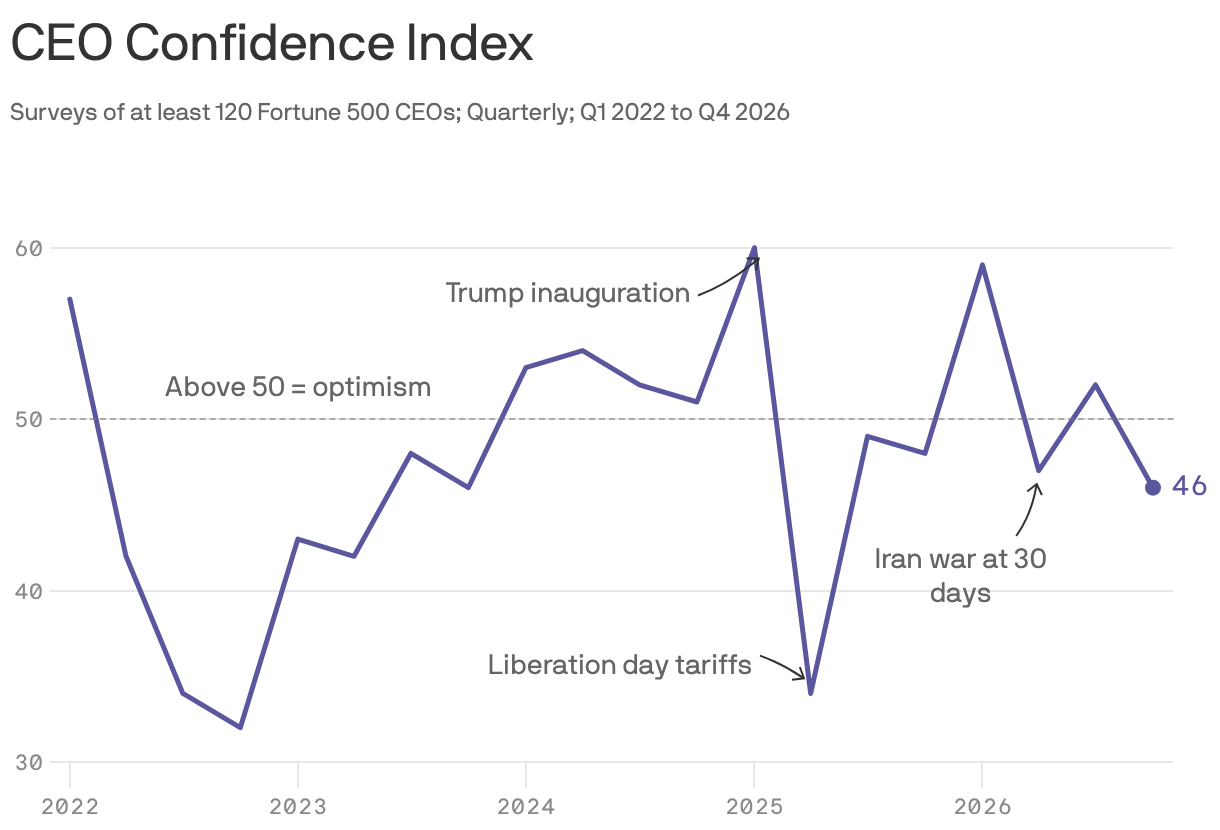
Data: The Conference Board and The Business Council; Chart: Axios/Emily Peck CEO confidence in the U.S. economy sank into negative territory earlier this month, finds a survey out Thursday morning from the Conference Board . Why it matters: Business leaders are mind-melding with most consumers, whose opinions on the economy are now lower than during the pandemic . Such sour sentiment is shaping up as a key issue in the midterms just weeks away. Where it stands: The CEO Confidence Index fell to 46 in the most recent period, down from 52 just three months ago — any number below 50 connotes negative sentiment. The nonprofit Conference Board and the Business Council surveyed 131 Fortune 500 CEOs from Sept. 21-Oct. 5. The survey measures how chief executives at major public companies feel about current economic conditions and their expectations for the economy and their own industries over the next six months. By the numbers: 41% of CEOs expected economic conditions to worsen — up from 19% in the previous quarter. Executives' concerns over cybersecurity, AI and geopolitics rose significantly from three months ago. 94% of CEOs cited cybersecurity threats among their top AI-related concerns. The surge in energy prices — particularly diesel, which is crucial to companies' energy costs — also contributed to the fall in sentiment, Dana Peterson, chief economist at the Conference Board, tells Axios. "All these inflationary shocks, one after the the other, is weighing down on the confidence of both CEOs and consumers," she says. Between the lines: The key worry when CEO moods darken is
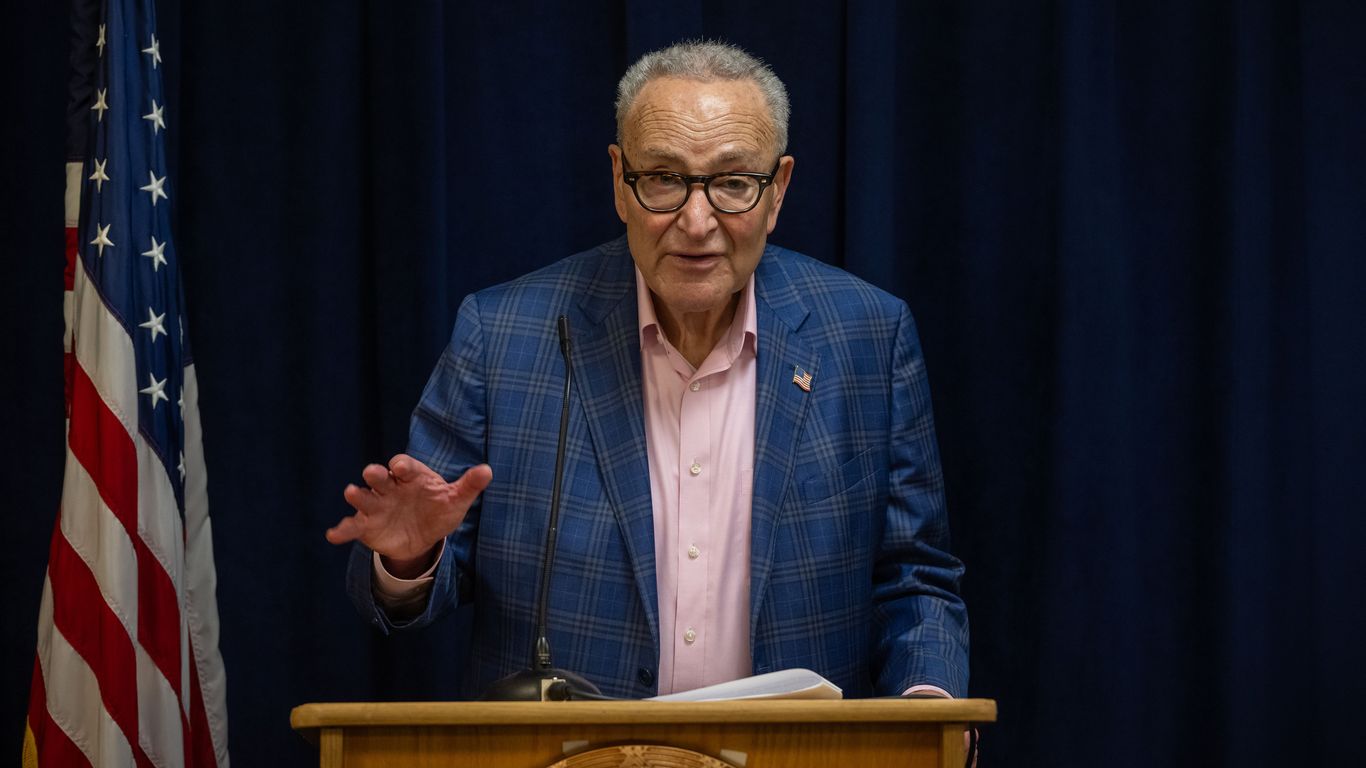
Senate Minority Leader Chuck Schumer (D-N.Y.) is on the cusp of leading his party to midterm victory and reclaiming his title as Senate majority leader. Winning the majority isn't guaranteed. But this son of Brooklyn, who has been in public life for 52 years, is more than favored to win a secret ballot to remain Democratic leader. Why it matters: At age 75 (76 by the time the new Congress convenes in January), Charles Ellis Schumer, an old-school pol who visits all 62 of New York's counties every year, looks poised to do what very few people do in life — go out on top. Behind the scenes: For starters, Democratic senators aren't quietly maneuvering — or publicly positioning themselves — to take the top job, according to senior aides. You can't beat someone with no one . A handful of Democratic Senate candidates, including Abdul El-Sayed in Michigan and Troy Jackson in Maine, haven't committed to supporting Schumer for leader. But they likely don't have the votes to stage a coup. And Schumer's super PAC is spending heavily to get them across the line. That calculus could change if Republicans overperform expectations with a massive win, potentially triggering a serious leadership challenge. Otherwise, the job is Schumer's for the asking — and he's asking. "I am running for re-election for leader. Period," he said two weeks ago. The intrigue: The bigger question surrounding Schumer involves 2028 and whether he'd retire at the top of his game or risk an embarrassing primary loss to, perhaps, Rep. Alexandria Ocasio-Cortez, who was born in the Bronx and represents parts of the Br
Gen Z and millennials have launched their biggest bid yet to remake Congress, but roughly seven in 10 were out by early September, a new report finds. Why it matters: These two generations are struggling to clear the first hurdles of a political system that rewards experience, fundraising and established party support. State of play: A new report from Future Caucus , a nonpartisan nonprofit that works with younger elected officials, found that a record share of this cycle's congressional candidates came from the nation's two youngest political generations. The group identified 3,918 candidates who filed for Congress this cycle, 31% more than in 2024. Of candidates with known or estimated ages, 36.4% were millennials or Gen Z, up from 23.4% in 2024. The report counts everyone who filed and doesn't track how many were first-time candidates. Between the lines : Many young candidates are trying to reach Congress without the political experience that helps candidates advance. Just 1.7% of Gen Z candidates and 9% of millennials have served in a state legislature. Among congressional challengers with age data, nearly 40% of those with state legislative experience reached the general-election stage, compared with 26.2% without it. By the numbers: Only 21.2% of Gen Z congressional candidates remained in the race at the report's September cutoff. That figure rose to 30.2% for millennials, 41.1% for Gen X and 44.5% for Baby Boomers. Nearly 33% of Gen Z candidates failed to qualify for a primary ballot, compared with 18.3% of millennials and 9.4% of Gen X. Incumbents averaged 59 years
The future of war is in outer space — and the U.S. is unprepared for the fallout. Why it matters: An outbreak of space warfare would cripple the global economy by disrupting satellites used for everything from worldwide financial transactions to maritime navigation. It would also hinder the U.S. military's ability to conduct some of its key missions on Earth. The dependence on satellites is precisely what makes them tempting targets for foes. China has made major advancements, such as satellites with robotic arms that could disable U.S. equipment and lasers that can blind military space sensors. Russia lags behind, but U.S. officials fear it may unleash an orbital nuclear weapon that "could pose a threat to all satellites and to the space-enabled services the world depends on." What they're saying: Todd Harrison, the American Enterprise Institute's space expert, said "we've been under the illusion" that an adversary would target only military satellites and leave civil or commercial ones alone. That's no longer the case. "In a future conflict, we could very well see the civilian and commercial space infrastructure that we often take for granted ... being attacked," Harrison said. "Is the American public ready for that? I'm not sure they are." " We're quickly coming to the conclusion that there's no sanctuary in space, not even in a small conflict," he added. Threat level: Last month, U.S. officials revealed that the military had weapons in space — a bombshell admission they said was aimed at deterring adversaries. Yes, but: Doug Loverro, a former top NASA and Pentagon space
AI companies for years have promised that smarter models would be worth the staggering cost to build them. Anthropic on Wednesday made that case in cash. The company presented eye-popping financials to investors, saying it was cash flow positive in the third quarter, with revenue surging nearly 50% to $16.8 billion compared with the April-to-June period. Why it matters: As Wall Street broadly spent the day fearing an AI bubble, Anthropic offered what investors have been desperate to see: evidence that frontier AI can be a sustainable business . State of play: The S&P 500 fell by more than 1% for the first time in 53 sessions, while Anthropic showed off a balance sheet that promises profitable AI, sources told Axios. Zoom in: Consider just one of the stats reported by Anthropic: The company is cash flow positive even as some of the world's most profitable companies are struggling to keep their AI spending in check. For context, Google parent Alphabet, long a money-printing machine, turned free cash flow negative in its second quarter as AI infrastructure investment soared. Investing gurus — especially those focused on the frothiness of companies relative to their underlying value — have long seen free cash flow as a gold standard for the long-term health of a business. Anthropic, a much younger company competing in the same expensive AI race, says it was cash flow positive in the third quarter. The Anthropic figures were first reported by the Financial Times . Yes, but: The company's blistering pace of growth appeared to slow compared with the difference between the first an
The Federal Trade Commission on Wednesday sent civil subpoenas to AI giants seeking documents about safety incidents that have spiraled into an industry crisis . The FTC sought documents from Anthropic and OpenAI with the scope of the probe focused on potential consumer protection violations, a person familiar told Axios. Why it matters: The investigation is one of a number of steps the administration has taken to show a firm hand with AI companies after multiple incidents in which unreleased models hacked websites or took deceptive or aggressive steps in testing. State of play: The agency on Wednesday sent out civil investigative demands, which help the government gather evidence and investigate ahead of potential litigation. They are more than 50 pages long each and ask for documents concerning security incidents and safeguarding practices. The agency is also asking for marketing materials and documents detailing company privacy policies, the source said. Investigative demands will be sent to third party AI organizations at a later date, the person familiar said. Zoom in: The FTC has plans to compel top AI executives to testify about their products, according to the source. The agency has investigative authority to examine actions related to consumer harms that could be seen as unfair or deceptive. Those can relate to a wide range of misbehavior, from how companies charge for services or if they're alleged to have misled users. AI companies continue to face scrutiny about the safety of their products. Ferguson has echoed the view of other administration figures and execut
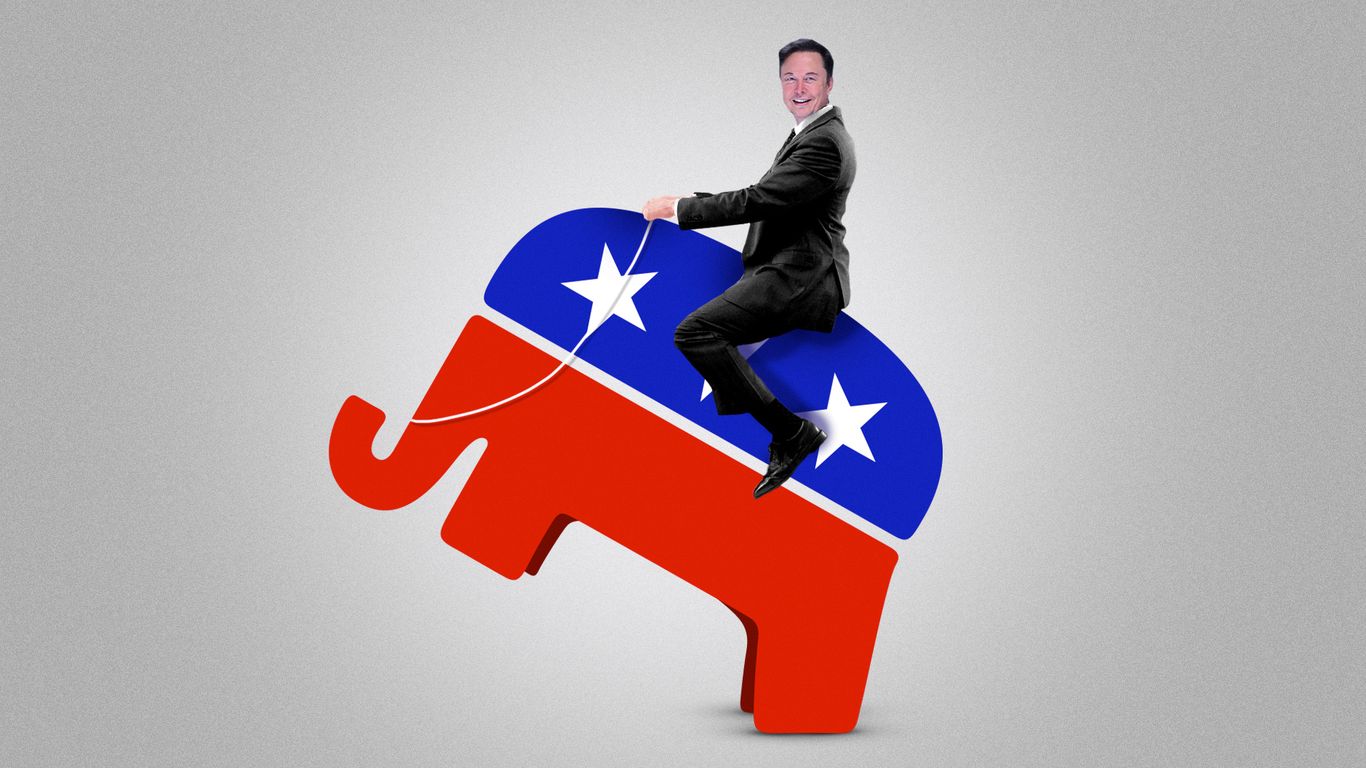
Elon Musk 's team reached out to Republicans in late August to discuss a train wreck they all saw coming: Unless the GOP poured more money into Texas immediately, the state's Senate race could be lost in a matter of weeks. Why it matters: That chat set in motion a massive rescue operation for Republican Ken Paxton funded substantially by Musk, the party's largest donor, who gave $158 million in September alone. Musk's rescue gave Paxton's sleepy campaign new life and showed why the world's richest person is the X factor in the push to prevent a midterm debacle for President Trump's party. Zoom out: It also helped Republicans avoid a death-spiral scenario: that propping up Paxton in Texas would force them to drain badly needed resources from other Senate battlegrounds. Instead, Musk's money allowed Republicans to flood Texas' expensive TV markets and free up cash to shore up unexpectedly competitive races in Kansas and South Carolina . Behind the scenes: In late August, Democrat James Talarico was dominating the Texas airwaves, portraying Paxton, the state's attorney general, as one of the nation's most corrupt politicians. Paxton, who isn't known as a prolific fundraiser, was dark on TV. Polling seen by Musk's team and the GOP's Senate Leadership Fund (SLF) suggested his chances were sinking. Against that backdrop, Musk's top political adviser, Chris Young, called SLF president Alex Latcham with an idea: Musk would donate $5 million to a pro-Paxton super PAC if that group raised another $5 million. Latcham countered: Would Musk contribute $10 million if the pro-Paxton group
Bill Gates is gearing up to dramatically expand his AI safety push , personally leaning on business leaders and considering a major deployment of his resources, sources tell Axios. Why it matters : The formidable, sharp-elbowed Bill Gates who built Microsoft is back, and he's directing his competitive fire toward what he has come to see as one of the most important causes of his lifetime. "I can reach CEOs on this better than you can," Gates told one person he consulted on AI safety, showing an eagerness for combat that associates say is a return to "OG" form. Driving the news : Once a voice for optimism on AI, Gates has grown dismayed by an escalation of model capabilities, alarming security incidents and what he sees as insufficient regulation, sources say. As he prepared to make the case for a far more robust regulatory framework on AI, he conferred extensively with leading AI executives, researchers, and safety advocates, including Anthropic CEO Dario Amodei. That process led Gates to see containing AI risks as one of the most important issues he will engage with in his lifetime, the people said. Behind the scenes : People Gates has spoken to called his advocacy a "comeback tour," an attempt to rebuild a legacy that has been tarnished by his past association with Jeffrey Epstein. Gates has said he's aware that some people may dismiss his warnings due to the Epstein ties. "What I did do, in some ways, was very limited, and it was motivated by my desire to raise money," Gates told Axios in August. "But ... it was a huge mistake." However, Gates sees the stakes as too high
Republicans who haven't faced serious reelection fights in years are suddenly campaigning like they're running in swing districts. Why it matters: Democrats are eyeing House districts so Republican that they weren't even on the party's radar at the start of the 2026 midterm election cycle. That includes incumbents like Reps. John McGuire (R-Va.) and Lauren Boebert (R-Colo.), neither of whom were seen as remotely vulnerable coming into the second Trump term. Most of these seats haven't elected a Democrat in years or even decades and are only truly in play if the party is winning nationally by double digits. Even then, some are a stretch. But candidates in Trump country say frustration with rising prices, corruption, the war in Iran and political incumbency in general have led to a sea change that could precipitate some shock results on Nov. 3. State of play: Rep. Jack Bergman (R-Mich.) is running scathing attack ads against Democratic opponent Callie Barr, labeling her "Crooked Callie" and tying her to Alexandria Ocasio-Cortez, Rashida Tlaib and Abdul El-Sayed. That's a stark change from 2024, when Bergman defeated Barr by 21 percentage points. His ads that cycle made at most a passing reference to Barr , according to AdImpact. Rep. John McGuire (R-Va.) won by 15 points in 2024, a sleepy general election with minimal spending or ads. He too is running attack ads amid a challenge from former Democratic Rep. Tom Perriello. What we're hearing: Democrats say they are astounded by the level of anti-establishment frustration in their districts. "We're in a real race. It's unreal,"
Speaker Mike Johnson's sudden frank talk about his political future is upending the quiet maneuvering ahead of a post-election GOP leadership contest. Why it matters: The race could become a three-way fight if Johnson follows former Speaker Nancy Pelosi's example and tries to stay in leadership if Republicans lose the majority. Majority Leader Steve Scalise (R-La.) has widely been viewed as a top contender for the job — and Rep. Jim Jordan (R-Ohio) did not seek a waiver to remain Judiciary chair, fueling speculation that he's preparing to run for leader. Many Republicans privately worry they're going to lose and expected Johnson to step aside if the majority slips away. But his new blunt and unexpected musings on his own future challenge that assumption. Driving the news: "In the unlikely scenario where we lost the majority, I would expect my colleagues would ask me to continue leading this conference, even if we have divided government," Johnson told CBS News. But some members aren't buying it: "Why would you want to be minority leader after speaker?" one House Republican told us, adding they would support new leadership. One leader not taking the bait is Scalise: "There are no races that any of us need to be talking about until after the election's over," he told Axios during an in-flight interview while campaigning out west. Scalise acknowledged Johnson's comments: "I think early on he said he wasn't going to play in hypotheticals, and you know, and he might have gone down that path for a minute. We're focused on holding the House, and that's where my energy is." Between
ICE is rejecting a Government Accountability Office recommendation for technology that automatically activates body cameras when weapons are drawn and safeguards to ensure agents record arrests, searches and detentions when required. Why it matters: The GAO warns that ICE risks losing crucial evidence on what happened during incidents involving force amid growing distrust over agent accountability in the wake of multiple fatal ICE shootings . The big picture: The GAO report found both CBP and ICE are struggling to manage their body-camera programs amid shifting deployment plans. CBP and ICE haven't updated their camera plans since 2022 and 2024, respectively. The plans fail to account for funding changes, expanded deployment needs and pauses in camera rollouts following one of Trump's executive orders that rescinded a Biden-era federal body-camera mandate. ICE's camera activation dispute is the central flashpoint in the GAO review, as DHS accepted all six other recommendations. CBP uses technology that automatically activates body cameras when officers draw firearms or turn on emergency lights, but ICE doesn't. Zoom in: At six of the 10 locations GAO reviewed, CBP and ICE personnel said they were unsure when they had to turn on their cameras. Some said camera use is "not mandated," "up to interpretation," and "has gray areas." Agents specifically reported uncertainty about whether they should record during "subpoena issuance, in-custody interviews, vehicle searches, undercover operations, and detainee transports." At five sites, people said they weren't sure how to use a ne
The rupture between President Trump and Ukrainian President Volodymyr Zelensky over last week's diesel deal deepened Wednesday after an Elon Musk -owned satellite system used by Ukraine unexpectedly restricted service — undercutting Ukraine's fight against Russia. Why it matters: The Ukrainian military uses SpaceX's Starlink satellite communications system to control and operate its reconnaissance and intercept drones. When it doesn't operate at full capacity, Ukraine's ability to gather intelligence, use interceptor drones and conduct long-range strikes against Russia is impeded. Service was partially restored on Wednesday, but Ukrainian officials were still searching for answers about why the service was throttled and who was responsible. The limitations came days after a new crisis erupted between the U.S. and Ukraine over Trump's agreement to lift sanctions on Russian oil sales. Zelensky criticized the move, then Trump called for Ukraine to elect a new president. A senior U.S. official said the Trump administration had nothing to do with the alleged Starlink service constraints. But Ukrainian officials remain suspicious. Driving the news: Ukrainian officials said SpaceX imposed the restrictions Tuesday night. The system turned off, they said, when a drone exceeded 160 kph. In some cases, it disconnected when the speed went over 80 kph. The Starlink restrictions came several hours after the Ukrainian military did not receive an early warning about a Russian ballistic missile attack. Ukrainian officials said the U.S. has provided such alerts over the last several years as
AI tools are now exacerbating a largely hidden problem that frontier AI companies have been contending with for years: the risk that employees will exploit their access to spy on their employers. Why it matters: The same AI tools that companies are racing to release can also help people plan crimes and develop the technology to carry them out, creating another security headache for the companies building them. Driving the news: Federal prosecutors charged Abdulrahman Alfozan, a Saudi national who has been an OpenAI engineer since July 2025, with allegedly attempting to intercept private conversations at OpenAI. Around Sept. 30, the company found a "surreptitious audio recording device" that was plugged into a USB port in the back of a television in an executive conference room. OpenAI said in a post on X that it used its own AI models to help "understand the device and where it had come from." Zoom in: Investigators allege Alfozan used AI tools to research company meeting rooms and develop recording equipment, according to an FBI affidavit . Alfozan used a "productivity agent" to ask basic information about OpenAI's offices, the documents say. Those queries included: "What meeting was this presented at and when was it record?," "List meeting rooms in (company) that are 6+", and "can you list today's meeting in this room." Investigators also said that an AI chatbot account tied to his spouse asked the model to build a "continuous audio recorder" and to add "browser access an controls," as well as encrypt the memory card where the recordings were saved. The complaint didn't s
The Trump administration is threatening emergency court action unless California officials investigate potential ineligible voters within 48 hours and set aside ballots from anyone whose citizenship they cannot verify, according to two letters sent to state officials from the Justice Department. Why it matters: With voting already underway, President Trump 's DOJ could delay ballots from eligible Californians mistakenly flagged as noncitizens and set up a court fight just three weeks before Election Day. Driving the news: Acting Deputy Attorney General R. Trent McCotter sent a letter Tuesday to Los Angeles County Registrar-Recorder/County Clerk Dean Logan along with a thumb drive of "likely noncitizens who were sent a vote-by-mail ballot," according to a copy of the letter shared with Axios. McCotter asks local officials to investigate their citizenship status by noon October 15. The letter did not say how many people are on the list. For anyone whose status can't be confirmed, DOJ asks the officials to "segregate—not cancel" those ballots and suspend signature verification or counting of any ballots already returned. DOJ also asks officials to withhold ballots from people on the list unless their citizenship has been confirmed. California Secretary of State Shirley Weber received a similar letter . Friction point: McCotter closed his letter with a threat: "If you cannot implement this process by then, given the ongoing federal election, the United States will have no choice but to seek emergency relief." What they're saying: "This should not be controversial, as the crimin
President Trump has directed his White House counsel to examine explosive allegations dropped on him Friday in the Oval Office: Former Trump attorney Alina Habba told the president that another one of his top advisers — former Kennedy Center leader Ric Grenell — failed to deposit a multimillion-dollar donation that her billionaire husband made to the center a year ago, according to four senior administration officials and three insiders briefed on the controversy. Grenell denied the accusations as "absurd" and a "lie." Habba and her husband, Turhan Mildon, declined to comment through a spokesperson. Why it matters: The extraordinary row between the two top-tier presidential advisers and former allies provides a rare and acrimonious behind-the-scenes glimpse into the intersection of power, influence and money in Trump's Washington. The total value of the contribution in question: nearly $6 million, White House sources said Habba told them. A senior administration official cautioned that "these are only allegations. We don't know if they're true. This could be a misunderstanding." Said another: "POTUS doesn't want to deal with this. Of course, he's concerned. But if there is missing money, this is a big, big problem." Just a few months ago , Grenell was friends with Mildon and Habba. But he was notably absent from their $10 million wedding that was attended by Trump world officials, power brokers and luminaries last month. "This is the ultimate MAGA blood feud," said one Trump world insider with knowledge of the conflict. Zoom in: The dispute grew out of a friendship between
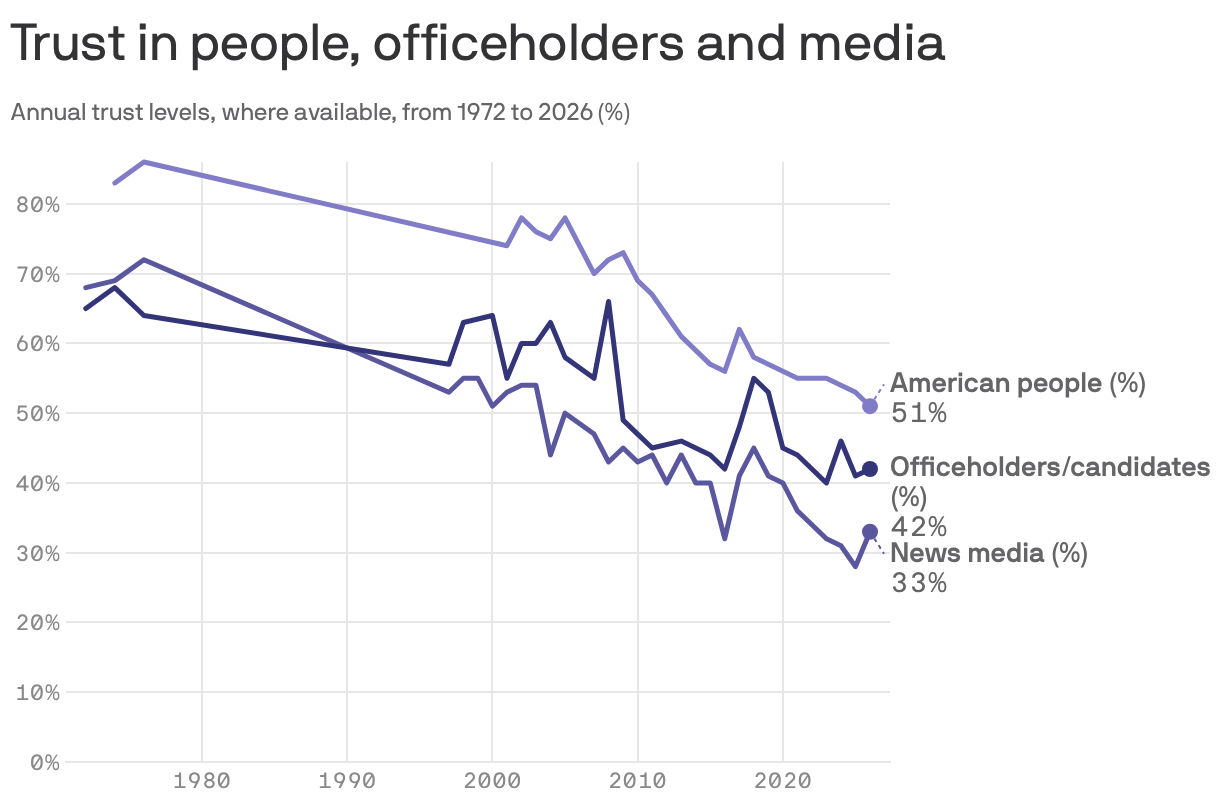
Data: Gallup ; Chart: Axios Americans' trust in their fellow citizens' democratic judgment has fallen to its lowest recorded level in more than five decades, according to a new Gallup survey. The big picture: Americans' growing distrust of political leaders and institutions now extends to one another, with Democrats and Republicans showing similar levels of skepticism. By the numbers: 51% of U.S. adults have a great deal or fair amount of trust in Americans as a whole to make democratic judgments, per Gallup. That's the lowest reading since Gallup began tracking the measure in 1974. The distrust cuts across party lines: 53% of Democrats, 51% of Republicans and 49% of independents trust Americans' ability to make democratic decisions. Flashback: Trust stood at 86% in 1976 and 78% in both 2002 and 2005. Trust has stayed below 60% since 2018, according to Gallup. State of play: Americans have more trust in their local government (67%) and state government (55%) than in their fellow citizens' democratic judgment (51%). The survey also found that 42% of Americans trust politicians who hold or seek public office, while 33% trust the news media. Zoom out: Americans' confidence in major U.S. institutions, including Congress, the presidency and the banking system, has also fallen to historically low levels. Methodology: Gallup surveyed 1,000 U.S. adults by landline and cellphone Sept. 1–17, 2026; the weighting-adjusted margin of error was plus or minus 4 percentage points.
America's inflation problem is becoming harder to contain, with new evidence Wednesday that price pressures are extending beyond the war-related energy shock rattling the global economy . Why it matters: Inflation is squeezing household budgets and dimming hopes for relief. It is also increasing the prospect that the Fed will have to raise interest rates further. What they're saying: "Higher energy costs are beginning to seep into broader services prices, increasing the risk that this inflation burst will persist," Fitch Ratings economist Olu Sonola wrote in a note. The Consumer Price Index report "stands out as the first of the year in which price pressure appeared to be showing up in most corners of the consumption basket at once," Glenmede's Jason Pride wrote. By the numbers: The CPI rose 0.6% in September from the prior month, accelerating from August's 0.4% increase. The index increased 3.7% in the 12 months through September, compared with 3.4% in the prior month. Gasoline prices surged 9% in September, accounting for more than half of the monthly jump in consumer prices. Core prices, which exclude food and energy, advanced 0.3% for the second consecutive month. The annual rate accelerated to 2.6% from 2.4%. The intrigue: Over the past three months, core CPI has risen at a 3.4% annualized rate, up notably from 2% in August — a sign that underlying inflation pressures are strengthening. Inflation was stubborn in parts of the services economy that are less directly exposed to the energy price surge. Shelter costs accelerated last month, rising 0.4%, while used car price
Data: Social Security Administration; Chart: Neil Irwin/Axios Social Security recipients will see the largest rise in their monthly payments in four years in January, with a 3.6% cost-of-living adjustment. Driving the news: The Social Security Administration announced the 2027 COLA adjustment for 76 million recipients of retirement and disability benefits, which by law is calculated based on the Consumer Price Index for the July-through-September quarter. That will increase the average retiree's benefits by $900 a year, or $75 a month. The agency also said that the cutoff for Social Security taxes will rise to $192,300 in 2027, from $184,500 this year. Income above that threshold is not subject to payroll tax. How it works: The adjustment is, by statute, determined by the year-over-year change in CPI for the third quarter. Thus, the September data released this morning was the final input needed to calculate the adjustment. Between the lines: The adjustment will mean more nominal income for seniors and disability recipients, amounting to a mild fiscal stimulus come January. However, it also accelerates Social Security's looming fiscal problems, with its trust fund scheduled to expire in six years. The most recent projections issued by the program's trustees assumed a 0.9 percentage point lower COLA for 2027, the Committee for a Responsible Federal Budget notes.