Chatham HouseArticle
Cut-off test
Cut-off test 17 September 2026 — 20:00 TO 21:00 BST Anonymous (not verified) 17 September 2026 Chatham House Description
Anonymous
Thu, 15 Oct 2026
Cut-off test 17 September 2026 — 20:00 TO 21:00 BST Anonymous (not verified) 17 September 2026 Chatham House Description
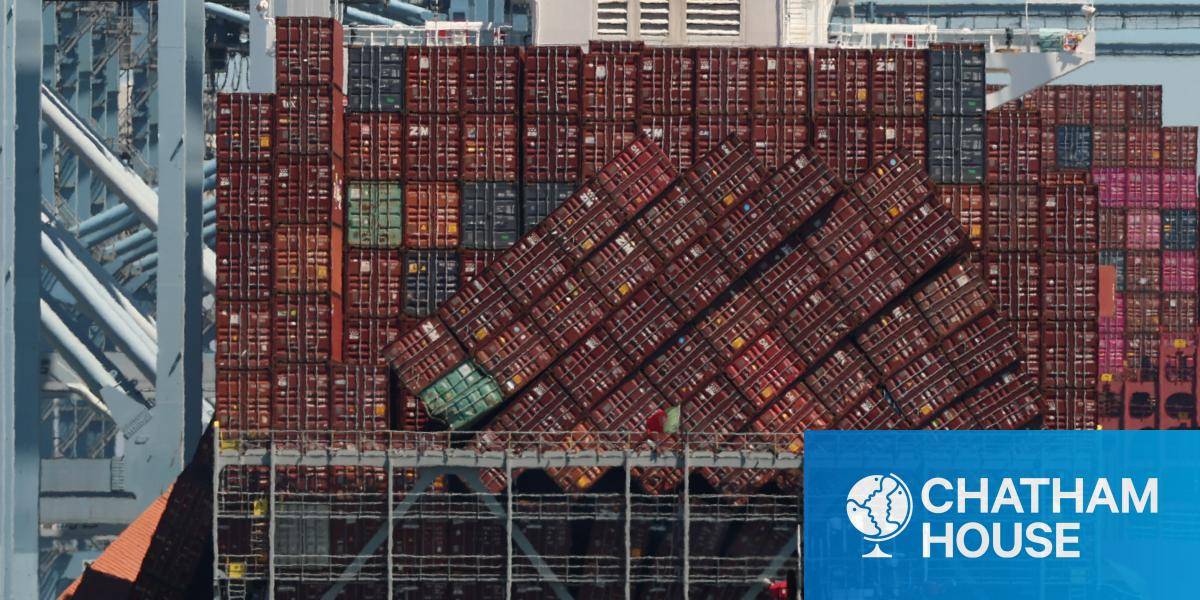
Imbalances are a feature of the global financial system, not a bug Expert comment jon.wallace 17 September 2026 The current focus on ‘global imbalances’ is too easily used by policymakers as a smokescreen for their own domestic failings. Global imbalances are back on the international finance agenda this year, prompting a flagship G7 report and creating discord at the G20 finance minsters’ summit. Seemingly this focus on global imbalances is justified. China’s trade in goods surplus now alarms Europe’s leaders as much as it worries America’s. The US’s net liability to the world – the degree to which its overseas borrowing exceeds its overseas investments – reached an astonishing 70 per cent of US GDP in 2025. The last time global imbalances were this prominent was just ahead of 2008’s Global Financial Crisis. What a shame, then, that this focus is so misguided. Imbalances are a feature of the global financial system, not a bug. They arise from saving and investment decisions, allowing diversification and dispersing risk in the process. In truth, ‘global imbalances’ are not primarily a global phenomenon. They are simply the product of all the world’s domestic imbalances added up. And because foreign investment is more mobile than domestic investment, it is more likely to punish bad domestic policymaking by moving elsewhere. The result is to impose discipline – constraints – on political choices. There is a generous interpretation of the motives for the current focus on global imbalances. It is possible that simultaneous domestic reforms across the global economy would make f
Corporate Leaders Series: Catherine Raw, Chief Development Officer at global resources company BHP 14 October 2026 — 09:00 TO 10:00 BST Anonymous (not verified) 17 September 2026 Chatham House Hear from Catherine Raw at BHP, the world’s largest mining company by market capitalization, on the forces reshaping global demand for resources. Hear from Catherine Raw at BHP, the world’s largest mining company by market capitalization, on the forces reshaping global demand for resources. Trade volatility, the energy transition and state intervention are reshaping demand for strategic resources. In this Corporate Leaders Series event, BHP Chief Development Officer Catherine Raw examines how capital, policy and supply chains are increasingly interconnected, and what effective leadership looks like as global demand continues to grow. This event discusses: What is driving global demand for copper, iron ore, steelmaking, coal and potash? How are trade and industrial policies reshaping resource investment decisions? What role can strategic partnerships play in strengthening supply chains? How should resource companies balance the energy transition with near-term cost pressures? What does effective global leadership look like in volatile markets? If you are not a corporate member of Chatham House but would still like to attend, please email the Conferences team to apply to attend.
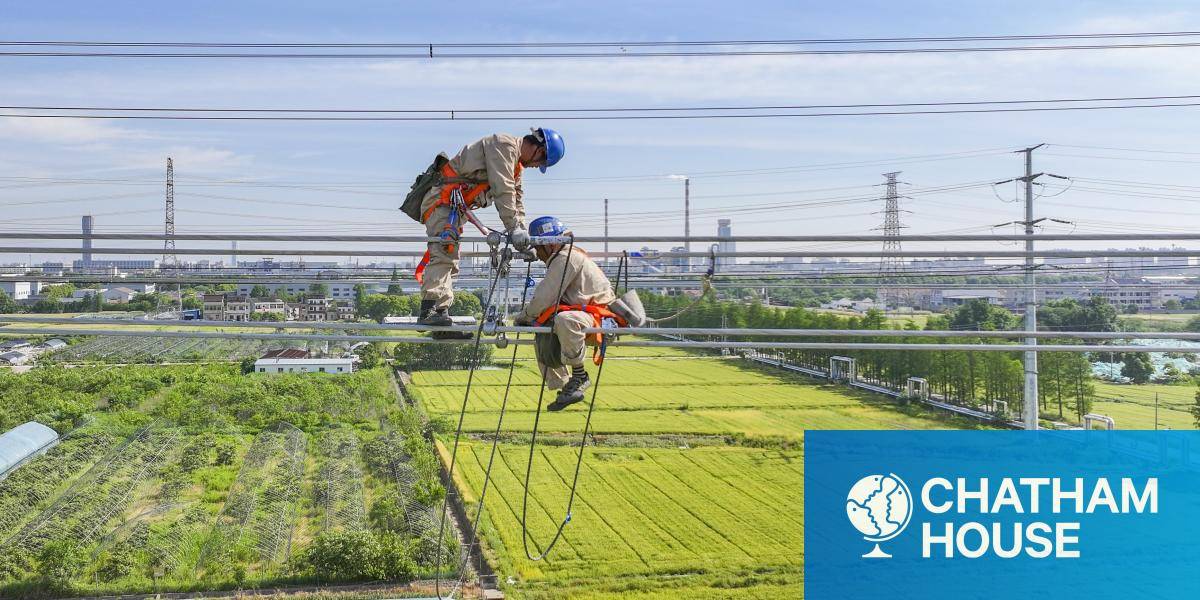
China is weathering the Hormuz energy crisis. But copying its model comes with risks Expert comment thilton.drupal 17 September 2026 China absorbed the shock by drawing on stockpiles and a decade of electrification. Europe needs electrification for security, but it needs to decide which parts of the system it is willing to buy from Beijing. Resources are no longer ‘king’ when it comes to energy, wrote Zhao Hongtu and Chen Wenlin in the 1 September 2026 edition of Qiushi , the Chinese Communist Party’s flagship theoretical journal. Mineral-rich economies may have some leverage, but the countries that control ‘transition-related technology, finance and rules’ will gain more influence as the world sees the rise of the ‘electrostate’, with ‘China, India and Brazil becoming the main force of new energy development.’ As a result of the US-Israeli war on Iran, argue Zhao and Chen, energy security has become a priority in national policymaking: ‘clean energy is seen as an important route to security’ and ‘economies that actively embrace the energy transition may occupy more important positions in the future global energy landscape.’ It is unsurprising that a CCP journal would commend China’s efforts in building renewable energy and managing the fallout of the Iran war. But the numbers support their conclusions. The oil importer most exposed to the crisis in the Strait of Hormuz – China imports 70 per cent of its oil, around half of it from the Gulf – has also been the least disrupted. Weathering the storm China’s strength in weathering the Hormuz crisis so far stands in contrast to
The European agenda and UK–EU relations: a French perspective on a changing world 24 September 2026 — 11:30 TO 12:30 BST Anonymous (not verified) 16 September 2026 Chatham House and Online How France views the current state of European affairs and the next phase of cooperation between the EU and the UK under the new Burnham government. How France views the next phase of cooperation between the EU and the UK under the new Burnham government As part of the UK in the World Programme’s new UK–EU series, join France’s Minister for Europe, Benjamin Haddad to examine the EU agenda and the future of UK–EU relations. The discussion will explore how Europe can strengthen cooperation, security and competitiveness in a changing geopolitical environment. This event will discuss: What is France’s perspective on the European agenda? How does the EU-UK relation fit into that agenda? What opportunities exist to deepen UK–EU cooperation a decade after Brexit? How does France view the future of the relationship between London and Brussels What major political, economic and security challenges remain? How can the UK and EU work more closely on European security and defence? What role can France and the UK play in strengthening Europe’s competitiveness and influence? What outcomes are realistic in the near term for UK–EU relations?
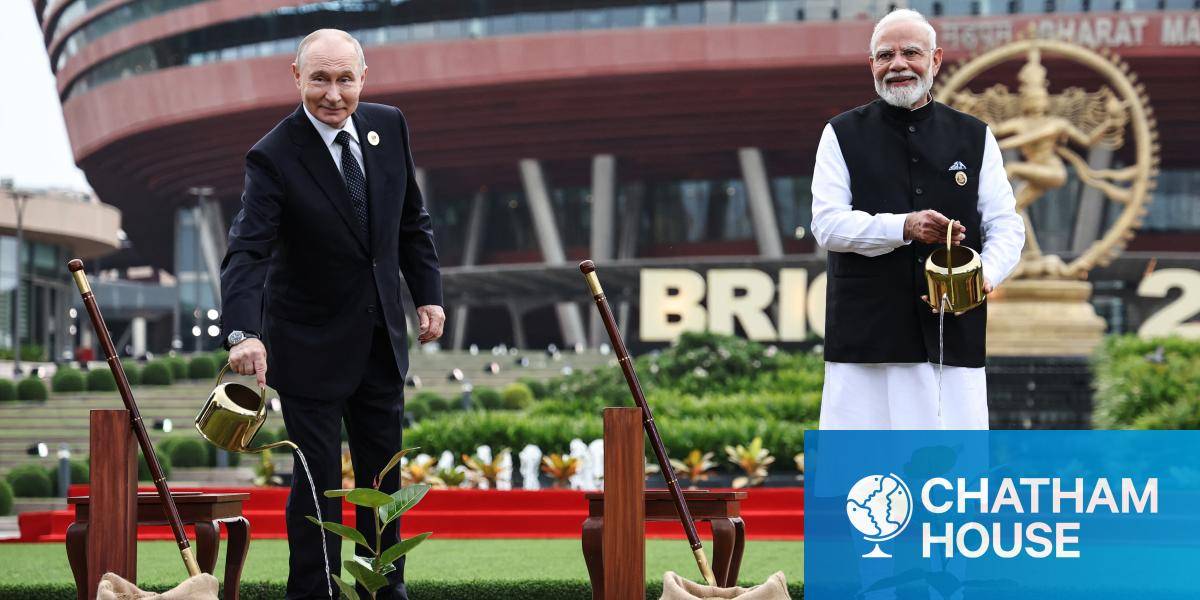
Putin is far from isolated. Europe must play him at the long game Expert comment jon.wallace 15 September 2026 The SCO and BRICS summits indicate Russia retains sufficient value to China, India and other non-Western powers to pursue its war objectives. Europe needs to adjust to that reality. The past fortnight has seen President Vladimir Putin undertake plenty of summit diplomacy. Throughout he has shown no sign he is open to compromise on Russia’s war aims in Ukraine. On the contrary, escalation has accelerated. Europe seems inclined to read this increased aggression as a sign of desperation on Moscow’s part. But that is a miscalculation. In reality, the Kremlin’s strategy of blended diplomatic impassivity and calibrated escalation may be stronger than it looks. No backing down US envoys Steve Witkoff and Jared Kushner spent more than three hours with Putin in Moscow on 5 September, discussing how to end the war. The Kremlin hailed the discussions as ‘highly useful’ but gave no indication that it was ready to relax its demands: Ukrainian territorial concessions and restrictions on Kyiv’s future security alignment. Days later, an offer by President Volodymyr Zelenskyy to meet Putin at December’s G20 summit in Miami was rebuffed. Meanwhile, Russian attacks have intensified. On 13 September, a Russian drone struck railway infrastructure near Yahodyn, shortly after a train carrying Boris Johnson, former CIA director David Petraeus and others had passed through the area. Whether they were deliberately targeted remains unknown. What is certain is that the strike was part of Russ
Timing test 15 September 2026 — 17:00 TO 18:00 BST Anonymous (not verified) 15 September 2026 Chatham House Description
Timing test 15 September 2026 — 14:00 TO 15:00 BST Anonymous (not verified) 15 September 2026 Chatham House and Online Description
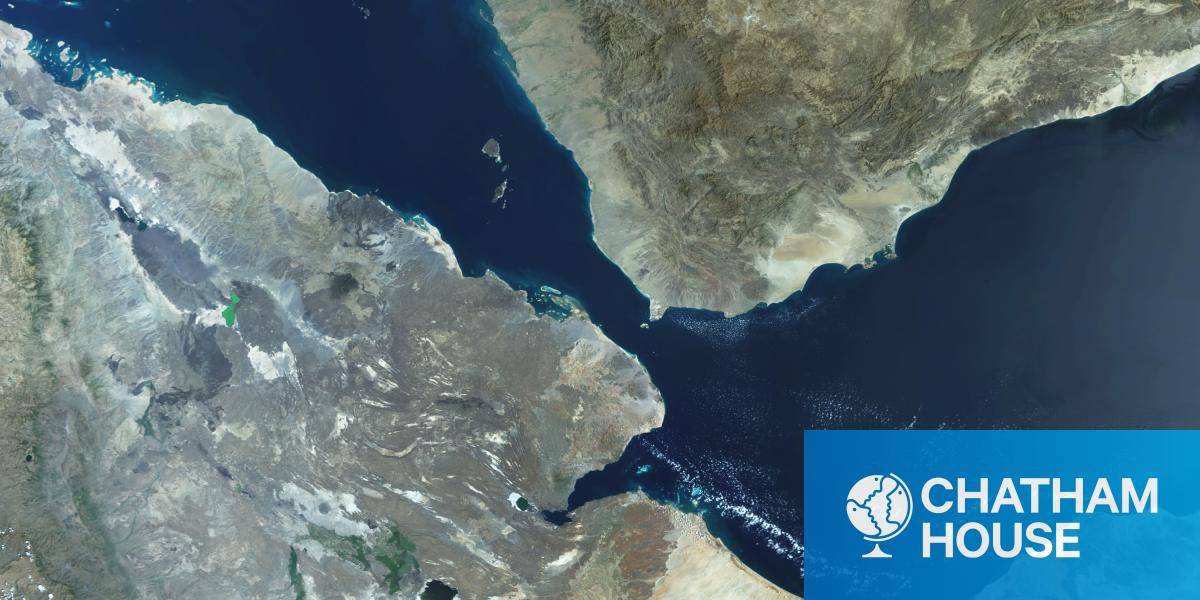
The Houthis’ capture of Mocha has transformed the war in Yemen – and the geopolitics of the Red Sea Expert comment thilton.drupal 14 September 2026 Iran and its allies can now exert pressure on two strategic maritime chokepoints, with global implications. A more coherent international approach to Yemen is needed. The Houthi armed group recently captured the strategic port city of Mocha in southwestern Yemen and advanced along the coast of the Bab al-Mandab Strait. This represents the most consequential change in territorial control in Yemen for years. For Yemen, the offensive risks reopening a war that never formally ended but had become significantly less violent since the UN-mediated truce of 2022. For the wider region, the implications are also massive. The Houthis’ new territorial position gives them much greater ability to influence maritime shipping through Bab al-Mandab, the narrow passage connecting the Gulf of Aden to the Red Sea and ultimately the Suez Canal. Together with Iran’s disruption of the Strait of Hormuz, Iran and its allies now have the capacity to exert pressure on two of the world’s most strategically important maritime chokepoints. The Houthis have also launched attacks into Saudi Arabia, including against energy infrastructure, that have reportedly injured civilians. This also constitutes an escalation in the conflict and poses questions for Riyadh and its US ally. — Made with Natural Earth data. The fragmentation of Yemen’s anti-Houthi camp Houthi forces, who control most of western Yemen, made a rapid push down the Red Sea coast last week. Governm
Is AI really getting out of control? Expert comment jon.wallace 14 September 2026 Anthropic’s warning should be taken seriously – but not as cover for entrenching US labs or escalating rivalry with Beijing. This weekend current and former employees of US AI laboratories and their leaders issued dire warnings of a near-term apocalypse at the hands of AI. Out-of-control AI development could mean ‘ we could all die in the immediate future ’ said one former lab employee. This was followed by a proposal from Dario Amodei, the CEO of AI company Anthropic, to slow down AI development to ensure the technology is safe. The proposal met with approval from the leaders of other labs, including Sam Altman and Elon Musk. No observer of AI would argue against a greater focus on safety in AI development and deployment. But the renewed attention on AI’s long-term risks must not become too hyperopic, at the cost of tackling the present-day impacts of the technology. It must not be a blunt instrument used to crush competition to current US AI leaders. And it will not be possible to address without some kind of US–China agreement. Why the new warnings? The path to catastrophe described by Amodei and others runs through a technique referred to as recursive self-improvement (RSI) – an approach to training AI models that is beginning to roll out, if still in its early stages. The risk is that RSI, which involves AI training AI, could lead to AI development of such speed that at some point a tipping point will be reached, where the AIs are capable enough to improve themselves without and beyond hu