
Available Downloads
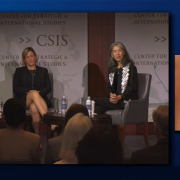
This transcript is from a CSIS event hosted on October 9, 2026. Watch the full video below.
Does Health Research Reach Washington? A Conversation on Evidence, Policy, and the Gap Between Them | CSIS-WashU Workshop
Sandro Galea: OK, we’re good to go. Good morning, everybody, both in the room and remotely. I’m Sandro Galea. I serve as dean of the Bursky School of Public Health at Washington University. On behalf of Washington University, welcome. It’s a pleasure to be here.
And I want to begin by thanking Steve Morrison, who you’re going to hear from in a second, and our colleagues at the Center for Strategic and International Studies for welcoming us and partnering on this conversation. I want to thank the Robert Wood Johnson Foundation for supporting the work that has brought us together today, and to everyone for making the time to join us.
Universities produce an extraordinary amount of knowledge. We study the forces that shape health. We identify problems. We evaluate interventions. We publish papers and reports. We generate evidence that, at its best, can tell us a great deal about what might make populations healthier. But knowledge alone does not create healthier populations. For knowledge to matter, it has to find its way into the decisions that shape people’s lives. And those decisions are not made primarily in our journals, our laboratories, or our universities. They are made in places like Washington, in government agencies, in congressional offices, in foundations and advocacy organizations, and in communities across the country.
That is why we are having this conversation here in Washington D.C. Too often, those of us in universities think about the challenge of translating evidence into policy as a communications problem. We have the evidence. How do we get policymakers to listen? I think that framing is too simple. Perhaps the more important question is whether we are producing the evidence that decisionmakers actually need, and whether we understand enough about the circumstances in which they are being asked to use it. Policy decisions are made amid competing priorities, limited resources, political pressures, uncertainty, and, often, very short timelines. Evidence is one input among many.
While researchers are trained to pursue certainty, policymakers are often required to act before certainty is possible. This tension invites an important question: How do we bring the best available evidence into moments of decision? If universities want our work to shape those decisions, we need to understand that reality much better than we often do. And we need to be willing to listen. That means thinking about what questions we ask, who gets to help define those questions, what kind of evidence we value, how quickly we can generate it, how we communicate it, and, perhaps more importantly, whether it is useful to the people who ultimately have to act.
This requires universities to reach beyond ourselves. It requires researchers to understand policymaking rather than simply wishing that policymaking looked more like research. It requires policymakers to tell us what evidence is useful, what is not, and what they need from universities that they are not getting today. And it requires all of us to think more expansively about whose knowledge counts in the first place. What makes evidence useful? Where are universities getting it wrong? How can researchers better understand the realities of policy decision-making? And ultimately, what would it take to build a relationship between evidence and policy that works better than the one we have now? These are difficult questions, but they are exactly the questions universities should be willing to ask if we are serious about having an impact on the health of populations.
I am delighted that we have today an extraordinary panel to help us wrestle with these questions. Thank you again for CSIS for hosting us, to our partners who have made this work possible, and to all of you for being part of this conversation. With that, I turn it over to Steve Morrison. Thank you.
- Stephen Morrison: Thank you. Thank you, Sandro. Thank you, Dean Galea.
So, as we’ve heard, this is part of a dialogue, part of a project, better ways of knowing. universities and the path from evidence to action, a multiyear initiative at the Washington University Bursky School of Public Health. I want to note here something very important about that new school of public health, led by Sandro Galea and with – (inaudible) – leadership here, Jennifer Layden. It’s a brand-new entity at Washington University, in a red state, in the middle of the country, at a particular moment of major change and rethink. And so it’s positioned itself to really be at the front edge of a lot of new thinking. And I think we’re very fortunate to be joined here today at this moment in time by folks who’ve been involved in putting this enterprise together and launching it.
I’m J. Stephen Morrison. I’m a senior vice president here at the Center for Strategic and International Studies, Washington, D.C., where I lead our work on health security and related matters. The CSIS Bipartisan Alliance for Global Health Security, the umbrella under which all of our work occurs, partnered with Dean Sandro Galea for a day-long discussion yesterday of the specific challenges specific to Washington D.C., but also looking at state and local government, in addressing this challenge of moving from public health knowledge generated by academic institutions to policymakers at different levels of government.
We heard from quite an array of experts. We heard from senior veteran appropriating staff, appropriations staff in Congress, and others. We heard from leaders who have served in key positions in the executive branch. We heard from academic leaders, from – obviously from WashU, but from other major institutions. We heard from philanthropies. We’ll hear from Julie Morita here momentarily. We heard from their efforts to build coalitions and be part of this rethink of how to connect evidence and knowledge in a usable way to policymakers. We heard from senior-ranking officials involved in the global health security reforms from the Department of State. And we heard from some of the most adept pollsters in the United States, and some of the most adept and astute leaders in the public health domain yesterday. So it was a very rich and lively discussion.
And I just want to offer a few comments before I introduce our speakers and kick off the discussion over the next hour. There was a lot of stark realism that surfaced yesterday. There’s a deep division in America that lingers on, that’s enduring post COVID and complicating all of our lives, including those in the academy or those in government. There’s been a – there is a deep division, and there has been a rupture of institutions, programs, staffing, and the like. So a lot of institutions that were partnership institutions, or advisory, or outreach, or means pathways, have been disrupted. And so we’re at a moment of rethink. OK, what comes next?
There has been no method – no coherent method of reckoning with some of the mistakes that were made during COVID, which were serious mistakes and which fueled this polarization and politicization, and a sort of enduring level of alienation and anger among much of our population around what happened. There hasn’t been much. There’s a void, in effect. And we’ve heard from pollsters, there’s a hardened distrust among a significant segment of the population that really needs to be acknowledged. But there’s also a reassessment happening as we get a little bit more distant. We’re approaching the seventh anniversary of the advent of COVID. So time is going along, but it is remarkable the level of division and trauma that does endure. But there are – as you break down the opinion work that’s emerging, you can see some windows of opportunity for engagement. You also see for a significant sector of the population a really serious long-term challenge that we need to address.
The scientific community, including the university-based public health and biomedical research community, that enterprise remains under siege. And it’s a difficult moment. If you’re being attacked, it’s a difficult moment for university leaders to stand up and think about, let’s try some things that are new, particularly with our government partners where that some of that threat is coming from government – from the government itself. It’s hard to be creative, innovative in this environment. But that has not stopped people from exploring what is possible. And that’s an interesting phenomenon. People are mobilizing, they’re gathering, they’re thinking, they’re putting new ideas together despite that.
We heard a lot of very positive thoughts. We’re not going to see a grand national commission like we saw after 9/11 around what went wrong in the COVID-19 experience. There have been major efforts to launch a commission. There’s been efforts in Congress that have failed. So we have to ask ourselves, out of all of this turmoil and disruption of COVID, followed by some of the ruptures and disruptions that have happened more recently, where is the new thinking going to come from? It’s going to come from different places than from – we shouldn’t just simply be thinking that a national commission is an essential element of this.
The public health research community is engaging in a lot of soul searching and a lot of experimentation. There are pathways to enter and engage government. We’ve heard – we’ll hear from our speakers here, advisory groups are always going to remain important. It’s always going to be important to have a clear strategy of engagement and understand what pathways – whether you’re talking federal, state, or local – are actually going to work, and to understand where the blockages happen. There needs to be a safe space created for the kind of private engagements and dialogue between academic and policymakers. One of our speakers urged us to be clear that visual is king. The way that data is presented to policymakers matters enormously, and witnessing what is happening with your own eyes matters enormously.
There’s also a recognition – and we heard this from the senior ranks of this administration who came over to speak with us yesterday at length – there’s a demand for new ideas. They are hungry. There is an appetite. That appetite never disappears in terms of understanding – if you’re talking about global health and global health security, we know that there’s going to be new technological opportunities that appear. We need to understand and think ahead. We know that there’s going to be new service delivery models in an era in which there’s more integration of approach. We know that data and management of data is going to be critically important.
So let me introduce our speakers here, and then we can begin this conversation. We are allowing some space to hear from – at the – in this final segment of our program, for those of us who are here today that would wish to offer comments and questions. And we’ll turn to you all towards the end.
Julie Morita is a philanthropy practitioner. She’s an M.D., president and CEO of the Joyce Foundation, where she funds evidence-based policy reforms in the Great Lakes region. Previously she was a commissioner of public health in the city of Chicago. She was a member of the ACIP, the Advisory Committee on Immunizations Practices, a central fixture nationally and globally in setting policy on vaccines, that’s now been transformed into something else. And we’ll hear more about that. She worked also at the Robert Wood Johnson Foundation after departing as a commissioner in Chicago, where she developed the framework for achieving racial and health equity in America. As you can see with Julie and with Jennifer Layden and Bill Steiger, all of our speakers today bring experience across different domains – City of Chicago, Robert Wood Johnson Foundation, Joyce Foundation, practice of medicine.
Jennifer Layden is with us. She too is now an academic practitioner. She’s an M.D., Ph.D., associate dean of practice, and a professor at Bursky School of Public Health, where she’s committed to growing partnerships. She’s an infectious disease physician and epidemiologist. We encountered one another when she was involved during the period of Rochelle Walensky’s leadership at CDC, followed by Mandy Cohen, when Jennifer was the lead in the data modernization effort – a central and terribly important initiative that carries on to this day, and really had her mark. And I remember the urgency. I remember the centrality as we were doing work in ’22 and ’23, looking at CDC and its vulnerabilities, and its need for new technological and business sector outreach. And as it was molding its approaches to data. She served briefly as a senior vice president at Association for State and Territorial Health Officials, ASTHO, and has joined Bursky in the last three or four months – Bursky School Public Health.
Bill Steiger is joining us remotely. He’s the executive CEO of Malaria No More, a close friend, a nonresident affiliate here with CSIS, former chief of staff at USAID during the first Trump administration under Mark Green. He, previous to that, was the managing director of the Pink Ribbon Red Ribbon, which was a private-public consortium dedicated to cervical and breast cancer at the Bush Presidential Center. From 2001 to 2009, when we got to know each other quite well in that period under the George W. Bush administration, he served as the director of the Office of Global Affairs at the Health and Human Services Department. During the – after that period – shortly after that period, in 2011 and ’12, the Global Fund entered a period of crisis.
And it was really an initiative that Secretary Clinton and others were very involved with, Secretary Leavitt – former HHS Secretary Leavitt, in putting together a small group that would figure out how to rescue the Global Fund, what were the changes needed? Bill was the driver of that effort. I remember the 125 recommendations that were developed and tabled, and all approved. And the Global Fund lived to be stronger and to be with us today. And I think we owe a great deal to this form of partnership between an international organization, current and former secretary level, and others internationally in trying to rebuild and rethink what this institution was to do.
So I’m going to open with a broad question. All three of you participated yesterday in this discussion. All three of you bring a remarkable mixture of expertise and experiences across different domains. So when we’re talking about this particular problem of how to improve the partnerships and the interface between an academic set of institutions that generate knowledge, expertise, train the next generation, are on call to bring forward different forms of expertise, versus policymakers and implementers at different levels of government, what is it – what’s the perspective that you bring to the table? And how do you see this problem? Let’s start with that question. And I’m going to ask you, Julie, to kick off. We’ll go to Bill, and then hear from Jennifer, just to get the ball rolling. Thank you, Julie.
Julie Morita: Well, thank you for that wonderful introduction. It’s really an honor to be part of this past couple days. The conversations were just enlightening and stimulating overall.
So I think your question is an important question, because I think what it allows me to do is just describe how evidence and science from universities has really impacted the work that I’ve done throughout my career. So, as you mentioned, I’m a pediatrician, I’m a former public health official, and now I’m the president and CEO of the Joyce Foundation, which is a policy-oriented private foundation located in Chicago and serving the Great Lakes states. And in every aspect of my career, I have relied on evidence that has been generated by universities, for every part of my work. So as a pediatrician, I use evidence from universities and other research organizations to inform every decision that I made about my patients and every piece of guidance that I gave to the parents of my patients that I was caring for. And I could sleep at night, because I knew there was an evidence base for what I was recommending and what I was suggesting.
As a local public health official, at various points throughout my career I was asked to make policy recommendations for immunizations. I was made – I had to make recommendations regarding lead poisoning prevention, substance use disorder, opioid crisis, and also tobacco prevention policies for youth. And in every single instance, I looked back to the evidence base that was created by research organizations, including universities, to find what was – what evidence was available, what could I rely on to make policies that would actually have an impact? And so when I think about being reliant on – the value of academic institutions and the university-generated research, it’s so clear to me that I have benefited from those.
Now, at the Joyce Foundation, where we support policy change in our six states, we also support research to investigate what kinds of policies might have the greatest impact as it relates to education, environment, gun violence prevention. And so throughout the course of my career, and in every aspect of my life, whenever I am asked to make a decision, whenever I am asked to give guidance to another decision-maker or policymaker, I have relied on, consistently, the evidence that is available and generated because of universities and other research organizations. So to me, I come with a deep passion and commitment and appreciation for what research that is generated by universities does.
But I also understand that that information is not always translated to the important stakeholders, whether it is policymakers, whether it is the general public, or whether it’s my friends and family members who are looking to me for guidance because they don’t know how to make sense of what they’re hearing in the media, or what they’re hearing from various people who claim to be experts. So I think that it’s really – this conversation is so critically important. And I’m really pleased to be able to be a part of it.
Dr. Morrison: Thank you, Julie.
Bill, offer us your thoughts on the nature of this problem, and what your experience brings to this.
William Steiger: Thanks, Steve. Thanks so much for having me. I want to thank you and the team at CSIS and Washington University, one of America’s great universities, for being part of this partnership and including me.
So I’ve had the privilege of working both at the state level and at the federal level over my career, in the state of Wisconsin, in Madison in the governor’s office, and then both at HHS and at the former U.S. Agency for International Development, as you noted – institutions that, in the latter two, both generated an enormous amount of research and were consumers of research – externally produced research from academia, from think tanks, and other kinds of institutions. And as Julie said, I have also relied consistently over the course of my career on that kind of research to help make the recommendations that turned into policy decisions.
You will know, and the audience will know, I think, that many of the things that I was engaged in, like the creation of the President’s Emergency Plan for AIDS Relief, or the President’s Malaria Initiative, or even the Global Fund, which you mentioned, depended in large part on an analysis of data and research conclusions that had been produced by academics, either those employed by the federal government or those externally. It’s a critical piece of the policymaking process. We’re going to talk later about how to improve that translation of research, but it’s really important.
And I’ll just close by saying, I think one demonstration of the value of this connection is that when we were negotiating what became the Global Fund, one of the fundamental tenets that the United States insisted upon was the creation of a Technical Review Panel, a peer-review process using independent experts, most of them from academia, to evaluate the proposals that were going to be coming in from consortia at the national level for funding from the Global Fund. And this is the system that remains in place today. The TRP, based on the National Institutes of Health peer-review process, was one of the fundamental things that we insisted upon for the credibility and the long-term viability of the Global Fund, which I think demonstrates the power of the potential of academic research in health to influence policy.
Dr. Morrison: Thank you. Thank you, Bill.
Jennifer.
Jennifer E. Layden: First, thank you for having me. It’s a great conversation both yesterday and today. So as mentioned, my background is as a physician. I actually started in academia, in which I was doing research on hepatitis C. And during that time, I started to work with our state and local health departments. I was doing research on hepatitis C, on what I thought was the most important problem. And when I started to engage our state and local partners on an effort to try to do test to treat to get people more into treatment, what I thought was important was not important to them. They were trying to figure out how to just get people tested and identify how to quickly make sense of the data that they were receiving into care.
And so it really – it for me at that time, when I was in academia, I was – like, it made me realize the distance between what I was doing in my research lab, and then what was happening in the front line within my own state. I then had the privilege of joining the state health department in Illinois and was the chief medical officer, and state epidemiologist, and then was at city of Chicago. So Julie and I share some similar roots. And, you know, building off of what Julie said, the importance of evidence and policy played out in day-to-day decisions. And Julie, I think, brought some really great examples on some of the policy decisions. Adding to that is some of the work we would do day-in and day-out for responses and outbreaks.
And just bringing it into an example, we often, unfortunately, had to deal with legionella outbreaks, and had a very significant legionella outbreak that impacted residents in a nursing facility, in which there were a significant number, several hundred individuals, that were elderly, had underlying conditions. And we had to make a policy decision of what to do. There was legionella in the buildings. There were individuals that were very vulnerable. But at the same time, we didn’t know where to – what the options were as far as making recommendations. Do you move them out of the facility? Do you not?
And what was really helpful in that, you know, instance, was not just the evidence about legionella and how it causes diseases, but at the same time what is the impact on the individuals if you move them out of what is their home? And being able to talk about the risk not just from legionella, but the risk of moving individuals out of a nursing facility into a new environment, and the risk it had on their morbidity and mortality, helped us to inform policy decisions. Moving to CDC, we were – I had the privilege of working on data modernization and trying to get our state and local health departments from – off fax machines and phone calls to report data, to more technically advanced.
And as we were doing that work, the evidence that had been generated already in the health-care field and the technology field was really what guided our decisions and our approach to data modernization. So I think the constant thread is that day-in and day-out, whether it’s a small decision versus a really significant decision, that the importance of the evidence – evidence that not is just generated in that moment, but the evidence that has already been generated – how that feeds into decisions.
One point I think that’s really important to emphasize, and this goes back to Julie’s point about ACIP, and I think we’ll talk about that more, is there’s something not just about the evidence, but the process. If every state and local health department has to evaluate the evidence on their own to come up with the policy decision, it would be impossible. When I was at the state of Illinois, I was the only medical director, and I didn’t have a chief science officer. So the ability for our frontline of public health to often be able to compile the evidence, make a decision, understand all the implications of different vaccine trials, for example, is incredibly hard. So having processes in place that help to distill that information and bring it to the front line I think is vitally important, especially when we’re dealing with health departments that have very constrained resources.
Dr. Morrison: One of the themes that has come through all of these conversations is the problem of distrust, or lack of trust. And that means different things in different contexts. It’s tied to a notion of the hangover effects of COVID, of the COVID-19 experience. It’s tied to calls for greater accountability and transparency in the way that public health officials operate. But it’s also a factor oftentimes used to justify actions that are taken that that do set back program staff, funding, budgets, and the like. Data has a special sensitivity around all of this. I’m sure you experienced this in negotiating the access and partnerships with state and local, because data became such a sensitive matter.
Tell us a little bit about how you have experienced this question of distrust in your own personal experiences. I’m going to turn to Bill first to say a few words. Give us some sense of how you have seen and experienced this, and what your perspective is. Bill.
Dr. Steiger: Thanks, Steve. So I’ll talk to it from the perspective of malaria. That’s my current job. That’s what we focus on at Malaria No More. And this is less about the skepticism that you might be talking about in the United States, but perhaps about confusion. And that can come from misinformation or disinformation. We’ve seen several different technologies or interventions in the malaria world run into some level of misunderstanding. This is often promoted through social media. And we’ve seen, as you know, that the rest of the world is probably ahead of us in how it communicates on social media platforms day to day, and how much people depend upon those platforms for their news and their information. And there’s also been, I think, a dearth of evidence that’s come out in very, very clear ways to counteract some of those – some of those misunderstandings.
So, for example, there was an enormous amount of discussion around the possible use of ivermectin in the COVID-19 pandemic. That has had an unfortunate consequence of overshadowing what appears to be a very powerful use case for ivermectin to proactively treat people, and their large animals, by the way, for malaria. So we are having a tough time with our academic partners breaking through some of the static that remains from the COVID experience with ivermectin, to try and get interest and funding and approval for the use of ivermectin on a wide scale for malaria, where it does appear to be very effective.
Another thing is some skepticism about the malaria vaccines that have come out. This is an interesting case in that that skepticism tends to be more in the West than it is in the countries that are using them. There is an enthusiastic embrace of the malaria vaccines in the 25 countries that are using them through Gavi, the Vaccine Alliance. And that is despite the reality that the vaccines are not perfect and they do not block transmission. That has been – blocking transmission has been, for some donors and for some policymakers in the West, the major criteria for – criterion for wanting to adopt a malaria vaccine.
But what we’re seeing on the ground is that parents, in particular, are really enthusiastic about using this technology to protect their young children. And it is having an enormous impact. Maybe not the one that people had hoped for in terms of absolute numbers of the percentage of cases prevented, but it is apparently reducing hospitalizations, severe cases, and deaths in a significant way, when combined with other tools. So in some cases what I’m saying, Steve, is that there is an unfortunate consequence of unsubstantiated debate around tools in the West that then begins through social media to affect the way that tools are implemented, or the way tools are adopted or paid for by donors, in the rest of the world.
Dr. Morrison: Thank you.
Julie, give us a case of how you’ve experienced this, how you’ve seen, witnessed this phenomenon.
Dr. Morita: Right. So that’s a really important question at this moment in time, because I think, as a pediatrician and as also as a public health person who focused on immunization work for so much of my career, I spent hours and hours reviewing information and evidence about measles, the disease, measles prevention, measles outbreak prevention. Just hours and hours of time. And also talking about it with the community members in Chicago and also nationally. And what’s heartbreaking to see is, because of the distrust in evidence and science, what’s happening now is we see lower levels of MMR vaccine coverage levels than we have seen in a long, long time. And not only are we seeing the coverage levels lower, we’re actually seeing more cases, more outbreaks.
This year there were more than 40 outbreaks within the United States. There’s more than 4,000 cases of measles that have been identified – have been identified and reported. There may be more out there in the United States. And there’s been five deaths. I mean, it’s remarkable to see how quickly things have changed in terms of vaccine coverage levels. I used evidence generated by research universities, research organizations, to really guide and inform outbreak investigations for prevention of outbreaks. Every year there was one case that would come into Chicago, usually from a traveler who was from a country that had endemic measles, would come back to the United States. And we would spend days protecting that individual, protecting the people that were exposed to that individual, to prevent the spread of outbreaks. And, by and large, we were successful.
But that’s because such a high proportion of our population in the city of Chicago, 3 million people, were well vaccinated. We’re not seeing that level of protection now because of the distrust of evidence and science. And I think we have to take a moment and really think back to, why is that? Why are people not trusting this information? And the conversations that we had yesterday were incredibly valuable because I think there are many things that we can be doing moving forward to help prevent this level of distrust about things that we know are actually true. And it is a matter of really listening and understanding what is most important to the people we are trying to reach. And that might be different.
So a policymaker may be more interested in the return on investment of an investment appropriation. A health-care provider may be concerned about another aspect of the vaccine, or how to communicate – how do they communicate the effectiveness and the importance of vaccines? And a parent might want to know, how does this vaccine not only protect my child, but how does that help me stay working – keep working, pay my bills, put food on the table? And so it really is a matter of understanding who we’re trying to communicate this science and evidence to, and understanding what is really most important to them, so that we’re getting that information to them in a way that is understandable and a way that makes the point about why it is so important.
Dr. Morrison: Julie, just on that point that you’ve made about measles, and it was just yesterday that there was this report around Senator Murray forming a group to advise on CDC and steps to take to strengthen the integrity of its policy processes in the way that it works to manage things like deaths from measles and engagement. And there’s really sort of two – there seemed to be kind of two contested views of how do you define what a measles death is, right? You had Senator Murray saying, we have a pretty clear idea. You had Dr. Schwartz, the CDC director, saying, we need a little bit more caution here. And there’s a lot of distrust and suspicion around that entire conversation.
And in the background is a sense of emerging crisis. When you reach five deaths in Pennsylvania, that’s a pretty dramatic statement for measles. And when you have a basic debate over what are the facts, and which are these – which of these are true and which of these are not, that is also an extraordinary moment that we find ourselves in. So thank you for bringing that up. Jennifer, how are you thinking about the way – how are you experiencing this element of distrust?
Dr. Layden: Yeah. So, you know, maybe just adding a bit to the measles, because I think it’s –you know, it is an example of some of the challenges we’re facing as a country and across communities – you know, every measles case that happens in the U.S., it costs $56,000 to – from a health-care side and a in a public health perspective. You know, right now the hospitalization rate for children under five who are getting measles is about 23 percent in the U.S. So it’s a real disease. We have three-quarters of our counties across the U.S. that have vaccine levels that are less than 95 percent, which is the herd immunity. So we are at risk across our communities and across vulnerable populations for increasing growth of measles.
But the reality is that those levels of measles and MMR vaccines have been declining for some time, right? This is not just happening over the last year. In our in own state of Missouri, we have seen over the last five years a dramatic decline, and an increase in exemptions, in some counties up to 18 percent. We have a city – our city of St. Louis has a vaccine rate of 75 percent, right? So there are – there are significant gaps and significant issues with trust in how we communicate the information, how we get out to the communities, talk to them, provide that evidence, so that they can make the decisions, arm our primary care physicians, our pharmacists with the information to have those conversations.
And I think it’s important for the public health community, the health community, to really address this, right? What is the best evidence? How do we work to address this? This is a public health issue, the mistrust. It’s not a new issue. So I think it’s something that we have to really wrap our heads around and acknowledge the importance of having better solutions. You know, thinking of the COVID response, at the time I was at the state. And, you know, I think one of the challenges that I felt was the urgency of making policy decisions in the front line and the delay in some of the data that we needed or information. So one example was vaccine effectiveness. The vaccines were approved. Some of the vaccine effectiveness trials were still delayed. But in the front line you had to make decisions of the policy recommendations and who you’re going to vaccinate or provide prophylaxis in your nursing home facilities, right?
And we couldn’t wait for that evidence. And I remember at the time just being frustrated with that. And then, you know, having some trust as a front line in the process, of how can I use the information that I have at hand, how can I explain the information I have at hand, recognize that we are making decisions off of imperfect knowledge, and do a better job of communicating in a way that recognizes we’re making decisions with the best information, and we may change that decision as more information comes in.
Dr. Morrison: Thank you. Let’s pivot to some examples of innovative initiatives that have begun to show evidence that they’re working. Things that are emerging that bridge these two domains of the academy, research, knowledge generation, policy decision-making, and implementation at different levels of government. We know the complexities of that relationship. We know the setbacks that have been experienced, or the stresses. We know the role distrust plays. But we know that there’s a lot of active innovation happening. Where do we – what do we point to? Bill, what would you point to?
Dr. Steiger: So I would point to the ongoing major U.S. government health programs, like PEPFAR, the President’s Emergency Plan for AIDS Relief, or the President’s Malaria Initiative, that are increasingly moving into the world of promoting innovation. So we’ve seen recently, for example, under the America first global health strategy, that based on evidence generated in the academic world and in operational research, the State Department, through PEPFAR, has decided that long-term injectable prevention, like lenacapavir, produced by Gilead Sciences, is a great investment for the American taxpayer. That’s something that I’m not sure we would have seen even a couple of years ago, the ability to make a large bet – a large financial commitment to an innovative product like lenacapavir, to roll it out now to a projected 3 million people. That’s an immediate effect of translating really good science generated on the ground in the field, to policy, and then to funding.
Similarly, we’ve seen in the malaria world, also in the State Department through the President’s Malaria Initiative, that the State Department is making a big bet on a new technology called Guardian from SC Johnson, great company from Wisconsin, that can repel mosquitoes from an interior space for up to a year. It’s a similar kind of initial catalytic commitment from the United States government that’s going to lead to a rollout of the product to reach, we think, 60 million people over the next couple of years. That also depended on evidence generated by academic institutions practically in the field, including African academic institutions like Ifakara Health Institute in Tanzania, to prove that this device worked. And policymakers were able to see that those data were going to translate into real lives saved, real lives affected, in a way that justified a taxpayer commitment. So I think we are seeing that, at least in the U.S. government global health programs, there is still a great tie between really good evidence generated in the field by researchers, translated into policy and funding.
Dr. Morrison: On the lenacapavir initiative, the partnership which we had the occasion back in mid-April to bring together Dan O’Day from Gilead Sciences, the Undersecretary Lewin from the Department of State, and Peter Sands from the Global Fund, the three major partners of that lenacapavir effort, to talk about that. It was very striking that there were 20 years of research, commercial research on the Gilead Sciences side, that had laid that groundwork. And you had to sort of step back to understand how we got to that point.
I don’t know quite how the academic institutions – the academic institutions figured in that. You may want to say a bit more about that, Bill. But this role that the private sector plays in this era now of looking at innovation, and how does that play vis-à-vis academic research institutions, is a big question. And I know it’s something that you’re pondering at Bursky. It’s something that you hear when you talk to the leadership of other schools of public health. Bill, you want to add anything on the academic role in some of these?
Dr. Steiger: Well, I would just say that you’re right that that this administration, at least, and I think this will be true going forward, is really interested in public-private partnerships that bring the private sector in as partners from the beginning, and that also have connections to American institutions. It’s very clear that there is a – there’s a premium placed now on American innovation, on American partnerships, and American technologies, many of them tested in the field overseas, and many of them that have uses both here and at home. But I think what is most attractive to the administration now are partnerships, as you say, that involve private companies, usually American ones, with various kinds of institutions overseas that are proving that these products can work and are worthy of an investment of U.S. taxpayer resources.
Dr. Morrison: Thank you.
Jennifer, can you cite some cases that give you hope?
Dr. Layden: Yeah. And, you know, building off of what Bill said, I think the concept and the importance of the public-private partnerships is so critical. And it’s this moment in time is forcing and providing that opportunity to think differently of how we do things, right? Our structures, our processes across systems were created, you know, decades ago. And they were created for the – you know, for the purpose at that moment. But we are in a different time from a technology standpoint, we have different health threats, there’s different, you know, threats to health that we have to account for. So I think working differently is critically important.
We see this in a few ways playing out. When I was at CDC, we made the decision to work with private partners to build our data platform. Recognizing within public health, we couldn’t do that on our own. When I was at the city of Chicago, we worked with several of our universities to do genetic testing, recognizing didn’t make sense for us as a health department to set up our own genomic lab. I think there’s some great examples. Common Health Coalition just announced an effort to work with, I think it’s, six states on an effort to eliminate hepatitis C in those states. I think it’s a great example of different partners coming together to solve a solution.
At WashU Bursky School of Public Health we have public health action labs which are setting up to think differently of how we bring evidence from the university side into action. And so those – that structure being set up to have the infrastructure, the capacity, to take the information that’s generated and bring it into implementable, you know, actionable, meaningful progress in the field. So I think there’s – you know, another great example, although I think this one is more a bit of a, you know, filling a gap, is some of the regional collaboratives that we’re seeing, recognizing folks coming together to generate or support the generation of knowledge, or interpretation of the knowledge to inform their decision. So I think this opportunity for people to say, how do we do things differently, we’re seeing that play out. And I hope that continues.
Dr. Morrison: Mmm hmm. Thank you.
Julie.
Dr. Morita: I love that concept of the action labs. It’s so exciting to hear about that. So congratulations on that.
I think, like with any crisis, comes opportunity, and I think I would agree with Bill and with Jen that partnership is critically important. And what this moment has really done is drive people to think – unlikely partners to come together to work together. And so the partnerships I’ll describe are a little bit different, but I have a couple examples. I think from a foundation or philanthropy perspective, when the federal cuts happened last year there was this huge attention being paid on what is private philanthropy doing to fill the gap? How is philanthropy going to fill all these federal gaps? And, you know, the reality is that there was a coordinated effort that I’ve not seen in philanthropy, where foundations came together to really talk about not only protecting the sector itself but really about thinking, how are all these federal changes impacting the work of our nonprofit partners, the people that we support, our grantee partners?
And from Joyce’s perspective, it was clear that there were federal cuts that really hit across a lot of the research organizations that we were supporting, had also been recipients of federal dollars and that money went away. And so foundations, a bunch of foundations, came together to talk about science in particular and say, how are we supporting science, and what can we do to coordinate our efforts? And so there is more coordinated foundation giving now. So some of it is done directly to organizations that’s aligned, but some of it is done by way of pooled grantmaking, which is a little bit less common among foundations because every foundation likes to do their own thing their own way. But I’m seeing more coordination than we’ve seen in the past.
And we also recognize that philanthropy can’t fill the gap of federal funding. And so we’re trying to be strategic and working together to identify where the greatest gaps are and how do we move forward over time. So Joyce Foundation, which has been a longstanding supporter of gun violence prevention research for over 30 years, and we’ve done it throughout the past 30 years. So even as federal funding was increasing over the past five years or six years, we continued to do that.
And then when the cuts were made last year, we actually identified a handful, probably about a dozen, research projects that were close to being finished that weren’t going to be able to be finished because of cuts. And so we made a bunch of grants to these organizations, with other funders, to get them across the finish line, so that critical work could actually be completed. So we couldn’t fund everything that was being proposed to be cut, but we could fund some critical work that was being done. And that’s a new way of working. And so, again, the crisis kind of creates this opportunity to rethink how we approach our work and what our role in philanthropy actually is, recognizing that there are some limitations.
The other example that I’ll give is that, you know, again, related to our gun violence prevention work, the Joyce Foundation has supported the Injury Center for many years at CDC – for many years, to support gun violence prevention work. And there was an effort actually to eliminate the entire Injury Center from the CDC’s budget. And we were concerned about it from a gun violence perspective, but we realized quickly that there were a lot of other funders, a lot of other nonprofit partners, a lot of other stakeholders who were concerned about the Injury Center because of mental health issues, substance use disorder, motor vehicle accident or crash prevention, suicide prevention.
All different constituents that don’t usually work together so well came together to really try to do a coordinated campaign of educating appropriators, educating the public within those appropriators’ communities, to help them understand what the Injury Center actually did for their communities, and what it led to in terms of lives saved, lives improved overall. And that was a coordinated effort under the Safe States Alliance, which is the organization that supports violence and injury prevention. That coordinated effort really helped and contributed to that funding being reinstated, we believe. I can’t take credit – I don’t think we can take credit for it completely. But I think it was a factor that there was this coordinated effort among groups that don’t usually necessarily partner together to really do that kind of coordinated education.
So I think, again, the crisis creates an opportunity. And it’s on us to identify these opportunities and what lessons we can learn to then carry forward. Because I think this coordinated effort will benefit us for the long run in many aspects of what we’re talking about.
Dr. Morrison: Thank you.
If any of our audience members would like to pose a remark or question, please put your hand up. We have microphones. There’s one hand. There’s a couple of hands up. Let’s hear from two or three people. We’ll cluster things together. Let’s start here. Please just identify yourself. Try to be very succinct. And just pose a question or a remark, please. Thank you.
Audience Question: So my question is that, as –
Dr. Morrison: Please use your microphone so our online audience can hear you.
Audience Question: My question is that if, like, there’s a difference between evidence-based policy and, like, actually making policy recommendations, how do you, as policy professionals, bridge that gap, especially with the rising distrust? Like, there are a lot more factors to be considered when you are making policy recommendations. So how does one bridge that gap?
Dr. Morrison: OK, thank you. Let’s cluster together several comments, please.
Audience Question: Have you seen Frances Lee’s book, “In Covid’s Wake”? She’s a political scientist. She said that distrust comes from gaslighting about COVID, mainly. And the president of Johns Hopkins had her speak at the Milken Center in Baltimore. It’s online. It was a partnership with the AEI. So, if it’s not – if you can’t find it on the Johns Hopkins site, you can find it on AEI. It’s “In Covid’s Wake,” or in the wake of COVID, by Frances Lee. She’s one of the top 10 political scientists.
And I listened to a woman on – a doctor on C-SPAN today talking about the plague in Russia. And she said, we don’t have much experience with stuff coming from labs. So she lumped COVID in with it. And said, well, COVID didn’t come from a lab either. So here was a group that does FOIA collection. It’s called USRTK, U.S. Right to Know. In September they got a document released. It was an email to Ralph Baric. And it said, please deny COVID came from your lab. And he said, oh, this is dangerous because they might try to shift the blame. So Baric and his student, Shi Zhengli, they got a patent for gene editing.
Dr. Morrison: Excuse me, what’s – let’s cut to the question, please.
Audience Question:
- So the question is, this is, like, the major event that led to distrust.
Dr. Morrison: COVID.
Audience Question:
So I actually proposed this to Dr. Collins.
Dr. Morrison: Please get to your question.
Audience Question: If he admitted that COVID came from a lab in order to get the funding back, would he do it? And he said no. So do you think transparency is important, and probably they should give the jurisdiction of the investigation to the FBI instead of being in the home court of HHS, that they should probably give it to FBI to investigate it? Thanks
Dr. Morrison: Thank you. We have a question – two questions over here, please. Please identify yourself.
Audience Question: Yes. This is a quick comment. My name is Elizabeth Geltman. I am from the City University of New York School of Public Health, who, like you, is a new school. So I went through that experience of doing it.
And one of the things that I’m going to challenge you all to think about in terms of addressing these very important problems is, one, think about how we educate our students and sort of the next generation of public health. And, as importantly, how we promote our faculty and professionals. So two things in that. The first one is, is that we, as public health professionals, are very often playing defense with our data in terms of our policy. And teaching our students how to draft regulation, draft legislation, and thinking about translation not just in terms of how we communicate, but how we can give a package to policymakers in terms of doing it, is going to be increasingly more important.
And that’s bipartisan. You know, we can go through in terms of doing it. It varies. So he, she, or they who write the first draft get to drive to the discussion. Students, you know, need to understand democracy does not end at the voting booth. Commenting on regulations is what industry does a lot. Public health is very often not there for things outside of HHS comments, but when you get into tax policy, SEC policy, interior policy, EPA policy. Those are derivatives of health. And being trained to do that is important.
Secondly, in terms of the faculty component, historically tenure and promotion has been based on very narrow types of things – how much money are you bringing in for your research, and where are you publishing? And thinking about that outside the box. How often are you testifying in your public health community, in your Congress, in state legislature? How often are you bringing different types of things into it or doing it, is going to be increasingly important showing leadership and partnership. And the last component on that is how we bring in money to the research institutions. And that is thinking about how we get our funding in a more creative and a more neutral way.
So this isn’t good funding, this isn’t bad funding, this isn’t suspect funding, this isn’t other things, but having ethical guardrails in place so when we have certain types of funding coming in, particularly from industry, you know that we have ethical guardrails putting in, thinking, is this a conflict of interest or not? Because in some instances, the answer may be, yeah, that’s a conflict of interest. And in many others, it just isn’t in terms of doing it.
Dr. Morrison: Thank you. Thank you.
Audience Question:
Sorry.
Dr. Morrison: No, no, that’s great. Thank you. Right here. Right here. Yes, please.
Audience Question: Hi. I’m a public policy – a public health policy student.
And I’m curious how you think about the politicization of mistrust and of research and evidence, and how to overcome that.
Dr. Morrison: OK. We have one last one in this round. Yes, please.
Audience Question: Yeah. I’ve worked as an academic and also in policy. And I want to suggest the way we do research has to be different. To do policy-relevant research, when you start a study, ask, you know, who’s going to use this, and what’s the important. So to think about that upfront rather than after the fact. And the other thing is to engage in partnership research and include decisionmakers and policymakers in formulating and designing the study, because I think that would increase, you know, the uptake.
And I just want to comment on what she said about academic promotion. I’m a recovering academic. I was a full professor with tenure. But I was at the University of Toronto, where they have a category called “creative professional activity.” So you need all the other stuff, but it adds in. And you could really document your impact on practice and policy.
Dr. Morrison: Thank you.
So we have a number of issues that have been put on the table here. The broad question around how to bridge the gap, that’s the central question. The call for accountability and prosecution in certain cases, both COVID but more recently. The suggestions from our colleague at City University of New York about educating students, but also the way that faculty are managed. And then the question around politicization of mistrust and policy-relevant – how to shape policy-relevant research. Jennifer, you are at an academic institution, so I’m going to ask you first to respond. But this covers a span of issues. I want to hear from Bill and Julie. Over to you, Jennifer.
Dr. Layden: First off, thank you, everyone, for the great comments and questions. And congratulations on the new school that you’ve stood up. I think you bring up some great points. I can say, from my journey from moving from an academic setting into state public health government leadership, I was not prepared, right? What I learned in my school training was not equivalent to what I was doing on the job, recognizing that public health practitioners go into a range of positions whether it’s governmental, community-based organizations, policy levers.
But I think the opportunity to think differently of how we train, how we give them that hands-on experience. As someone who was trained as a physician, you know, some of that process of – as a student having to write medical notes, as an intern having to write them, there’s something to being in the front line, in a variety of positions, to getting that experience, building that the confidence, seeing how people above you are doing it. So I appreciate those comments. And I think that’s something that, at least at WashU Bursky School, where our education team is looking really closely at how we provide and involve the educational curriculum for that.
The question of evidence and bringing into policy, I think one of the important considerations is really, you know, how we acknowledge what’s known, what’s not known, where the gaps are, and in in bringing forth – and this came up yesterday in a lot of the conversations – the humility in decision-making, both at the time and afterwards.
Dr. Morrison: Thank you.
Julie.
Dr. Morita: Yeah. Thank you so much for your questions and your suggestions. I think I may combine the two of your questions, because I think your points were about how do you translate this information or get the evidence to the appropriate people and audiences. And I think, first of all, is really identifying and recognizing that there are a variety of audiences that we’re trying to get this information to. So who are those audiences? Whether it’s policymakers, whether it’s the general public, whether it’s health-care providers, who are also messengers of important information. So identifying who they are. And then, again, identifying what’s most important to them. So engaging them up front to understand what it is that they need to understand, or they need to communicate, or what they want to know, to help inform what the research agenda actually looks like.
Because I think these research agendas often are made in silos, like, in isolation. But the reality is, if we want the research and evidence to be relevant to what a policymaker is thinking about, what the public is concerned about, what health-care providers are worried about, you really have to engage with them upfront while the agenda is being developed, and then also as the work is being done, as the research is being conducted. And then thinking through communication with them as well. So all along the process really engaging with the key stakeholders to understand what they need, what they want, how do they communicate it, how do they need to hear it, is really, really important. So I think those would be things that I would think about.
The comment about preparing students for writing, whether it’s public comment, I mean, it’s so relevant right now. Head Start regulations, Census regulation changes, I mean, we’re constantly in philanthropy thinking about, do we submit some comments? How do we submit the comments? Who’s appropriately trained to write as appropriate regulatory comment about a regulation that’s being proposed? That kind of training is essential. I didn’t learn it in medical school. And I didn’t go to public health school, but I also worked at CDC, and I didn’t get trained to do that there either. So really thinking critically about how to do that.
And then the other comment that you made was about the incentives for faculty. That was a big topic of conversation yesterday. And Josh Sharfstein from Hopkins, Megan Ranney from Yale, they were part of the conversations talking about how they’re thinking about incentives for faculty and thinking about health outcomes. Like, what was the impact of the policy change? What can you document that you contributed to? Or what was your role in doing these kinds of things? Instead of it just being, was the research published? Because that’s not really sufficient. At least that’s not what they’re thinking. So you’re not alone in thinking about that.
Dr. Morrison: Thank you.
I want to turn to Bill. Bill, we’ve been partnering with Echelon Insights on some focus group work in red states, along with a national survey. That work will be coming out in November. Which has shown that there’s, here in America, quite a bit of – there’s still, among certain very conservative voters, a lot of anger, a lot of alienation, calls for accountability and transparency, looking back to COVID. So that reality is there. It’s one that is – that is enduring, and is a factor, and has to be brought into play. We have a question around should this be something brought to the attention of the FBI?
Now we have the outbreak – or, not the outbreak – we have a death of a young woman in Irkutsk, in Russia, tied, it looks like but we’re not certain, to plague. It was a plague institute. And that’s evoked memories around the Wuhan first discovery period and the practices and behavior of the Chinese government. And we’ve posted a commentary by General Friedrichs, Paul Friedrichs, on the CSIS website two days ago on what do we know and how do we respond to this. But this is a recurrent challenge, it seems to me, this question around accountability and transparency, and how do we manage situations like this that are breaking, that continue to remind us that we have to be able to respond nimbly to this? Can you say a few words, please?
Dr. Steiger: Sure. As you know, Steve, I was involved with a bunch of other people in the negotiation of what became the revision to the international health regulations, now more than 20 years ago. And this issue of transparency and the sharing in real time of data around outbreaks of pathogens with pandemic potential, or that pose a risk to the world in general, was at the crux of those negotiations. It is imperative that all governments, including our own, be transparent with the world on what’s happening with outbreaks like this one. And so I applaud what you’re doing and what the administration has been doing to try and put some additional pressure on the Russian government to come clean with what might be happening in Siberia, because we just don’t fundamentally know. That lack of transparency has affected public trust.
But I’m going to pivot, Steve, if I might for one minute, to the last two questions we got, because I think they’re so important, about what schools of public health can be doing better to reach policymakers with their outputs, and to prepare students better for the reality of the world that we live in today given all of the factors that you’ve laid out. I could not agree with them more that the incentive structures in schools need to be changed. And that means, in particular, recognizing for promotion and for career advancement public service. It’s very hard to get schools, universities, to release professors, for example, to serve on intergovernmental personnel agreements, or IPAs, to work inside the federal government or state governments, because they can’t figure out how to account to pay for their time and to backfill them.
That’s got to change, because one of the most important things we can be doing is putting more fresh ideas through intergovernmental personnel agreements into government bureaucracies to get perspective from both academia and industry, by the way. The schools and universities need to reduce their hostility to the private sector. They need to be much more open to partnerships with private institutions, according to, yes, ethical guidelines. But public health schools can learn a lot from schools of medicine in that regard. And schools of public health need to diversify their faculty and their student bodies by going to the states that were – that are represented on the stage today for students and faculty, by reaching out to people who have different points of view to recruit them as students and as professors, and also by recruiting people who have industry experience into the student body and into the faculty.
And I’ll say two more things. And that it’s absolutely imperative that we train students for the future in the policymaking process. The comment about comments is exactly right. We need to train students how governments work, where the bureaucratic bottlenecks are to the adoption of good ideas, in health or anything else, how the appropriations process and funding processes work at the state level and at the federal level, and how you can affect change inside large complex government organizations. We don’t teach students in any discipline that enough. And we really should.
And the last thing is about communication. I know that Dean Galea said at the front that this isn’t just a communications problem, and he’s right. But it is partially a communications problem, bridging the gap. One, because I think we ought to treat science and public health communication as its own discipline. There should be more partnerships between schools of public health and schools of communication and schools of business to learn – to teach students how to actually break things down, complex ideas and data down, into products that are digestible by policymakers and by the general public. And you mentioned this at the outset, Steve.
My final thought is visualization is really key here. Data buried in very impenetrable academic papers never lands in Washington or in a state capital. Really good graphs, really good infographics that explain what the connection is between what a researcher has found and a practical outcome with a policy recommendation, that really lands. And so do stories. It’s hard to overstate the power of anecdotes that are based on real-world experience that bring science and data to life and connect them to real people. That’s not to say we’re dumbing down the science, but the personal connectivity that can show why something is really important to a congressional district, to a state, and to a beneficiary or to a patient, to a client, is really important in getting policymakers to respond.
Dr. Morrison: Thank you, Bill.
We’re getting towards the end of our hour here. I want to close by asking all three of our speakers just to reflect on what gives you the greatest hope in this period. It’s a period of tumult, turmoil, change, uncertainty, but opportunity. I think that point kept coming over – kept coming up. This is a moment of opportunity, where experimentation, innovation is possible. But tell us a bit about where you see the greatest – what gives you the greatest hope in this period. Julie.
Dr. Morita: Oh, I thought I was going to be first. I think one of the things that really gave me a lot of hope was the conversation that we had yesterday, because there were a broad range of people that were represented. You kind of talked about the different roles – people were researchers, some of them were policymakers, some of the people were public health practitioners. But what you didn’t – I don’t think you acknowledged this up front, was that they were representing different political ideologies as well. It was a pretty diverse group of people overall. And what I heard in the conversations was a general consensus about the value and the importance of really addressing this issue of trust, and the value and the importance of science and evidence. So there’s no disagreement on some of the most fundamental things, and there was a lot of agreement about paths forward. How do we move forward?
And that’s what I think we really need to know, is that regardless of political ideologies there’s a strong base of support for science and evidence from universities, and that there are paths forward that we can agree upon. And we just need to activate them. So – and there are glimmers of hope. There are the examples that others have lifted up, about how we’re seeing progress being made. So it does give – that gives me a lot of hope. That kind of conversation, rich, deep conversation across ideologies, and signs of progress really, really gives me hope for a way of reimagining what science looks like, the science enterprise looks like, and also how we communicate out about the science itself.
The one caution that I will have is that I don’t think we want to throw the baby out with the bathwater. Not all things were bad. And there were some things that were critically important in the prior way that we were doing things. And, as a former member of the ACIP, or Advisory Committee on Immunization Practices, I think these advisory committees – Bill mentioned that earlier – these advisory committees, which are made up of independent people who volunteer their time, who sign disclosure – non-disclosure – or no conflict –
Dr. Morrison: Conflict of interest.
Dr. Morita: Conflict-of-interest statements, really, that’s where a lot of that translation happens, where the evidence base is reviewed deeply and carefully and thoughtfully, and then it’s looked at in ways of how do you implement this in a way that makes sense? What’s the immunization schedule look like? When do you give it? At what age? To which children? Who shouldn’t get it? How are the vaccines handled and stored? All those things about practically implementing, that happens in those kind of advisory committees. And then there’s work that’s done in terms of translating that so that health-care providers understand, and the public understands. And in the absence of those kinds of advisory committees, there’s this lack of independence, there’s a lack of review, there’s a lack of translation that is so critically important.
And while they may not have been perfect, they certainly were serving a critically important role. And I would not want to eliminate those kinds of advisory committees from the future state that we’re looking towards. So I have a lot of hope, and I also don’t want to get rid of absolutely everything that was – that we had in place previously, because I think there were some very important things that were in place – structures and systems that were in place – that really helped ensure the health and wellbeing of our nation.
Dr. Morrison: I’m going to go to Bill and then Jennifer. You’re the representative here of the Bursky School of Public Health, so we’re going to ask you to close. Bill, what gives you hope?
Dr. Steiger: What gives me hope is innovation, Steve. That we are in a moment of tremendous technological advancement. Just in malaria, we’ve seen more innovation in the last 18 months than we have in the last 30 years. Think about that. That’s a tremendous opportunity for us to take what are mostly American-made or American-adjacent technologies to the field more quickly. But it does mean that we’ve got to change the way we do business.
And I think what’s happened with the America First global health strategy, for example, on the international stage, gives us that chance to reimagine the way that we do business overseas, to listen more carefully to what communities and governments need from us, to create new kinds of partnerships with private companies and with philanthropic institutions that maybe weren’t possible in the in the old system, and to translate science into action more quickly, if we can get reforms not only in our own government but in international institutions like the World Health Organization. We’ll have a new director general next year. We’ll have a new executive director of the Global Fund. This is a moment, I think, where we can really make some breakthroughs very quickly if we translate this innovation into the field using data and science.
Dr. Morrison: Thank you, Bill.
Jennifer, you get the last word here today.
Dr. Layden: Yeah. So echoing several the sentiments that were already raised, I think having the conversations, I think that is so critical. Recognizing and hearing public health and others in the field acknowledge that we have to do things differently. I think that’s a first step. And that’s really exciting to see in the conversation yesterday, particularly where you’re bringing such a diverse representation, and people are challenging each other. I think that that’s – having the space and opportunity to do that is important.
Two, seeing the innovation, building off of what Bill said, of how people are working differently, how we are working with private industry, how we are working with community members, and whatnot, I think that’s vitally important. You know, we at Bursky School of Public Health, I mentioned the public health action labs. I also want to mention the work that Dr. McLean’s leading, a Rural Health Task Force, in which the premise or the initial effort is just going out and listening, going to communities across the state and just listening and using that to guide. So I think that concept, and you’re seeing that bubble up more and more, of engaging multiple different stakeholders, and that includes our community members, to help inform.
I think I want to perhaps say that we have to go beyond just the conversations. How do we take the energy of the moment, the opportunity of the moment, and take the conversations, the lessons learned, the acknowledgement that we need to do things differently, and start to continue to innovate. Recognizing not every process we put in place or new way of working is going to work, we have to recognize that some won’t – will, some won’t. But we have to continue to move the field forward, and do that not just within public health, talking to each other, but, Julie, I loved your example of how different industries came together to address the opioid. I think that is critical. Public health is broader than the public health field. And we need to work with other professionals, areas of disciplines, to continue to evolve the work. So, one, the conversations; two, how we take the conversations into action.
Dr. Morrison: Thank you. We’ve had the great fortune today to have these three remarkably incisive and accomplished leaders with us here to share their thoughts. Please join me in thanking them. (Applause.)
I want to also thank Caitlin Noe, my colleague who’s really worked indefatigably over the last several weeks to pull everything together. And also to thank Theo and Eric, our production team, who made today possible. Thank you. (Applause.)
(END.)