Central banks are buying gold to escape Western custody risk. But this only guards against seizure, not volatility. The post Petrogold: How Gold Became a Sanctions Shield, and Where It Fails appeared first on Geopolitical Monitor .
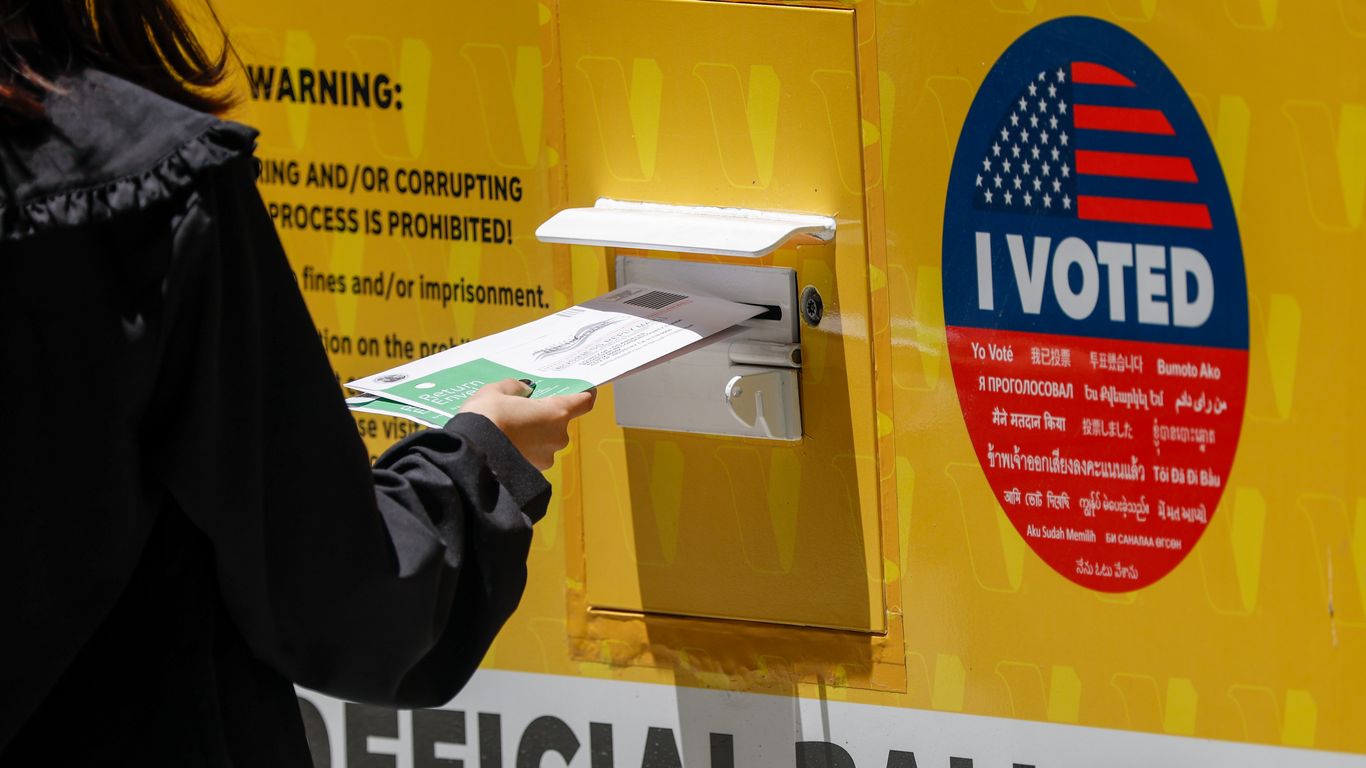
The Trump administration is threatening emergency court action unless California officials investigate potential ineligible voters within 48 hours and set aside ballots from anyone whose citizenship they cannot verify, according to two letters sent to state officials from the Justice Department. Why it matters: With voting already underway, President Trump 's DOJ could delay ballots from eligible Californians mistakenly flagged as noncitizens and set up a court fight just three weeks before Election Day. Driving the news: Acting Deputy Attorney General R. Trent McCotter sent a letter Tuesday to Los Angeles County Registrar-Recorder/County Clerk Dean Logan along with a thumb drive of "likely noncitizens who were sent a vote-by-mail ballot," according to a copy of the letter shared with Axios. McCotter asks local officials to investigate their citizenship status by noon October 15. The letter did not say how many people are on the list. For anyone whose status can't be confirmed, DOJ asks the officials to "segregate—not cancel" those ballots and suspend signature verification or counting of any ballots already returned. DOJ also asks officials to withhold ballots from people on the list unless their citizenship has been confirmed. California Secretary of State Shirley Weber received a similar letter . Friction point: McCotter closed his letter with a threat: "If you cannot implement this process by then, given the ongoing federal election, the United States will have no choice but to seek emergency relief." What they're saying: "This should not be controversial, as the crimin
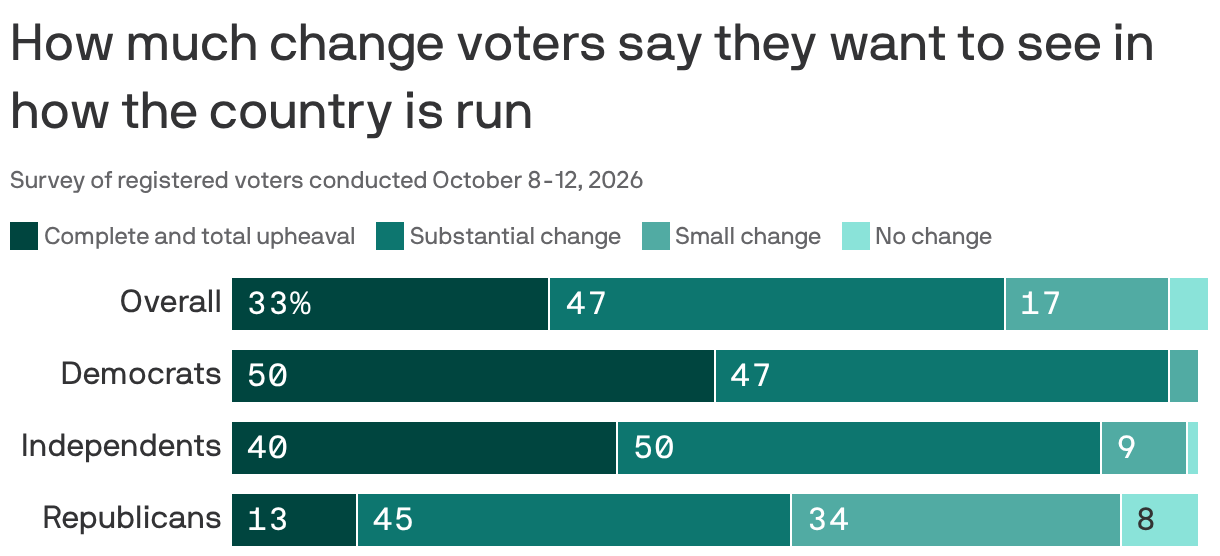
Data: AP-NORC; Chart: Avery Lotz/Axios A quartet of polls out this week carry a stark message: Americans feel disgruntled, dizzy and down on the man in the White House. Why it matters: The vibes going into the midterms are bleak, with a large majority of voters wanting significant change. But the question remains whether those sentiments will drive them to the polls. Driving the news: Nearly two-thirds of Americans rate the economy negatively, per a Fox News poll out Wednesday. Seven in ten voters say they feel like things in the country are out of control, per a The Economist/YouGov survey conducted October 10-12. And eight in ten, new AP/NORC polling found, want to see either "substantial change" or "complete and total upheaval" in how the country is run. Among Republicans, 58% share those sentiments. Zoom out: That national angst appears to be dragging down the president's approval. Fox News found that Trump's approval rating on inflation, which picked up last month, is at a new low: 22%. His overall job approval rating has also fallen to a new floor in Fox News surveys for either term: 36%. Fox says that drop is largely driven by voters under 45, those with household incomes below $50,000, non-white voters and those without a college degree. The White House did not immediately respond to Axios' request for comment. Yes, but: Polling suggests that disgruntlement doesn't necessarily translate into a wellspring of positive energy toward Democrats. Far more voters say they're somewhat or very pessimistic about the Democratic Party's future (47%) than those who say they're o
On October 15, 1962, senior U.S. officials learned that their fears had come true—the Soviet Union was installing nuclear-armed ballistic missiles in Cuba.
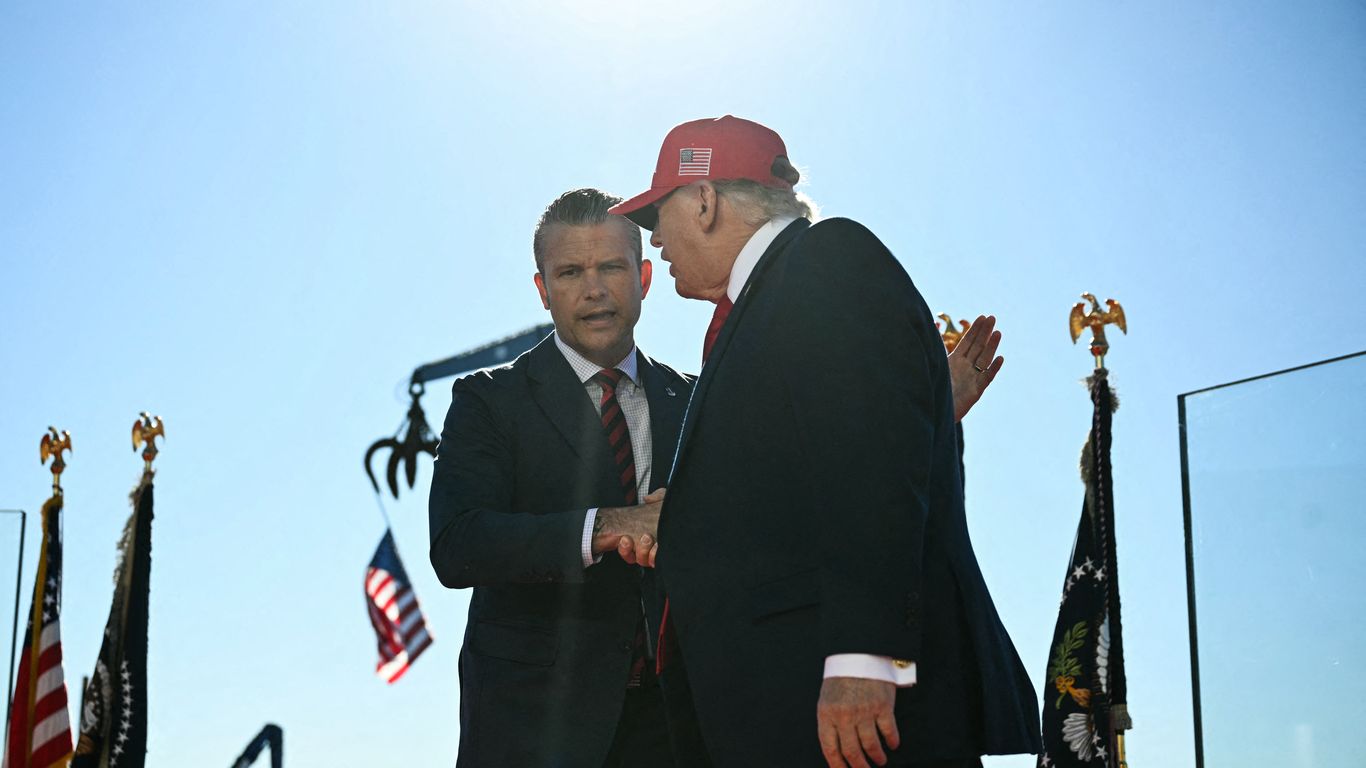
President Trump said in a Thursday Truth Social post the execution of the convicted Fort Hood shooter by firing squad will not be live-streamed. The big picture: The president's post walks back an idea that Defense Secretary Pete Hegseth pitched last week, setting off an avalanche of bipartisan condemnation. Driving the news: " He will die, as scheduled, by firing squad, but this event will not be streamed," Trump's post read. He added, "That said, the execution may be viewed in person by the immediate families of the victims, if they so choose." Trump noted that he thinks "streaming the execution for all to see might have been a strong deterrent for the World to witness how America deals with Terrorists and SCUM like Hasan but, many very good and well meaning people would rather not watch him die." That seemingly included Vice President JD Vance who said he wouldn't watch the execution. House Speaker Mike Johnson (R-La.) warned footage of the execution could become a "recruiting tool for future terrorists." Catch up quick: The Pentagon previously confirmed that the December execution would be streamed after Hegseth said in an interview with Real America's Voice that it would be made "public." But the plan received swift pushback from Republicans and Democrats in Congress alike, as well as from clergy and survivors of the horrific 2009 attack. Even though most Americans support executing shooter Nidal Hasan, a vast majority oppose livestreaming his death by firing squad, according to a ABC News/Washington Post/Ipsos poll out Thursday. This is a breaking news story and will
Trump’s diesel deal moves little fuel, but it could cost Ukraine its best lever against Moscow. The post Trump’s Diesel Deal Matters More to Moscow than the Market appeared first on Geopolitical Monitor .
Dr. Yunis GurbanovAll, Energy Sector, Russia Sanctions, Trump Foreign Policy, Ukraine War
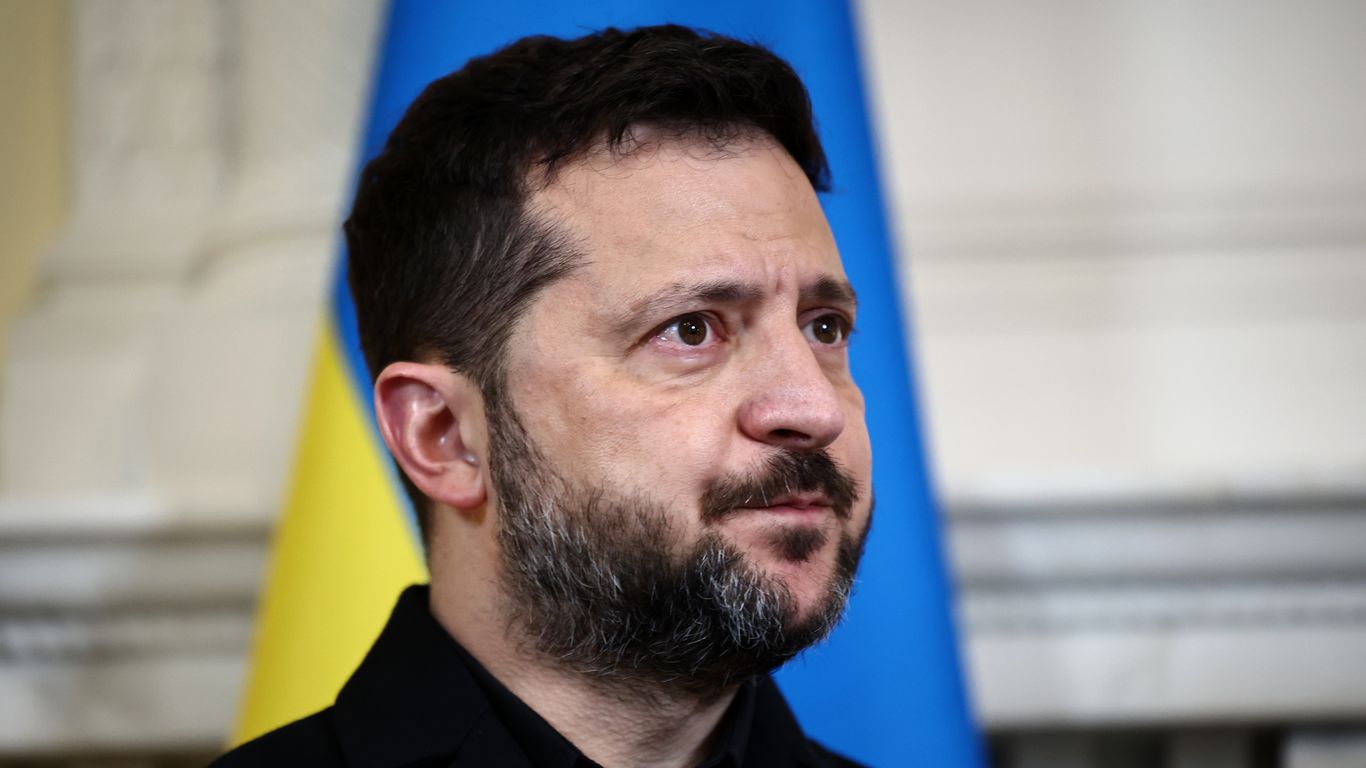
Ukraine's Starlink and Starshield satellite services — critical tools in its war against Russia that were unexpectedly throttled this week — have been restored to full capacity, a Ukrainian official tells Axios. The official also said that Ukraine conducted a strike overnight against a Russian oil refinery — defying President Trump's demand that it stop hitting those facilities. Why it matters: The twin developments further strained the U.S.-Ukraine relationship, as the war with Russia drags on and the Trump administration sided with Russian President Vladimir Putin last week by lifting sanctions on Russian oil sales. State of play: The move angered Ukraine. President Volodymyr Zelensky responded by calling it "a weak decision" and a "gift to Putin." Trump then called for Ukraine to elect a new president. The crisis intensified this week when Elon Musk's SpaceX restricted service of Starlink — a satellite service used for defensive purposes in battle — while Starshield, a tool used for offensive war operations that is controlled by the U.S. government, was also slowed. After more than a day, the services were restored. Ukraine, meanwhile, fired on a Russian oil refinery, which U.S. officials are unlikely to look kindly upon. The Ukrainian official said the country resumed strikes because Russia continued to hit Ukrainian energy infrastructure, despite Trump announcing that the two sides had agreed to a ceasefire. That declaration came as a surprise to Zelensky. The bottom line: It's still unclear to many inside the Trump administration and the Ukrainian government whether T
Putin’s conservative staffing policies and search for ever greater control have cemented parliament’s transformation into a bureaucratic appendage of the executive branch.
Andrey PertsevDomestic Politics, Political Reform, Russia
With its public finances in shambles, the far right polling at 35 percent ahead of the 2027 presidential election, and a growing protest movement, is France’s crisis a threat to the EU’s geopolitical awakening?
Rym MomtazEU, Foreign Policy, Domestic Politics, Economy, Security, Europe, France
Sign up here to receive Bellingcat’s biggest investigations by email as soon as they are published. Satellite imagery obtained by Bellingcat lays bare the extent of tree-felling at a Washington DC golf course that President Trump is reportedly seeking to transform into a championship-level course, despite moves to protect the site by conservationists. The extent […] The post Satellite Images Show Extent of Trump Admin’s Tree-Felling at DC Golf Course, Despite ‘Furious’ Judge’s Order appeared first on bellingcat .
Welcome back to Five Questions for a General, a production of the Modern War Institute at West Point. This series features specially selected cadet hosts who are given an incredible professional development […]
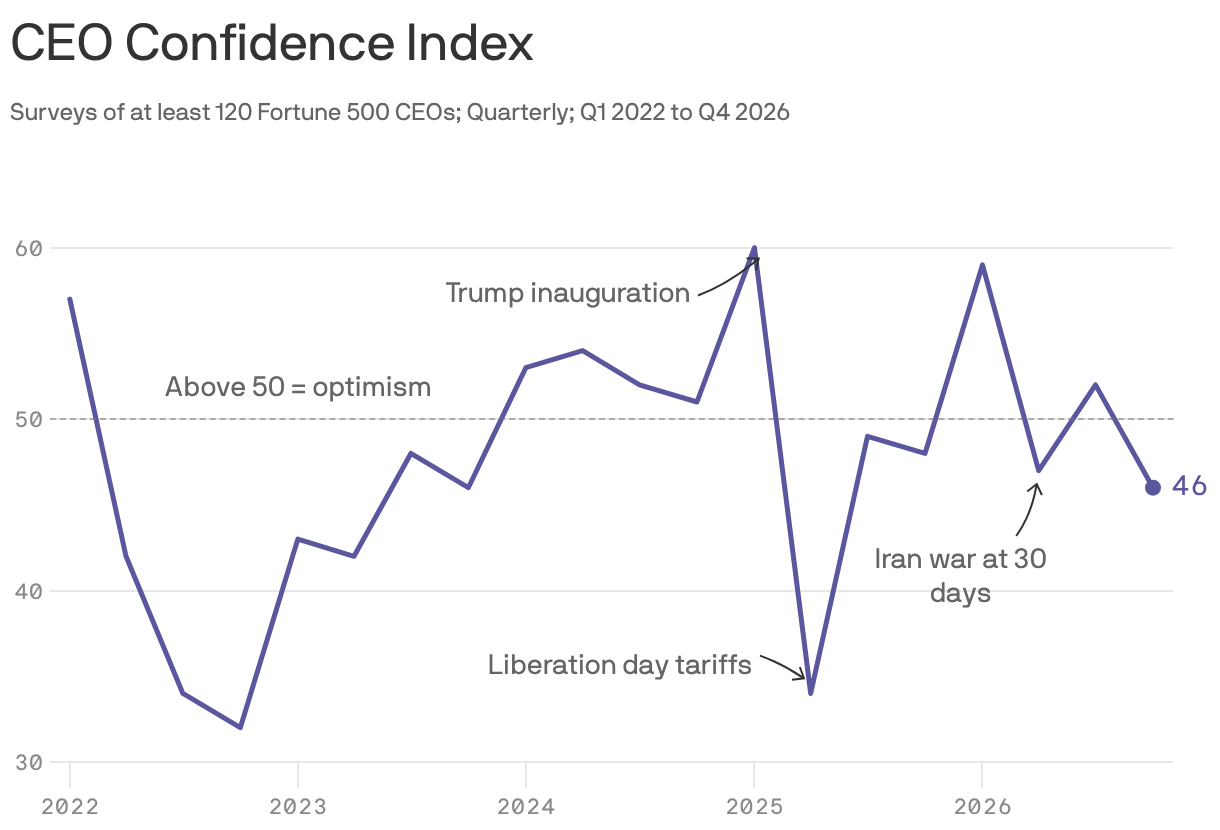
Data: The Conference Board and The Business Council; Chart: Axios/Emily Peck CEO confidence in the U.S. economy sank into negative territory earlier this month, finds a survey out Thursday morning from the Conference Board . Why it matters: Business leaders are mind-melding with most consumers, whose opinions on the economy are now lower than during the pandemic . Such sour sentiment is shaping up as a key issue in the midterms just weeks away. Where it stands: The CEO Confidence Index fell to 46 in the most recent period, down from 52 just three months ago — any number below 50 connotes negative sentiment. The nonprofit Conference Board and the Business Council surveyed 131 Fortune 500 CEOs from Sept. 21-Oct. 5. The survey measures how chief executives at major public companies feel about current economic conditions and their expectations for the economy and their own industries over the next six months. By the numbers: 41% of CEOs expected economic conditions to worsen — up from 19% in the previous quarter. Executives' concerns over cybersecurity, AI and geopolitics rose significantly from three months ago. 94% of CEOs cited cybersecurity threats among their top AI-related concerns. The surge in energy prices — particularly diesel, which is crucial to companies' energy costs — also contributed to the fall in sentiment, Dana Peterson, chief economist at the Conference Board, tells Axios. "All these inflationary shocks, one after the the other, is weighing down on the confidence of both CEOs and consumers," she says. Between the lines: The key worry when CEO moods darken is
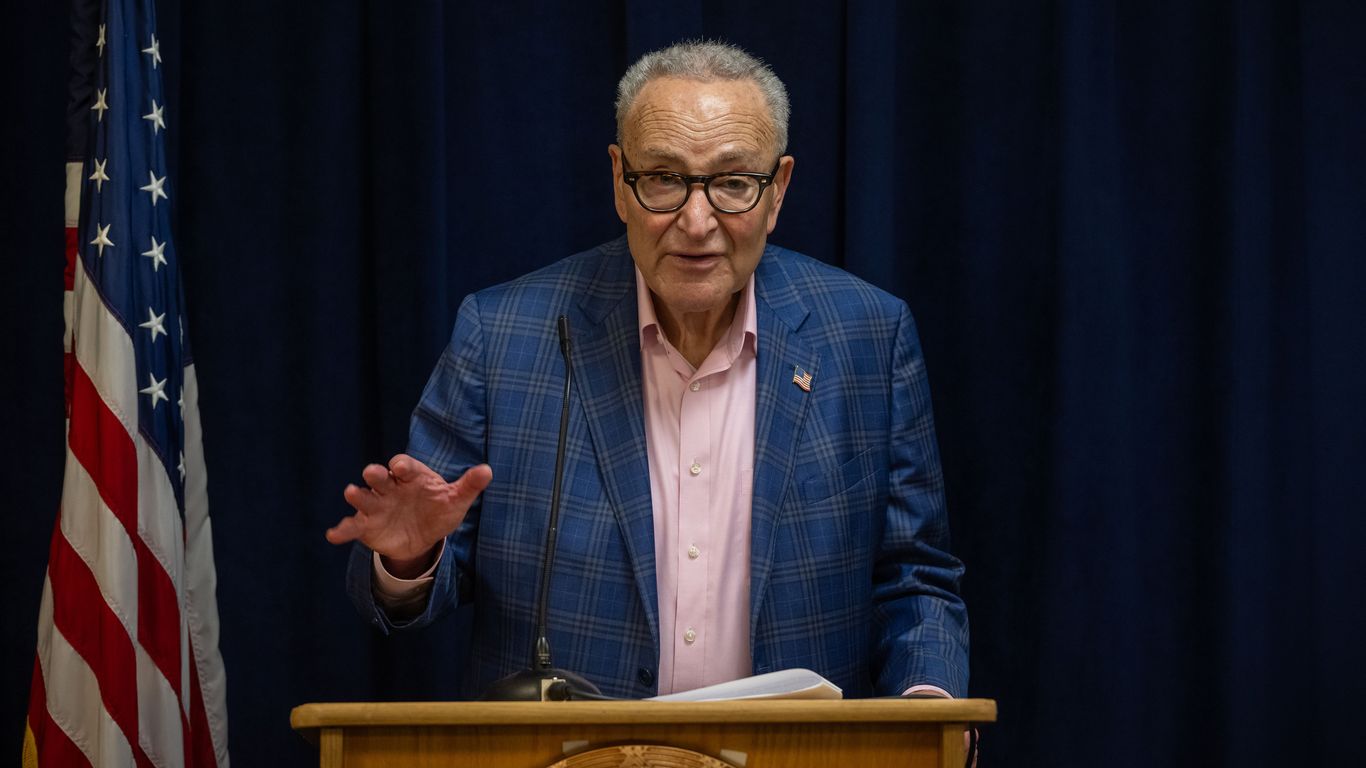
Senate Minority Leader Chuck Schumer (D-N.Y.) is on the cusp of leading his party to midterm victory and reclaiming his title as Senate majority leader. Winning the majority isn't guaranteed. But this son of Brooklyn, who has been in public life for 52 years, is more than favored to win a secret ballot to remain Democratic leader. Why it matters: At age 75 (76 by the time the new Congress convenes in January), Charles Ellis Schumer, an old-school pol who visits all 62 of New York's counties every year, looks poised to do what very few people do in life — go out on top. Behind the scenes: For starters, Democratic senators aren't quietly maneuvering — or publicly positioning themselves — to take the top job, according to senior aides. You can't beat someone with no one . A handful of Democratic Senate candidates, including Abdul El-Sayed in Michigan and Troy Jackson in Maine, haven't committed to supporting Schumer for leader. But they likely don't have the votes to stage a coup. And Schumer's super PAC is spending heavily to get them across the line. That calculus could change if Republicans overperform expectations with a massive win, potentially triggering a serious leadership challenge. Otherwise, the job is Schumer's for the asking — and he's asking. "I am running for re-election for leader. Period," he said two weeks ago. The intrigue: The bigger question surrounding Schumer involves 2028 and whether he'd retire at the top of his game or risk an embarrassing primary loss to, perhaps, Rep. Alexandria Ocasio-Cortez, who was born in the Bronx and represents parts of the Br
Gen Z and millennials have launched their biggest bid yet to remake Congress, but roughly seven in 10 were out by early September, a new report finds. Why it matters: These two generations are struggling to clear the first hurdles of a political system that rewards experience, fundraising and established party support. State of play: A new report from Future Caucus , a nonpartisan nonprofit that works with younger elected officials, found that a record share of this cycle's congressional candidates came from the nation's two youngest political generations. The group identified 3,918 candidates who filed for Congress this cycle, 31% more than in 2024. Of candidates with known or estimated ages, 36.4% were millennials or Gen Z, up from 23.4% in 2024. The report counts everyone who filed and doesn't track how many were first-time candidates. Between the lines : Many young candidates are trying to reach Congress without the political experience that helps candidates advance. Just 1.7% of Gen Z candidates and 9% of millennials have served in a state legislature. Among congressional challengers with age data, nearly 40% of those with state legislative experience reached the general-election stage, compared with 26.2% without it. By the numbers: Only 21.2% of Gen Z congressional candidates remained in the race at the report's September cutoff. That figure rose to 30.2% for millennials, 41.1% for Gen X and 44.5% for Baby Boomers. Nearly 33% of Gen Z candidates failed to qualify for a primary ballot, compared with 18.3% of millennials and 9.4% of Gen X. Incumbents averaged 59 years
The future of war is in outer space — and the U.S. is unprepared for the fallout. Why it matters: An outbreak of space warfare would cripple the global economy by disrupting satellites used for everything from worldwide financial transactions to maritime navigation. It would also hinder the U.S. military's ability to conduct some of its key missions on Earth. The dependence on satellites is precisely what makes them tempting targets for foes. China has made major advancements, such as satellites with robotic arms that could disable U.S. equipment and lasers that can blind military space sensors. Russia lags behind, but U.S. officials fear it may unleash an orbital nuclear weapon that "could pose a threat to all satellites and to the space-enabled services the world depends on." What they're saying: Todd Harrison, the American Enterprise Institute's space expert, said "we've been under the illusion" that an adversary would target only military satellites and leave civil or commercial ones alone. That's no longer the case. "In a future conflict, we could very well see the civilian and commercial space infrastructure that we often take for granted ... being attacked," Harrison said. "Is the American public ready for that? I'm not sure they are." " We're quickly coming to the conclusion that there's no sanctuary in space, not even in a small conflict," he added. Threat level: Last month, U.S. officials revealed that the military had weapons in space — a bombshell admission they said was aimed at deterring adversaries. Yes, but: Doug Loverro, a former top NASA and Pentagon space
AI companies for years have promised that smarter models would be worth the staggering cost to build them. Anthropic on Wednesday made that case in cash. The company presented eye-popping financials to investors, saying it was cash flow positive in the third quarter, with revenue surging nearly 50% to $16.8 billion compared with the April-to-June period. Why it matters: As Wall Street broadly spent the day fearing an AI bubble, Anthropic offered what investors have been desperate to see: evidence that frontier AI can be a sustainable business . State of play: The S&P 500 fell by more than 1% for the first time in 53 sessions, while Anthropic showed off a balance sheet that promises profitable AI, sources told Axios. Zoom in: Consider just one of the stats reported by Anthropic: The company is cash flow positive even as some of the world's most profitable companies are struggling to keep their AI spending in check. For context, Google parent Alphabet, long a money-printing machine, turned free cash flow negative in its second quarter as AI infrastructure investment soared. Investing gurus — especially those focused on the frothiness of companies relative to their underlying value — have long seen free cash flow as a gold standard for the long-term health of a business. Anthropic, a much younger company competing in the same expensive AI race, says it was cash flow positive in the third quarter. The Anthropic figures were first reported by the Financial Times . Yes, but: The company's blistering pace of growth appeared to slow compared with the difference between the first an
The Federal Trade Commission on Wednesday sent civil subpoenas to AI giants seeking documents about safety incidents that have spiraled into an industry crisis . The FTC sought documents from Anthropic and OpenAI in a probe focused on potential consumer protection violations, a person familiar told Axios. Why it matters: The investigation is one of a number of steps the administration has taken to show a firm hand with AI companies after multiple incidents in which unreleased models hacked websites or took deceptive or aggressive steps in testing. State of play: The agency on Wednesday sent out civil investigative demands, which help the government gather evidence and investigate ahead of potential litigation. They are more than 50 pages long each and ask for documents concerning security incidents and safeguarding practices. The agency is also asking for marketing materials and documents detailing company privacy policies, the source said. Investigative demands will be sent to third-party AI organizations at a later date, the person familiar said. Zoom in: The FTC plans to compel top AI executives to testify about their products, according to the source. The agency has investigative authority to examine actions related to consumer harms that could be seen as unfair or deceptive. Those can relate to a wide range of misbehavior, including how companies charge for services or if they're alleged to have misled users. AI companies continue to face scrutiny about the safety of their products. FTC Chair Andrew Ferguson has echoed the view of other administration figures and execu
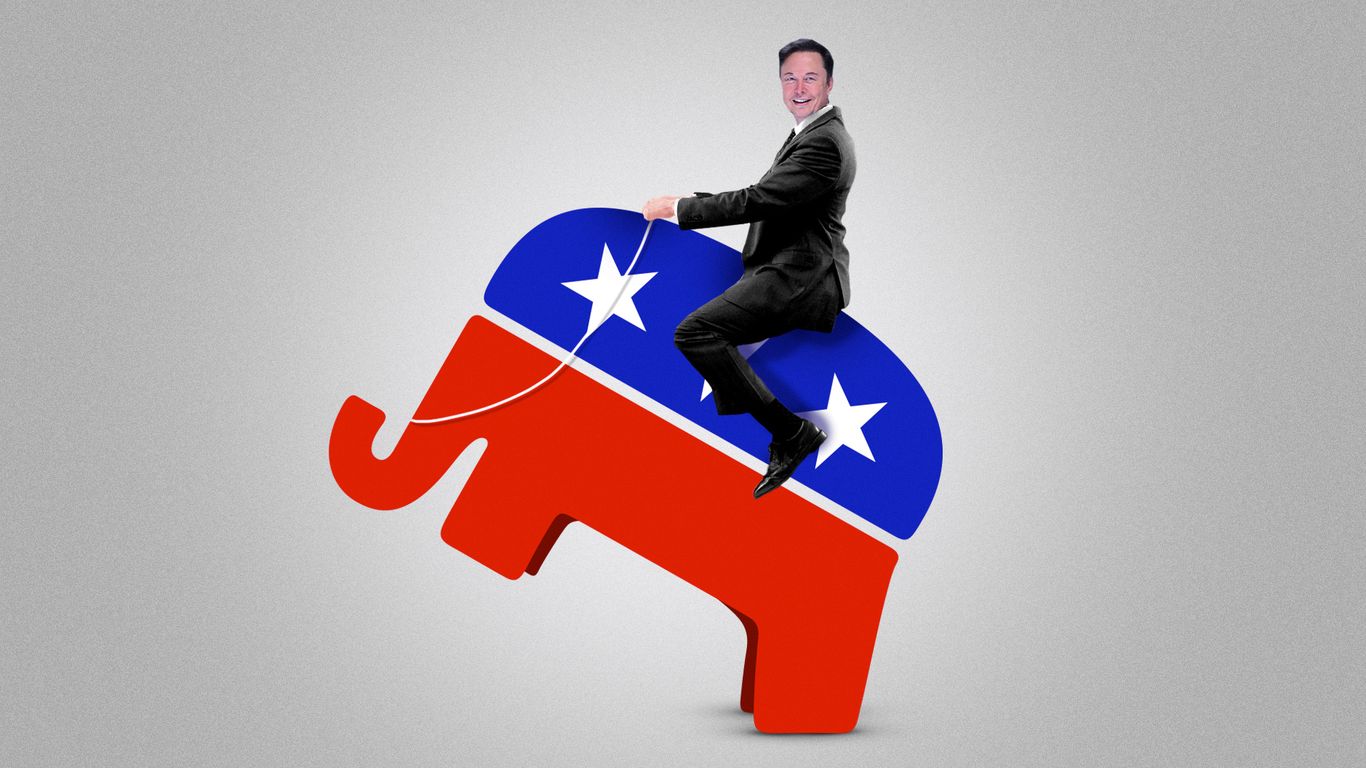
Elon Musk 's team reached out to Republicans in late August to discuss a train wreck they all saw coming: Unless the GOP poured more money into Texas immediately, the state's Senate race could be lost in a matter of weeks. Why it matters: That chat set in motion a massive rescue operation for Republican Ken Paxton funded substantially by Musk, the party's largest donor, who gave $158 million in September alone. Musk's rescue gave Paxton's sleepy campaign new life and showed why the world's richest person is the X factor in the push to prevent a midterm debacle for President Trump's party. Zoom out: It also helped Republicans avoid a death-spiral scenario: that propping up Paxton in Texas would force them to drain badly needed resources from other Senate battlegrounds. Instead, Musk's money allowed Republicans to flood Texas' expensive TV markets and free up cash to shore up unexpectedly competitive races in Kansas and South Carolina . Behind the scenes: In late August, Democrat James Talarico was dominating the Texas airwaves, portraying Paxton, the state's attorney general, as one of the nation's most corrupt politicians. Paxton, who isn't known as a prolific fundraiser, was dark on TV. Polling seen by Musk's team and the GOP's Senate Leadership Fund (SLF) suggested his chances were sinking. Against that backdrop, Musk's top political adviser, Chris Young, called SLF president Alex Latcham with an idea: Musk would donate $5 million to a pro-Paxton super PAC if that group raised another $5 million. Latcham countered: Would Musk contribute $10 million if the pro-Paxton group