SIPRIArticle
Beyond a legacy of war: Integrating mine action into climate security
This blog highlights how climate change and landmine contamination can interact to create new security risks.
Thu, 15 Oct 2026
This blog highlights how climate change and landmine contamination can interact to create new security risks.
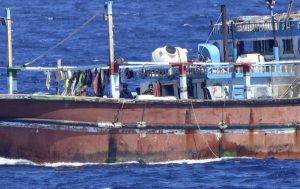
Somali piracy has resurged in 2026 and now forms one of the many active threats to international shipping, according to International Maritime Organization data. Piracy off the Horn of Africa in 2026 is at its highest level since 2013, with 25 incidents recorded by mid-September, according to a tally by the European Union Naval Force […] The post Second-Order Effects from Hell: A Resurgence in Somali Piracy appeared first on The Soufan Center .
Despite a new textbook, an influx of Russian teachers and managers, and an end to the teaching of Ukrainian, the Kremlin is unlikely to have “reprogrammed” locals.
On 16–17 September, SIPRI, IAI and UNTFHS convened a two-day dialogue in Rome on human security in Europe and the Mediterranean.
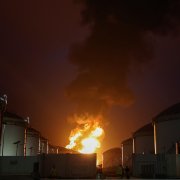
Oil exports from the Middle East have rebounded, fueling claims that the United States is winning its war with Iran. But the Strait of Hormuz remains treacherous, Tehran isn’t any closer to accepting Washington’s terms, and the costs of the conflict are continuing to climb on both sides.
Wednesday marks the third anniversary of the October 7 Hamas attack on Israel, an act from which experts can draw a straight line to the current U.S.-Iran war, and the strategic dead end the Trump team now faces in that conflict. The October 7 assault represented an attempt by Hamas, a key member of an […] The post The Region Still in Crisis Three Years after the October 7 Attack appeared first on The Soufan Center .
Two of the Defense Department’s biggest contractors will help lead a project that could directly benefit them.
CFR President Michael Froman reflects on the third anniversary of Hamas’s October 7, 2023, attacks on southern Israel, and how the Middle East has changed since.
U.S.-ROK cooperation on shipbuilding should be structured so that it strengthens U.S. maritime industrial capacity, makes commercial sense for Korean shipbuilders, and survives the political and regulatory constraints on both sides.
As the U.S.-led Coalition withdraws, the Kurds’ reliance on Baghdad, and on themselves, will only increase.
For every ruble allocated to social policy, health, and education in 2027, double that amount is earmarked for the army, the police, and the security services.
In August 2009, my Ranger platoon was twenty hours into a twenty-seven-hour firefight in the Khowst mountains of Afghanistan. Three platoons inserted onto a high ridgeline in darkness, hunting enemy […]
Why the Houthis’ Red Sea power play makes Iran even stronger Audio sseth.drupal@c… 2 October 2026 On this week’s episode of Independent Thinking, our experts discuss what Houthi control of the Bab al-Mandab strait means for the wider region. The Iranian-backed Houthi rebels’ capture of Yemen’s port city of Mocha means that Iran now effectively controls two crucial waterways in the region – the Bab al-Mandab Strait to the Red Sea and thus the Suez Canal, as well as the Hormuz Strait. Why has this simmering conflict exploded again? What do Iran and the Houthis want? How serious is this potential blockade for world trade and energy supply? And could the Houthis become a regional power, in economic terms even more powerful than Iran? Bronwen Maddox is joined by director of Chatham House’s Middle East and North Africa Programme, Dr Sanam Vakil; Horn of Africa specialist Ahmed Soliman; and Yemen and Gulf specialist, Farea Al-Muslimi, who joins us from Jordan. Read the latest related work from Chatham House here: Expert Comment: New energy and trade routes could bypass Hormuz and change the Middle East. But major challenges remain The World Today article: Farea al-Muslimi: ‘I wrote my own death statement 5 times’ Expert Comment: Escaping the Hormuz trap: What should an agreement to reopen the Strait look like?
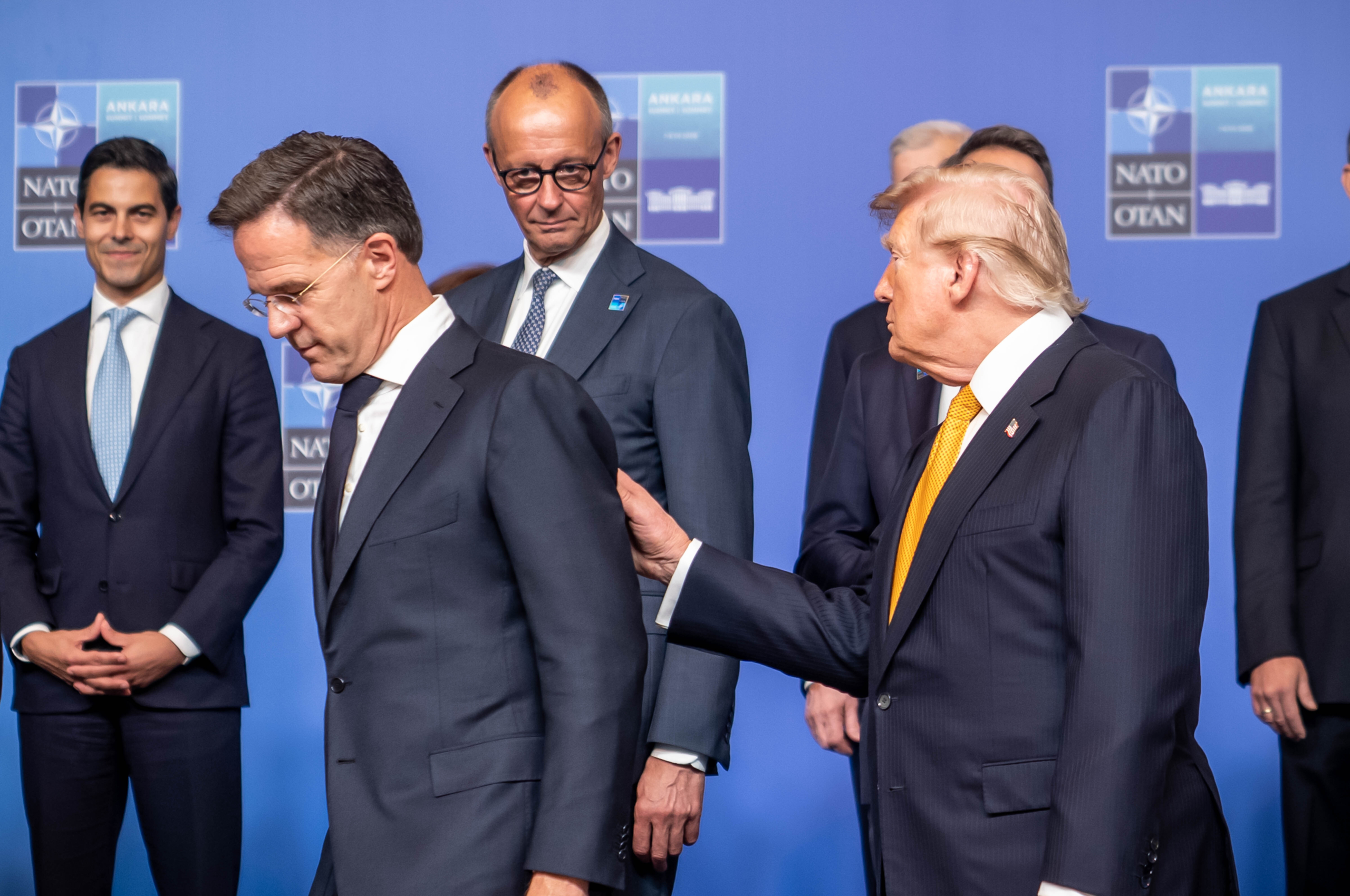
Factional struggles around the US president have left Europe at the mercy of competing foreign policy agendas. But European disunity only undermines European interests
In American slang, “in a stew” means to be in a difficult situation. Italians say pasticciaccio — a baked pasta dish — to describe an awful mess. Israelis prepare shakshuka, a delicious North African stew, but it can also mean a chaotic situation. The current situation in the Gulf is a shakshuka — a complicated […] The post A Shakshuka in the Gulf: U.S. Options in the Iran War appeared first on The Soufan Center .
The acknowledgment has sparked fears of a new arms race with China and Russia.
Twenty-five years later, 9/11's lessons are still contested, except the simplest: the United States mistook quiet for peace. And it is doing so again.